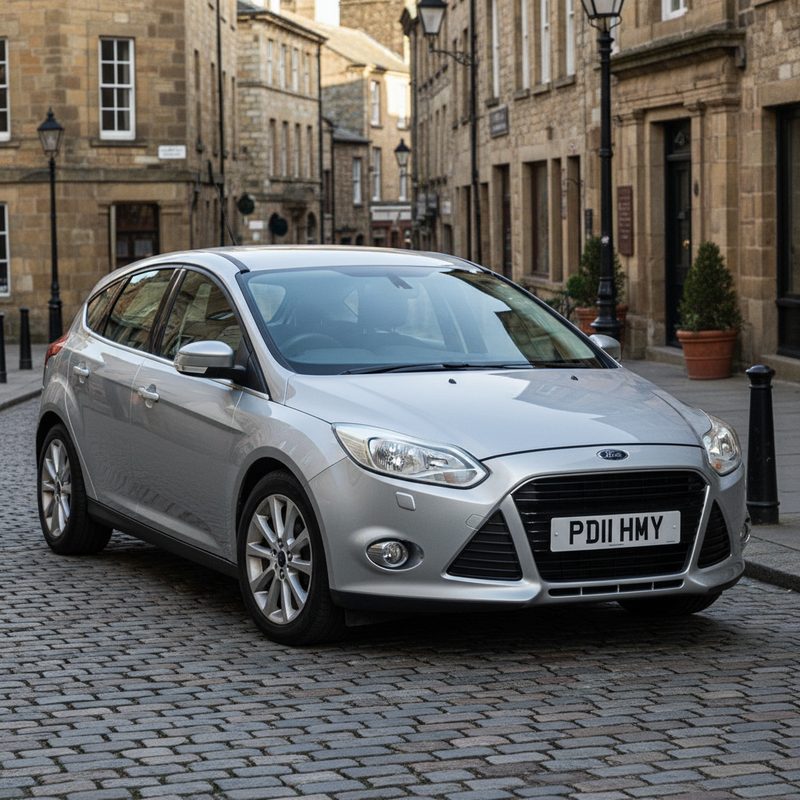
Used Ford Focus with 100k Miles — Worth the Risk?
Six figures on the clock means bargain-basement prices, but a 100k Focus needs proper scrutiny. Here is exactly what to check before you part with your money.
What to Expect from a Ford Focus at 100,000 Miles
A hundred thousand miles. It sounds like a lot, and I will not pretend it does not matter. But context is everything. A Ford Focus that has racked up 100k mostly on motorways, with regular servicing and sensible owners, can still be a genuinely good car. One that has done 100k of city crawling with missed services is a very different proposition.
The Focus was designed as a fleet car as much as a family car. Ford knew it would be hammered by reps doing 30,000 miles a year, so the mechanicals were engineered to cope. The engines are strong, the gearboxes (manual ones, at least) are robust, and the chassis is sorted. At 100k, you should still be able to feel the quality of the engineering underneath the accumulated wear.
What you will notice at 100k is that everything feels a bit softer. The steering will have a touch more play. The gearshift will be slightly less precise. The ride will be less controlled. None of this is alarming -- it is just wear. The question is whether it is normal wear or whether it has been accelerated by neglect.
Components That Will Need Attention
At 100k on a Focus, several components are either due for replacement or already past their best.
Clutch and Flywheel -- Almost Certainly Due
If the clutch has not been replaced by 100,000 miles, assume it is needed. The Focus's clutch is more robust than the Fiesta's, but 100k is pushing it, especially on diesel models. Budget £500-£700 for a petrol model and £800-£1,100 for a diesel with a dual-mass flywheel. Test it properly -- slip the clutch in a high gear under load and see if the revs flare without corresponding acceleration.
Timing Belt on EcoBoost
Same story as the Fiesta. The 1.0 and 1.5 EcoBoost engines use a timing belt with a 125,000-mile or 10-year change interval. At 100k, it is getting close, and if the car is also approaching 10 years old, it should be changed now. Cost: £350-£500 with water pump. This is a non-negotiable maintenance item. If it snaps, the engine is destroyed.
Complete Suspension Refresh
At 100k, the Focus's suspension will be tired. Front shocks, rear shocks, anti-roll bar links, front arm bushes, and (on Mk3) rear trailing arm bushes are all candidates for replacement. A comprehensive suspension refresh can cost £600-£1,000 depending on what is needed. The handling improvement afterwards is transformative -- a Focus with fresh suspension feels like a different car.
Diesel Particulate Filter
On diesel models, the DPF at 100k is a major concern. If the car has lived a life of short urban trips, the filter will be heavily loaded. Regeneration cycles might fail to complete, leading to blocked DPFs and warning lights. A DPF replacement costs £500-£900. Check for any signs of DPF issues: smoke from the exhaust, reduced power warnings, or a strong diesel smell.
Steering Rack and Column
The Focus steering rack can develop play at high mileages. At 100k, listen for clunking when turning the wheel at low speeds. Also check for play in the steering column universal joint, which is a known Focus issue. A steering rack replacement is £500-£800, so it is worth checking carefully.
Wheel Bearings and Driveshafts
Front wheel bearings and driveshaft CV joints are both due for attention around 100k. Listen for clicking on full lock (CV joints) and droning that changes with speed (wheel bearings). Driveshaft replacement is around £200-£350 per side. Bearings are £150-£250 each.
Is the Price Right at 100,000 Miles?
This is where the Focus becomes genuinely interesting for budget buyers. A 2017 Focus 1.0 EcoBoost Zetec at 100k might be priced at £5,500-£7,500 at a dealer. A 2015 Mk3 at the same mileage could be as low as £3,500-£5,000. These are seriously low prices for a car of this quality.
But the maths must work. If you buy a 100k Focus for £5,000 and immediately need a clutch (£600), timing belt (£400), and suspension work (£500), you have spent £6,500 in total. That is still decent value -- but only if you knew about those costs upfront and budgeted for them.
The best 100k Focus deals are the ones where the major work has already been done. Look for receipts showing clutch, belt, and brake work in the recent history. Those cars cost more upfront but save you money overall.
Negotiation at this mileage is essential. Nobody expects to pay full asking price for a 100k car. Make a reasonable offer based on the work you know needs doing, and most sellers will meet you somewhere in the middle.
Red Flags in the MOT history at This Mileage
With eight or more years of MOT history to examine, you have a wealth of information at your fingertips.
The Story the MOT Tells
A 100k Focus should have a long, detailed MOT history. Read every entry. The pattern matters more than any individual result. A car that has sailed through every MOT with no advisories either has an incredibly diligent owner or has been tested at a soft garage. A car with a few minor advisories each year that get resolved is actually the more trustworthy option -- it shows genuine, realistic maintenance.
Danger Signs
- Structural corrosion on subframes -- At 100k, subframe corrosion is possible on older Mk3 models, especially those driven in areas where roads are heavily salted in winter. This is a potential MOT failure and an expensive welding job.
- Brake line replacement -- If brake lines have been replaced due to corrosion, it suggests the car has been exposed to harsh conditions. Check what else might be corroded underneath.
- Emissions failures -- A diesel Focus that fails emissions at 100k has DPF or engine management problems. These are not cheap to resolve.
- Multiple suspension failures in one test -- If a 100k Focus fails on several suspension items at once, it has been run into the ground. The owner waited until the MOT caught everything rather than maintaining the car proactively.
Mileage Fraud Detection
At 100k, mileage fraud is a real risk. Clocked Focuses are common because they are popular and the parts market supports it. Look at every single MOT mileage entry and calculate the difference between each one. The numbers should progress consistently. Any backward step, unexplained gap, or dramatic change in annual mileage needs investigating.
Realistic Ownership Budget at 100k
If you buy a 100k Focus, here is what a realistic annual budget looks like:
- Servicing: £200-£280 per year
- Unexpected repairs fund: £800-£1,200 per year
- Brakes (as needed): £200-£300
- Tyres: £250-£350 per set
- Insurance: Still reasonable at groups 8-20
- Fuel: £1,200-£1,800 per year depending on engine and mileage
That unexpected repairs fund is not optional at 100k. Something will go wrong. Having the money set aside turns a stressful breakdown into a manageable inconvenience.
Dave's Verdict -- Worth the Risk or Walk Away?
A Ford Focus at 100,000 miles is a calculated risk that can pay off brilliantly. These are fundamentally good cars, and the low prices at this mileage make them accessible to buyers on tight budgets. If you find a manual-gearbox Focus with a full service history, consistent MOT records, and evidence that major items have been addressed, buy it with confidence.
Avoid any PowerShift automatic at this mileage -- the odds of a costly gearbox failure are too high. Also steer clear of any Focus with gaps in its service history or suspicious mileage patterns. At 100k, you need evidence that the car has been cared for. No evidence means no deal.
Make Dave's vehicle check the very first thing you do when you find a 100k Focus you like. Pull up the full MOT history, check every mileage reading, and verify there is no hidden finance or write-off history. At this mileage, the stakes are too high to buy blind. My check gives you the facts, and the facts are what keep you out of trouble.
Check Ford Focus, instantly with Dave's free vehicle intelligence report.
Check the MOT mileage history with Dave