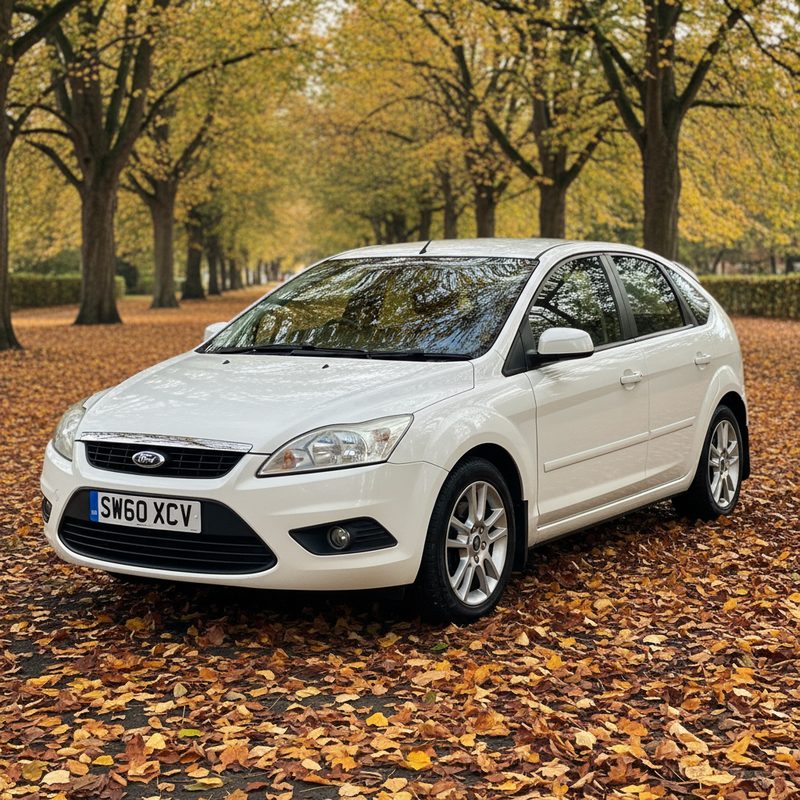
Used Ford Focus with 75k Miles — Worth the Risk?
At 75,000 miles, a Focus starts to reveal its true colours. A well-kept one is a cracking buy, but a neglected one will drain your wallet fast.
What to Expect from a Ford Focus at 75,000 Miles
Here is the thing about a Ford Focus with 75,000 miles -- it is at the tipping point. The car has done enough work to have worn through the easy stuff, and you are now entering the territory where previous maintenance really matters. A Focus that has been serviced on time, driven with a bit of sense, and looked after will still feel tight and rewarding to drive. One that has been thrashed and neglected will feel like a bag of spanners.
I see a lot of 75k Focuses come through, and the range in condition is staggering. Some feel like they have just left the showroom. Others rattle, vibrate, and pull in every direction. The mileage number is identical -- it is the care that makes the difference.
At this point in a Focus's life, the driving experience should still be good. The steering should be precise, the engine should pull cleanly, and the ride should be composed. If any of those feel wrong on your test drive, you are looking at maintenance bills. The question is how big those bills will be.
Components That Typically Need Attention at 75k Miles
The Focus has more going on mechanically than the Fiesta, particularly around the rear suspension. At 75k, expect these items to be on the agenda.
PowerShift Gearbox -- The Elephant in the Room
I am going to repeat myself because it is that important. If you are looking at a Mk3 Focus with the PowerShift dual-clutch auto, 75,000 miles is deep into the danger zone. Many of these gearboxes start failing between 50,000 and 80,000 miles. Symptoms include shuddering at low speeds, difficulty engaging gears, and warning lights on the dashboard. A reconditioned gearbox costs £1,500-£2,500, and Ford dealer replacements are even more. At 75k, I would genuinely walk away from any PowerShift model showing even the mildest symptoms.
Clutch on Manual Models
Manual Focus clutches are hardier than the Fiesta's, partly because the Focus's gearing is better suited to mixed driving. At 75k, the clutch should still have life in it, but test it carefully. Urban-driven Focuses will wear clutches faster. A replacement clutch on a Focus costs £450-£650 for petrol models and £700-£1,000 for diesels with a dual-mass flywheel.
Rear Suspension Bushes and Links
The Mk3 Focus's multi-link rear suspension is excellent for handling but expensive when it wears. At 75k, the rear trailing arm bushes and lateral link bushes are prime candidates for replacement. You will hear clunking and banging from the rear end over uneven surfaces. A full rear bush refresh can cost £400-£600 including labour. The Mk4's torsion beam rear is much simpler and rarely causes issues.
If you are considering a Ford, you should also read our Used Ford Fiesta or Vauxhall Corsa? True Running Cost Comparison guide for the full picture.
Front Lower Arm Bushes
The front lower arms on both Mk3 and Mk4 Focuses use a pressed-in bush that wears over time. At 75k, these are often knocking. The trouble is that Ford supplies the bush as part of the complete arm, so you are replacing the whole thing. Budget £200-£350 for both sides fitted.
Water Pump and Cooling System
On EcoBoost models, the water pump and thermostat housing are common failure points around 60,000-80,000 miles. If you see any coolant staining around the front of the engine or the coolant level is low, factor in a water pump replacement at around £250-£400.
Our Ford Fiesta vs Vauxhall Corsa Reliability guide covers another important aspect of owning this car.
Diesel-Specific Items
The 1.5 and 2.0 TDCi engines at 75k might start showing signs of injector wear. Rough idling and a slight misfire when cold are the early symptoms. Individual injectors cost £200-£350 each, and there are four of them. The EGR valve can also start to stick at this mileage, causing flat spots in acceleration.
Is the Price Right at 75,000 Miles?
At 75k, Focus prices drop significantly compared to lower-mileage examples. A 2018 Focus 1.0 EcoBoost Zetec at 75,000 miles will sit around £8,000-£10,500. A Mk3 from 2015-2016 with similar mileage might be as low as £5,000-£7,000. Diesel models tend to be priced slightly lower than their petrol equivalents at this mileage because buyers have become nervous about DPF and emissions issues.
These prices can represent excellent value if the car is in good mechanical order. The key is to do your sums. Work out the realistic cost of any maintenance items that are due, deduct that from the asking price, and see if the deal still stacks up.
PowerShift automatics at 75k are often priced at a significant discount -- sometimes £2,000-£3,000 below equivalent manuals. That might seem tempting, but remember: if the gearbox fails, the repair will wipe out your saving and then some.
Red Flags in the MOT history at This Mileage
By 75,000 miles, a Focus should have a substantial MOT history. Here is how to read it.
What Healthy MOT Records Look Like
A well-maintained 75k Focus should show minor advisories that get resolved by the next test. Brake disc wear advisory one year, no mention the next (because they were replaced). That is the pattern you want to see -- an owner who acts on advisories rather than ignoring them.
Warning Signs
- Repeated suspension advisories -- If the MOT mentions rear suspension play year after year, the bushes have not been replaced. That tells you the owner cut corners.
- Corroded brake components -- At 75k, brake pipes and calipers should not be badly corroded unless the car has lived in a coastal area or been stored outside on a gravel drive.
- Steering rack play -- Any mention of steering rack play at 75k is concerning. The Focus steering rack is an expensive replacement at £500-£800 fitted.
- Large mileage gaps -- If there are years missing from the MOT record (the car was less than 3 years old, for example), you have fewer data points to work with. That is not necessarily a red flag, but it means you have less evidence to rely on.
The Mileage Detective Work
At 75k, the MOT mileage should tell a clear story. Work out the average annual mileage and check it is consistent. A Focus that did 15,000 miles a year for four years and then supposedly 5,000 miles in the fifth year has either been clocked or had a significant period off the road (possibly for repair after an accident). Ask questions.
Running Costs at This Mileage
Owning a 75k Focus is still very affordable, but your maintenance budget needs to be higher than for a newer car.
- Annual service: £180-£250 at an independent garage
- Brakes (when needed): £180-£250 front, £150-£200 rear
- Tyres: £250-£350 for a set of four (the Focus uses slightly larger tyres than the Fiesta)
- Insurance: Groups 8-20 depending on engine, still very reasonable
- Fuel: 1.0 EcoBoost returns 42-48 mpg; diesels manage 50-60 mpg on a long run
Budget an extra £500-£800 per year for unexpected repairs at this mileage. That might sound like a lot, but it is still far cheaper than PCP payments on a new car.
Dave's Verdict -- Worth the Risk or Walk Away?
A Ford Focus at 75,000 miles? With a manual gearbox, absolutely yes. This is a car that rewards good maintenance, and if the previous owner has taken care of it, you are getting a brilliant driver's car at a fraction of its new price. Check the rear suspension for clunks, make sure the cooling system is healthy on EcoBoost models, and verify the service history is complete.
With a PowerShift auto, I would say no. The risk at 75k is simply too high, and the potential repair cost is out of proportion to the car's value.
Whatever model you are considering, do not skip Dave's vehicle check. I will dig into the full MOT history, check every mileage reading for consistency, and flag up anything suspicious. Finance checks, write-off checks, and plate change alerts are all included. When you are spending thousands on a 75k car, a few quid on a proper check is the most sensible money you will ever spend.
Check Ford Focus, instantly with Dave's free vehicle intelligence report.
Check the MOT mileage history with Dave