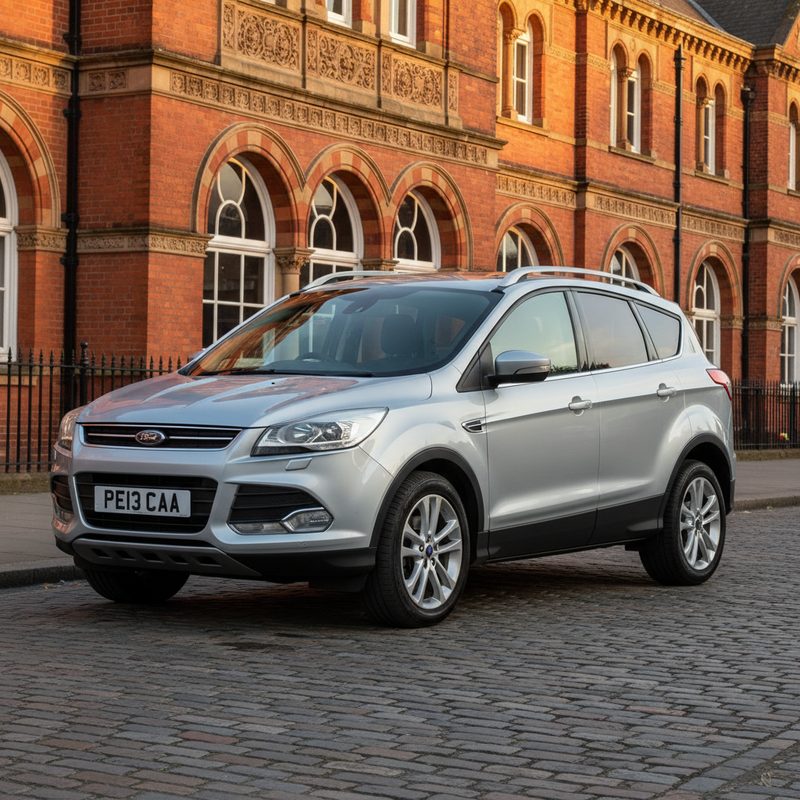
Used Ford Kuga with 50k Miles — Worth the Risk?
The Kuga is Ford's best-selling SUV, and at 50k miles it should still be a solid family workhorse. But there are a few Kuga-specific traps to avoid.
What to Expect from a Ford Kuga at 50,000 Miles
The Ford Kuga has become one of the most popular family SUVs in the UK, and there is a good reason for that. It drives better than most of its rivals, it is practical enough for the school run and the holiday, and it looks the part without being ostentatious. At 50,000 miles, a Kuga should still be in cracking shape -- these are robust cars that take daily life in their stride.
You will mostly find two generations at this mileage. The Mk2 Kuga (2013-2019) is the one that really put the model on the map, while the Mk3 (2020 onwards) is more refined but less common at 50k as it is still relatively new. Both generations share Ford's tried-and-tested mechanical components, but the Mk3 added some new technology that brings its own considerations.
At 50k, the Kuga should feel solid and planted. The driving position is higher than a Focus but not vertiginously so. The engine should pull cleanly, the steering should be precise, and the ride should be comfortable without being wallowy. If anything feels vague or loose, that is a warning sign about the car's maintenance history.
Components That Typically Need Attention at 50k Miles
The Kuga is heavier than the Focus it is based on, and that extra weight accelerates wear on certain components.
Brakes -- Heavier Car Means Faster Wear
The Kuga's size and weight mean the brakes work harder than on a Focus or Fiesta. Front discs and pads typically last 25,000-30,000 miles, so at 50k they should have been replaced at least once. If the seller claims the brakes are original at 50,000 miles, be suspicious -- that would be unusual for a car this heavy. Budget £200-£280 for a front set and £170-£230 for rears.
1.5 EcoBoost Coolant Issues
The 1.5 EcoBoost petrol engine in the Kuga shares the same coolant system vulnerabilities as its Focus and Fiesta siblings. Water pump failures, thermostat housing leaks, and coolant hose delamination can all occur. At 50k, these issues should not have surfaced yet, but check the coolant level, inspect the expansion tank, and look for any staining around the front of the engine. A water pump replacement is £300-£400.
2.0 TDCi Diesel Specifics
The 2.0 TDCi diesel is a strong performer in the Kuga and copes well with the extra weight. At 50k, it should be running sweetly. However, the turbo actuator linkage can seize on earlier examples, causing reduced power and a check engine light. This is a relatively cheap fix (£150-£250) but can feel alarming if it happens on the motorway.
Four-Wheel-Drive System
If your Kuga has the optional four-wheel-drive system, it needs checking at 50k. The Haldex-style coupling uses its own oil that should be changed every 30,000-40,000 miles. Many owners skip this, leading to premature wear of the clutch pack. Ask for evidence of 4WD oil changes. If there is none, budget £100-£150 to have it done, and keep in mind the coupling might already be compromised.
Tailgate and Electrics
The Kuga Mk2's electric tailgate (on models that have one) can develop motor failures around 40,000-60,000 miles. The struts get weak and the motor burns out trying to compensate. A replacement tailgate motor is £200-£350 fitted. Test it multiple times during your viewing -- open, close, open, close. If it hesitates or sounds strained, budget for a replacement.
Is the Price Usually Right at 50,000 Miles?
Kuga pricing sits comfortably in the mid-range of the compact SUV market. A 2018 Kuga 1.5 EcoBoost Titanium with 50,000 miles will typically be advertised at £12,000-£15,000 at a dealer. The diesel versions command a slight premium due to better towing capability and stronger resale demand. The Mk2 ST-Line models with the appearance pack are the most desirable and hold their value best.
Compared to rivals like the Nissan Qashqai or VW Tiguan, the Kuga offers better value. The Tiguan in particular is significantly more expensive at equivalent mileage, yet the Kuga arguably drives better. That is your negotiating angle -- you are choosing the Kuga because it is the better deal, so push for the best price you can get.
Expect £500-£1,000 of negotiation room at a dealer. Private sales offer more flexibility. If the car needs brakes or has any outstanding advisories, use those to justify a lower offer.
Red Flags in the MOT History at This Mileage
The Kuga's MOT history at 50k should be relatively straightforward, but there are SUV-specific things to watch for.
Advisories to Monitor
- Brake wear -- Expected and normal. Just make sure the work has been done if advisories appeared.
- Tyre wear -- The Kuga runs on larger tyres than the Focus, and they are more expensive. Four-wheel-drive models can show unusual tyre wear patterns if the system is not functioning correctly.
- Suspension wear -- Front lower arm bushes and drop links are common advisory items. Cheap to fix but indicative of the driving conditions the car has experienced.
Genuine Red Flags
- Mileage discrepancies -- Kugas are popular lease cars, and mileage clocking can occur when they leave the lease company. Check every MOT reading.
- Corrosion warnings at 50k -- A Kuga should not have any corrosion issues at this mileage. If the MOT mentions corrosion, the car has had inadequate protection or a poor-quality repair.
- Emissions advisories -- On diesel models, any emissions concern at 50k suggests the DPF system is not regenerating properly. This gets worse, not better.
Towing Considerations
Many Kugas are bought specifically for towing caravans, trailers, and horse boxes. If the car has been used for regular towing, it will show in specific wear patterns.
- Clutch wear -- Towing accelerates clutch wear dramatically. A Kuga that has towed regularly might need a clutch at 50k rather than 80k+.
- Gearbox wear -- Auto gearboxes that have towed will have worked harder and the fluid will be more degraded.
- Suspension sag -- Check the rear ride height. If it sits low compared to the front, the rear springs may have sagged from carrying heavy loads.
- Towbar condition -- Check the electrical socket and ball for wear. Heavy use is not a disqualifier, but it tells you the car has had a harder life than average.
Dave's Verdict -- Worth the Risk or Walk Away?
The Ford Kuga at 50,000 miles is a strong buy. It offers the practicality of an SUV without the inflated pricing of some German rivals, and it drives better than most of the competition. At 50k, the major components should all be in good working order, and the car has plenty of life ahead of it.
The things to focus on are the brakes (make sure they have been maintained), the cooling system on EcoBoost models, and the four-wheel-drive system if fitted. If you are buying one that has been used for towing, factor in potential clutch wear.
Before you hand over your cash, use Dave's vehicle check to get the complete picture. The Kuga is popular with lease companies and fleet buyers, which means the ownership history can be complex. My check will verify the mileage, check for finance, reveal any write-off markers, and give you the full MOT history. It is the best few pounds you will spend in the entire car-buying process.
Check Ford Kuga, instantly with Dave's free vehicle intelligence report.
Check the MOT mileage history with Dave