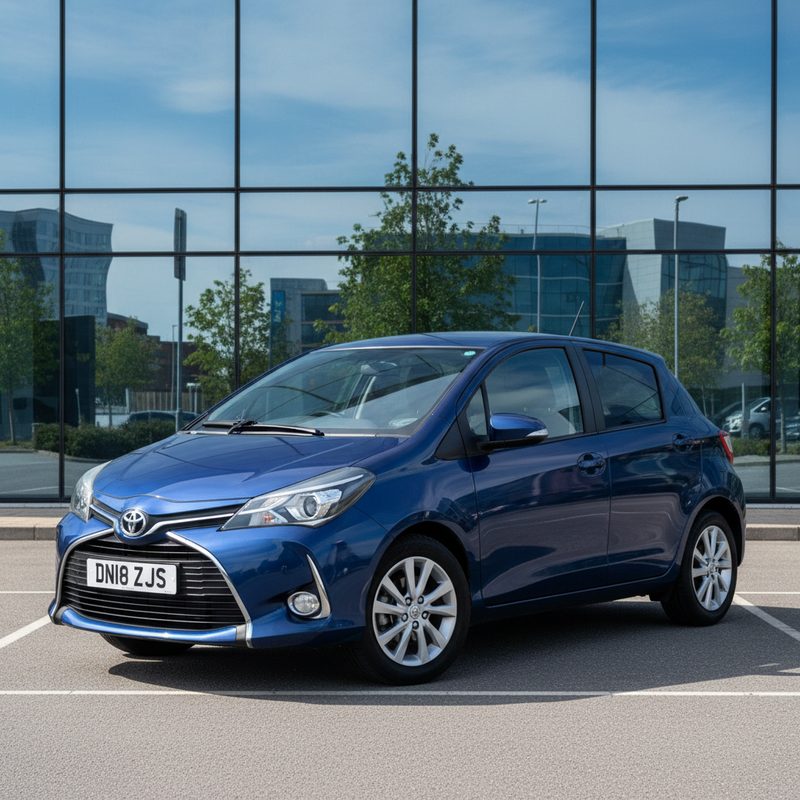
Toyota Yaris Depreciation: Why Toyotas Hold Value
The Toyota Yaris depreciation curve, why the hybrid retains 8-10% more value than petrol, and the smartest time to buy for maximum value retention.
The Yaris: Slow to Depreciate, Fast to Sell
The Toyota Yaris depreciates 20 to 30% slower than mainstream supermini rivals. A 5-year-old Yaris Hybrid retains roughly 48% of its new value, compared to 35% for a Hyundai i20, 37% for a Ford Fiesta, and 39% for a VW Polo. This isn't accidental. It's the result of Toyota's reliability reputation, growing hybrid demand, and genuinely lower running costs creating sustained used market demand.
For used buyers, this is a double-edged sword. You'll pay more upfront for a Yaris than an equivalent Fiesta or Corsa, but you'll lose less money every year you own it. Over a 3-year ownership period, the Yaris often costs less in total depreciation than cars that were cheaper to buy.
Depreciation Curve: Mk4 Yaris Hybrid (2020+)
Based on a 1.5 Hybrid Design bought new at £22,000:
| Age | Mileage | Value | Retained | Annual Loss |
|---|---|---|---|---|
| New | 0 | £22,000 | 100% | , |
| 1 year | 10,000 | £17,500 | 80% | £4,500 |
| 2 years | 20,000 | £15,500 | 70% | £2,000 |
| 3 years | 30,000 | £13,500 | 61% | £2,000 |
| 4 years | 40,000 | £12,000 | 55% | £1,500 |
| 5 years | 50,000 | £10,500 | 48% | £1,500 |
| 6 years | 60,000 | £9,000 | 41% | £1,500 |
| 7 years | 70,000 | £8,000 | 36% | £1,000 |
If you are weighing up alternatives, our guide to Mercedes E Class Depreciation covers similar ground from a different angle.
The first year absorbs the biggest hit (£4,500), then annual losses stabilise at £1,500 to £2,000. After year 5, the Yaris loses roughly £125/month: one of the lowest monthly depreciation figures in the supermini class.
Mk3 Yaris (2014: 2020) Comparison
The older Mk3 has already passed through most of its depreciation:
| Age | Mk3 Hybrid Value | Mk3 Petrol Value |
|---|---|---|
| 5 years (2019, 50k mi) | £9,000 to £10,500 | £6,500 to £8,000 |
| 7 years (2017, 70k mi) | £6,500 to £8,000 | £4,500 to £6,000 |
| 9 years (2015, 80k mi) | £5,000 to £6,500 | £3,500 to £4,500 |
For more on this topic, take a look at our Nissan Qashqai Depreciation guide.
The Mk3 hybrid retains £2,000 to £2,500 more than the petrol equivalent at every age point. This premium covers the hybrid's higher new price and then some.
Why Toyotas Hold Value
Five factors combine to create Toyota's depreciation advantage:
1. Reliability reputation: Toyota's reliability record is the best in the industry. The Yaris consistently tops customer satisfaction surveys and has among the lowest warranty claim rates of any car. Buyers pay more for certainty, particularly at the 5+ year used mark where reliability matters most.
2. Hybrid demand growth: As fuel prices remain high and clean air zones expand, hybrid Yaris demand has grown year-on-year. The self-charging hybrid system requires no charging infrastructure. It just works, making it accessible to all buyers, not just those with driveways and home chargers.
3. Low running costs: Zero road tax, 55 to 65 mpg urban, near-zero brake wear (regenerative braking), and minimal maintenance requirements create a running cost profile that competing cars can't match. Used buyers increasingly factor total cost of ownership into their decision.
4. Toyota warranty: The 10-year/100,000-mile hybrid battery warranty transfers to subsequent owners. This is a powerful reassurance for used buyers, no other manufacturer matches it for hybrid components. Even the standard 5-year warranty covers most of the Mk4's current used market window.
5. Supply constraints: Toyota limits discounting on new cars more strictly than most manufacturers, which supports used values. A Fiesta might be available with £2,000 off list; a Yaris rarely has more than £500 in dealer flexibility. This trickles down to used prices.
The Sweet Spot: 3: 4 Years Old
Buy a Yaris Hybrid at 3 to 4 years old with 25,000 to 40,000 miles for the best value:
- Price: £12,000 to £13,500 for a Mk4 1.5 Hybrid Design
- Future depreciation: £1,500/year, roughly £125/month
- Warranty: Still covered by Toyota's warranty (5 years standard, 10 years hybrid battery)
- Condition: Nearly new, Toyota build quality means minimal wear at this age
- Technology: Toyota Safety Sense 2.0 (auto emergency braking, lane keep, adaptive cruise) standard
At this price point, you're paying roughly £500 to £1,000 more than an equivalent Polo or Fiesta. But over 3 years of ownership, the Yaris loses approximately £4,500 in depreciation vs £5,500 to £6,000 for the Fiesta, saving you £1,000 to £1,500. Add the fuel and tax savings (roughly £500/year for the hybrid vs petrol rivals), and the Yaris is genuinely cheaper to own despite the higher buy-in price.
You might also find our When Does a Nissan Qashqai Stop Depreciating? guide useful alongside this one.
Which Engine Holds Value Best?
| Engine | 5-Year Retention | Notes |
|---|---|---|
| 1.5 Hybrid (Mk4) | 48% | Best retention, hybrid demand |
| 1.5 Petrol manual (Mk4) | 40% | Lower demand, less efficient |
| 1.5 Petrol CVT (Mk4) | 38% | CVT puts some buyers off |
| 1.5 Hybrid (Mk3) | 45% | Older design but still strong |
| 1.0 Petrol (Mk3) | 35% | Cheapest to buy, worst retention |
The hybrid outperforms the petrol by 8 to 13 percentage points at every age. The manual petrol holds slightly better than the CVT petrol because many buyers dislike CVT characteristics (engine drone under acceleration).
We have covered related ground in our Nissan Leaf Depreciation guide, which is worth reading if this subject interests you.
Trim Impact on Residuals
| Trim (Mk4) | 3-Year Retention | Best Buy? |
|---|---|---|
| Icon | 58% | Budget entry, fine if you're keeping 5+ years |
| Design | 62% | Sweet spot, highest demand trim |
| Design Premium | 60% | Good spec but higher buy-in dilutes retention |
| Excel | 59% | Top spec, but few used buyers pay the premium |
| GR Sport | 65% | Limited supply and sporty appeal = best retention |
Design is the volume seller and the smartest buy: it's the trim most people search for, which means the widest buyer pool when you come to sell. GR Sport retains best in percentage terms but the higher purchase price means your absolute loss (in £) may be similar.
Yaris vs Rivals: 5-Year Depreciation
| Car | New Price | 5-Year Value | Retained | Monthly Loss |
|---|---|---|---|---|
| Toyota Yaris 1.5 Hybrid Design | £22,000 | £10,500 | 48% | £192 |
| VW Polo 1.0 TSI Style | £22,000 | £8,500 | 39% | £225 |
| Ford Fiesta 1.0 EB Titanium | £21,500 | £8,000 | 37% | £225 |
| Vauxhall Corsa 1.2T Elite | £21,000 | £7,000 | 33% | £233 |
| Hyundai i20 1.0 T-GDi Premium | £20,000 | £7,000 | 35% | £217 |
If things go wrong after purchase, Citizens Advice can help you understand your legal rights.
The Yaris retains £2,000 to £3,500 more than every rival at 5 years. That's the equivalent of 2 years' road tax and fuel savings, on top of the Yaris's already lower running costs. Check current values on AutoTrader.
Dave's Yaris Value Strategy
- Buy at 3 to 4 years old: maximum depreciation already absorbed
- Choose Design trim: widest resale appeal
- Always buy the hybrid: 8 to 13% better retention than petrol
- Maintain FTSH: Toyota dealer stamps maximise resale value
- Sell at 7 to 8 years: before the car drops below £8,000, where demand shifts to budget buyers who'll pay less
Verify the MOT history, check DVLA records, and confirm insurance groups at Thatcham (groups 8 to 16 depending on variant). Check Euro NCAP, the Mk4 Yaris scored 5 stars with class-leading pedestrian protection.