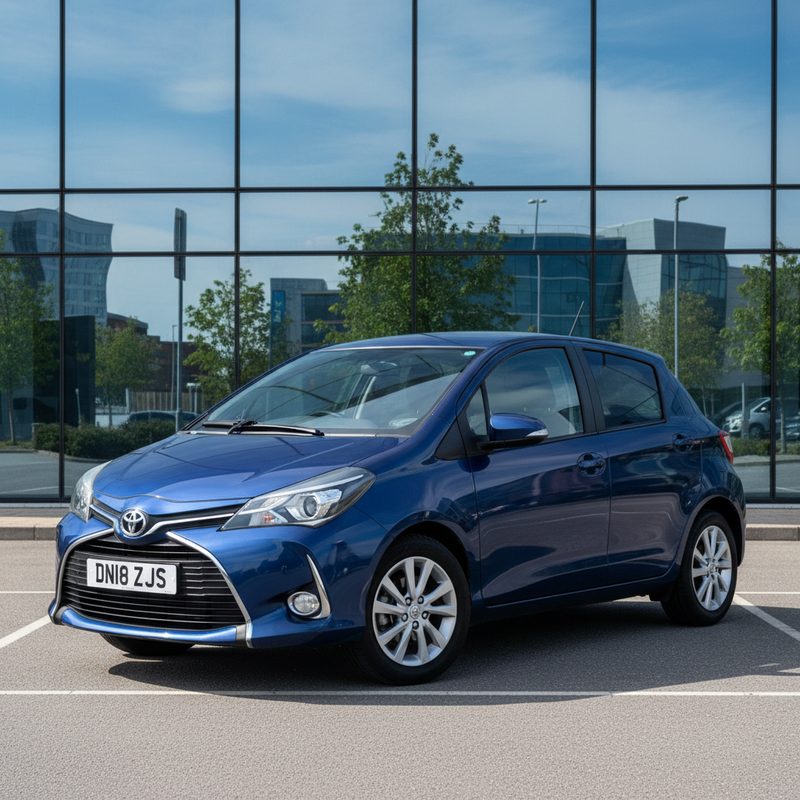
Should I Buy a 2018 Toyota Yaris: The Reliable Choice
Mechanics love it because they never see it. The 2018 Yaris has a bulletproof reputation, but does the ownership experience actually match the hype?
Should I Buy a 2018 Toyota Yaris?: The Reliable Choice
If you ask any mechanic which small car gives them the least work, most will say the Toyota Yaris. This is a car that has built its reputation on being boringly, relentlessly reliable, a car that starts every morning, never surprises you with an unexpected bill, and quietly racks up 150,000 miles with nothing more than routine servicing. But is the 2018 model still a smart buy, or has the competition caught up? Let me give you the honest picture.
Which Yaris Is the 2018 Model?
The 2018 Yaris is the third-generation model (XP130/XP150), which was built from 2011 to 2020. It received a significant mid-life facelift in 2017 with a completely new front end (inspired by the Mirai hydrogen car), revised interior trim, and improved safety equipment including Toyota Safety Sense as standard on most trims. The 2018 model year benefits from all these improvements, making it the best version of this generation.
Engine Choices
| Engine | Power | Real-World MPG | Insurance Group | 0-62 mph |
|---|---|---|---|---|
| 1.0 VVT-i | 72 PS | 48 to 54 mpg | 3 to 6 | 15.3 sec |
| 1.5 VVT-i | 111 PS | 43 to 49 mpg | 10 to 14 | 11.0 sec |
| 1.5 Hybrid | 100 PS | 55 to 65 mpg | 9 to 12 | 11.8 sec |
The 1.5 Hybrid is the standout choice. It uses Toyota's proven hybrid system, the same basic architecture as the Prius, scaled down, and delivers exceptional urban fuel economy. In stop-start city driving, 60+ mpg is genuinely achievable. The system is mechanically simple: a petrol engine paired with an electric motor and a small battery, connected through a CVT gearbox. There is no clutch to wear, no turbocharger to fail, and no diesel particulate filter to clog.
The 1.0 VVT-i three-cylinder is adequate for town driving but genuinely slow, 0 to 62 mph takes over 15 seconds, and motorway overtakes require serious planning. It is cheap to insure (groups 3 to 6), which makes it attractive for young drivers, but the 1.5 hybrid is only marginally more expensive to insure and far more pleasant to drive.
The 1.5 VVT-i non-hybrid petrol is the rarest of the three and offers decent performance but no particular advantage over the hybrid. Most buyers will be choosing between the 1.0 and the hybrid.
What Goes Wrong (Not Much)
The Yaris has one of the shortest fault lists of any car I cover. But it is not entirely immune to problems:
CVT Gearbox Feel (Hybrid)
The CVT (Continuously Variable Transmission) in the hybrid is reliable, Toyota has been refining this system since the original Prius in 1997, but it feels unusual if you are used to a conventional automatic. Under hard acceleration, the engine revs rise and stay high while the car gradually builds speed, creating a "rubber band" effect. This is perfectly normal and not a fault, but it can feel disconcerting. Take a thorough test drive to ensure you are comfortable with the sensation.
Hybrid Battery Degradation
The nickel-metal hydride (NiMH) battery in the Yaris Hybrid is designed to last the lifetime of the car, Toyota offers an 8-year, 100,000-mile warranty on hybrid components. In practice, degradation is minimal even beyond those figures. However, if the battery does fail outside warranty, replacement costs £1,200 to £2,000 at a Toyota dealer. Aftermarket refurbished units are available from £600 to £900 from specialists like Hybrid Battery UK.
Check the hybrid system indicator on the dashboard, the battery charge level should oscillate normally between empty and full during driving. If the petrol engine runs constantly and the battery never shows charge, there may be a cell failure.
Rear Drum Brake Squeal
Like many small cars, the Yaris uses rear drum brakes. These can develop a squeal in wet or damp conditions, annoying but harmless. The shoes and drums are cheap (£80 to £120 per side) and rarely need replacing before 80,000 miles. Check the MOT history for brake-related advisories.
Suspension Clunks (High Mileage)
Above 60,000 to 80,000 miles, the front anti-roll bar drop links and track rod ends can wear, producing clunking noises over bumps and speed bumps. These are MOT-testable items, so check the history. Replacement costs £60 to £100 per side for drop links, £70 to £120 per side for track rod ends, far cheaper than equivalent parts on German cars.
Interior Rattles
The Yaris interior, while improved on the 2017 facelift model, uses hard plastics extensively. These can develop rattles and squeaks over time, particularly from the dashboard and door cards. This is a build-quality issue rather than a mechanical one, but it can be irritating. Check the car carefully on rough surfaces during your test drive.
What to Pay
A 2018 Yaris 1.5 Hybrid Icon with 20,000 to 40,000 miles sells for £10,500 to £13,500. The 1.0 VVT-i Icon is cheaper at £7,500 to £10,000. Higher-spec Design and Excel trims add £500 to £1,500 to these figures.
Yaris values are strong relative to other superminis because of the Toyota reliability reputation. A Ford Fiesta or Vauxhall Corsa of the same age and mileage will be £1,000 to £2,000 cheaper, the Yaris holds its value better. Check AutoTrader and What Car's valuation tool for current market prices.
Running Costs: Why the Yaris Excels
This is where the Yaris genuinely stands apart from the competition. Annual costs for a 1.5 Hybrid Icon covering 8,000 miles:
- Road tax: £0 per year (if registered before April 2017) or £155 per year (post-April 2017). Some 2018 models squeaked in under the old system depending on registration date
- Insurance: £350 to £550 for experienced drivers (groups 9 to 12); £600 to £1,000 for younger drivers
- Fuel: £650 to £850 at 8,000 miles (~60 mpg)
- Servicing: £130 to £180 at an independent Toyota specialist; £200 to £280 at Toyota main dealer
- Tyres: £180 to £280 for four (15 or 16-inch)
Total annual ownership: approximately £1,400 to £2,000 for the hybrid. That is genuinely remarkable for any car, let alone one with a premium reliability reputation. The hybrid system needs no additional maintenance beyond standard servicing.
Toyota offers fixed-price servicing that is very competitive. A major service at a Toyota dealer is typically under £300, which compares favourably with independent garage rates for premium brands.
Safety and Euro NCAP
The 2018 Yaris scored 5 stars from Euro NCAP when tested with the Toyota Safety Sense package. This includes:
- Pre-collision system with pedestrian detection
- Lane departure warning
- Automatic high beam
- Road sign assist
These features are standard on Icon trim and above, making the post-facelift Yaris significantly safer than many rivals at the same price point.
How Does It Compare?
- Ford Fiesta: more fun to drive, better interior design, but less reliable long-term. No hybrid option. Read about common Vauxhall Corsa problems if you are considering the Corsa instead.
- VW Polo: more refined cabin, stronger engines, but more expensive to service and more complex technology that can go wrong
- Nissan Micra: competitive pricing but limited resale value and a less proven reliability record
- Honda Jazz: similar reliability reputation, more practical interior with Magic Seats, slightly quirky styling
If outright running costs and peace of mind are your priorities, the Yaris wins. If you want a more engaging drive, the Ford Fiesta is hard to beat. The Honda Jazz matches the Yaris for reliability but is more practical and less stylish.
Dave's Verdict
The 2018 Toyota Yaris is not an exciting car. It does not set your pulse racing, the interior is functional rather than inspiring, and the 1.0-litre petrol version is genuinely slow. But it is a supremely competent small car that excels at the things that actually matter in daily ownership: reliability, running costs, and ease of living.
My pick is the 1.5 Hybrid in Icon trim. It has all the safety equipment you need, the hybrid system slashes fuel bills, and Toyota's reliability means you can buy with genuine confidence. Budget £11,000 to £13,000 for one with 25,000 to 40,000 miles and full Toyota service history. It might be the most sensible used car purchase you ever make, and sometimes, sensible is exactly what you need.