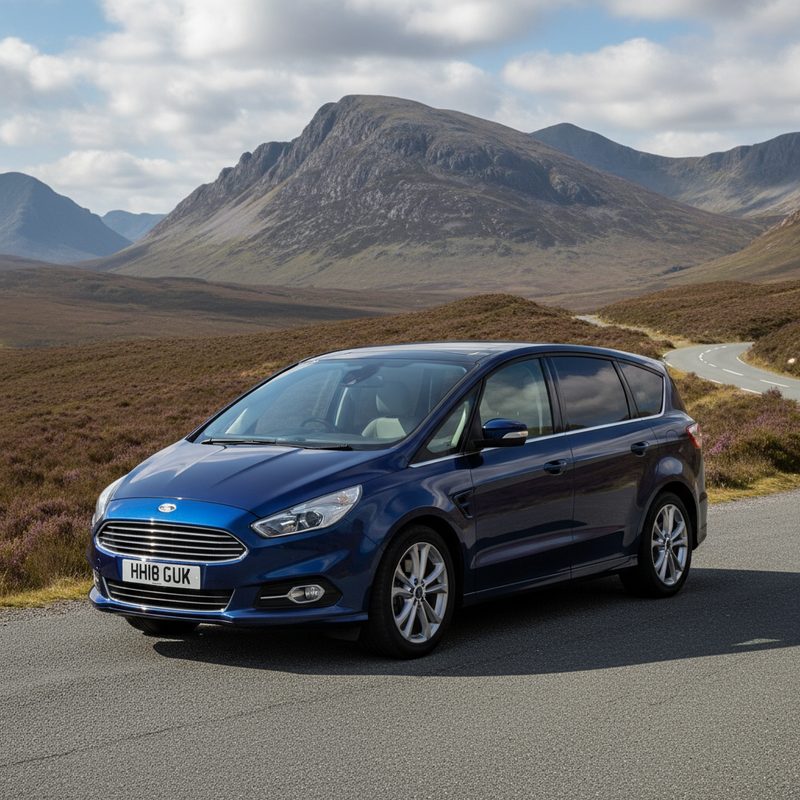
Ford S-Max Depreciation — Best Year to Buy Used for Value
The Ford S-Max combined MPV practicality with a sporty driving experience unlike anything else. Now discontinued — the depreciation sweet spot for used buyers.
The S-Max -- An MPV That Actually Drives Well
Here is a car that should never have worked. Take a seven-seater MPV, give it sharp steering, a firm suspension setup, and dynamics that genuinely entertained on a B-road. The Ford S-Max was the thinking family's alternative to the Galaxy -- slightly smaller, considerably more fun to drive, and aimed at parents who refused to give up their driving enjoyment just because they had children.
Ford axed the S-Max in 2023 alongside the Galaxy, and the model has not been replaced. That makes it a dying breed, and interestingly, the S-Max's sporty character and enthusiast following give it slightly different depreciation characteristics compared to the more utilitarian Galaxy.
New S-Max prices were broadly similar to the Galaxy, ranging from around £33,000 for a Titanium to £40,000 for a Vignale. The S-Max sat on the same platform but was shorter, lower, and lighter than the Galaxy. Those dynamic advantages translated to a slightly more desirable car on the used market.
S-Max Depreciation by the Numbers
For a Ford S-Max 2.0 EcoBlue Titanium (approximately £34,000 new):
- Year 1: Falls to about £23,000 (32% loss, around £11,000 gone)
- Year 2: Falls to about £18,800 (18% further decline)
- Year 3: Falls to about £15,600 (17% further decline)
- Year 4: Falls to about £13,000 (17% further decline)
- Year 5: Falls to about £11,000 (15% further decline)
- Year 6: Falls to about £9,400 (15% further decline)
- Year 7: Falls to about £8,000 (15% further decline)
Compare these figures to the Galaxy and you will notice the S-Max holds roughly 2-4% more of its value at every age bracket. The difference is small in percentage terms but meaningful in pounds. A five-year-old S-Max might be worth £500 to £1,000 more than an equivalent Galaxy. Over the life of ownership, this adds up.
The reason is straightforward: the S-Max appeals to a broader audience. It is not just families who buy them. Couples who want occasional seven-seat flexibility, drivers who appreciate handling, and even some enthusiasts who want a practical performance car all shop in the S-Max market. That wider demand supports values.
The Best Time to Buy an S-Max
My sweet spot for the S-Max is three to five years old. At that age, you are looking at 2021 to 2023 models with reasonable mileage, and the car has taken its largest depreciation hits.
A 2022 S-Max Titanium with the 2.0 EcoBlue 150PS and 35,000 miles will cost you around £15,000 to £17,500. That is roughly half the original price. Keep it for three years and sell at six to seven years old, and you are looking at total depreciation of around £5,500 to £7,000. That gives you annual ownership depreciation of roughly £1,800 to £2,300. For a car that carries seven and drives like a hot hatch, those are reasonable numbers.
For the budget-conscious buyer, the Mk1 S-Max (2006-2015) is where the real bargains sit. These pioneering first-generation cars are now ten to eighteen years old, and tidy examples with the 2.0 TDCi engine can be found from £2,500 to £5,000. Depreciation at this point is irrelevant -- you are buying purely on condition and mileage. The Mk1 S-Max remains a lovely thing to drive, and parts are plentiful and affordable.
The ST-Line Premium
S-Max ST-Line models command a noticeable premium over Titanium. The sportier bodywork, lowered suspension, and sports seats suit the S-Max character perfectly. Expect to pay £1,000 to £1,500 more for an ST-Line at any age compared to a Titanium. In percentage terms, the ST-Line loses slightly less value, making it the smarter buy despite the higher entry price.
Which Specs Hold Value
Powertrain Analysis
The 2.0 EcoBlue diesel dominated S-Max sales, and it is the engine to target. The 150PS version is perfectly adequate and the most fuel-efficient. The 190PS version adds useful shove for overtaking and towing, and commands a premium of around £600 to £1,000 at any age.
Ford offered a 2.5-litre hybrid on the S-Max in its final years. Take-up was limited, and the hybrid S-Max occupies a strange niche. Values are currently softer than the diesel because the hybrid system adds complexity and buyers are uncertain about long-term reliability. If you can find one cheaply, it could be a bargain, but the diesel is the safer choice for value retention.
Automatic vs manual is worth noting. The Powershift automatic was available on earlier models and has a mixed reliability reputation. The later torque converter automatic is far better. Manual S-Maxes are rarer but easier to maintain. Values are roughly comparable between auto and manual on the S-Max, unlike some cars where the auto commands a premium.
Trim Levels
Titanium is the volume seller and the easiest to resell. ST-Line is the value champion as I mentioned. Titanium X adds luxury features and holds a modest premium. Vignale offers exceptional equipment but depreciates the hardest in percentage terms because its high new price is not reflected proportionally in used values.
Colour Preferences
Blue has always suited the S-Max well, and it is one of the stronger colours for resale. Grey and silver are safe bets. White does well in newer models. Black is acceptable but shows wear. Red S-Maxes are uncommon and do not command a penalty, but they do not earn a premium either. Avoid unusual colours -- the S-Max market is practical, and buyers want sensible tones.
Factors That Hurt S-Max Values
Mileage matters but with an important nuance. S-Max buyers accept higher-than-average mileage because these are motorway cars. A five-year-old S-Max with 70,000 miles is not unusual and will sell close to the average. Below 50,000 miles at five years earns a 5-7% premium. Above 90,000 miles at the same age brings a 12-15% penalty.
Seat mechanism condition is critical. The S-Max has a clever folding second and third row, and the mechanisms can become stiff or jammed with age. A full demonstration of every seat folding and unfolding is essential at any viewing. Faulty seat mechanisms can cost £300 to £800 to repair, and they will put off most buyers.
Diesel engine health follows the same principles as the Galaxy. Full service history, evidence of DPF care, and timing belt changes on schedule are all non-negotiable. A well-maintained 2.0 EcoBlue will run to 150,000 miles or more without drama. A neglected one will develop expensive problems from 80,000 miles.
Brake and suspension wear is more pronounced on the S-Max than the Galaxy because of its sportier setup. Bushings, anti-roll bar links, and drop links are common wear items. Budget £200 to £400 per year for suspension maintenance on an S-Max over five years old.
Alloy wheel condition matters because the S-Max sits on large wheels -- 18-inch or 19-inch on ST-Line models. Kerb damage is common, and refurbishment costs £60 to £80 per wheel. Badly kerbed alloys suggest careless ownership and will knock £300 to £500 off the asking price.
Dave's Depreciation Strategy
My advice is focused and specific. Buy a 2022 S-Max ST-Line with the 2.0 EcoBlue 150PS in blue or grey metallic, with under 40,000 miles and a full Ford service history. Budget £16,000 to £18,000. Plan to keep it for three to four years.
Alternatively, for the budget buyer, look for a late Mk1 S-Max (2013-2015) in Titanium trim with the 2.0 TDCi and 70,000 to 90,000 miles. Budget £4,000 to £6,000. At that price, you will barely lose any money to depreciation.
Maintain it religiously. The S-Max rewards careful ownership, and a well-documented service history adds real value at the point of sale. Keep the interior clean, address suspension wear promptly, and protect those alloy wheels.
Dave's Closing View
The Ford S-Max is a genuinely special car -- an MPV that drives like a proper driver's car. It is one of the most underappreciated vehicles in the UK, and the depreciation means you can buy one for a fraction of the original price. Now that production has ended, the best examples will become increasingly sought after by families who value driving dynamics alongside practicality.
Before you commit to any S-Max, protect yourself with a proper vehicle check. Run the registration through Dave's vehicle check to verify the mileage, check for outstanding finance, review the MOT history, and confirm the car has not been in any serious incidents. S-Maxes accumulate miles quickly, and mileage discrepancies are more common than you might think. Two minutes checking now could save you thousands in unpleasant surprises.
Check Ford S-Max, instantly with Dave's free vehicle intelligence report.
Check a specific year with Dave