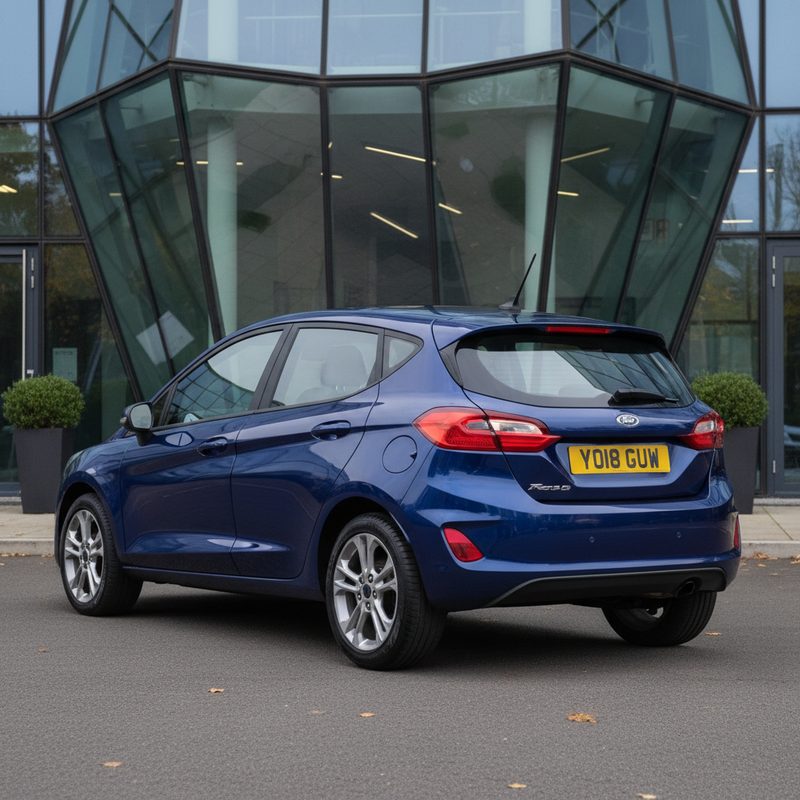
Is This Ford Fiesta Overpriced? 5-Minute Check
Wondering if that Ford Fiesta is overpriced? Our 5-minute check will help you assess its value and make an informed decision.
Understanding the Ford Fiesta's Market Value
When considering whether a Ford Fiesta is overpriced, the first step is to understand its market value. The Ford Fiesta has been a popular choice in the UK for years, known for its reliability, fuel efficiency, and compact size, making it a favourite among city dwellers and families alike. Prices can vary significantly based on the model year, trim level, mileage, and condition.
For instance, a 2018 Ford Fiesta with around 30,000 miles might typically range from £10,000 to £12,000, depending on its condition and whether it has any additional features. On the other hand, a 2015 model with higher mileage could be found for as low as £7,000. To get a fair market price, it’s crucial to check multiple sources, including online marketplaces like AutoTrader, eBay Motors, and local dealership listings.
Additionally, platforms like Glass’s Guide or Parkers can provide you with a valuation based on the car’s specifics. This research will give you a solid baseline to determine if the asking price is reasonable or if it’s inflated.
Key Factors Influencing the Price
Several factors can influence the price of a Ford Fiesta, and understanding these can help you negotiate better. Firstly, the age of the car plays a significant role. Newer models typically command higher prices, but depreciation can work in your favour when buying a used car.
Next, consider the mileage. A well-maintained Fiesta with low mileage will usually be priced higher than one with high mileage, even if they are the same model year. For example, a 2017 Fiesta with 15,000 miles may be priced at £11,500, while a similar model with 60,000 miles could be listed for £9,000.
The condition of the vehicle is also paramount. A car with a full service history, no accidents, and in excellent condition will fetch a higher price. Conversely, if the car has been in an accident or has mechanical issues, it could be significantly undervalued.
Lastly, optional features and trim levels can affect pricing. Higher trims like the ST-Line or Vignale come with additional features and better performance, which can justify a higher price point.
Fair Market Price Range for a Ford Fiesta
To determine whether the Ford Fiesta you’re eyeing is overpriced, you need to establish a fair market price range. As mentioned earlier, the price can vary based on several factors. Here’s a general breakdown of what you might expect:
- 2018 Ford Fiesta: £10,000 - £12,000
- 2017 Ford Fiesta: £9,000 - £11,000
- 2016 Ford Fiesta: £8,000 - £10,000
- 2015 Ford Fiesta: £7,000 - £9,000
- 2014 Ford Fiesta: £6,000 - £8,000
These figures are averages and can fluctuate based on the car’s specific condition, mileage, and location. For instance, cars in London may be priced higher than those in rural areas due to demand.
To get a more precise figure, compare similar listings in your area. If you find that the Fiesta you’re considering is priced significantly higher than similar models, it’s worth investigating further.
Specific Leverage Points Buyers Can Use
When negotiating the price of a Ford Fiesta, having specific leverage points can make a significant difference. Here are a few strategies to consider:
-
Research Comparable Listings: As mentioned, gather data on similar models in your area. If you find several listings for lower prices, use this information to negotiate. For example, if you find three 2017 Fiestas priced at £10,000 and the one you’re interested in is listed at £11,500, you can confidently present this data to the seller.
-
Highlight Any Issues: If the car has any visible defects, such as scratches, dents, or worn tyres, use these as negotiation points. Mentioning that you’ll need to spend money on repairs can help lower the price.
-
Mileage Comparison: If the Fiesta has higher mileage than similar models, use this as a bargaining chip. A car with 50,000 miles should generally be cheaper than one with 30,000 miles.
-
Service History: If the car lacks a full service history, this can be a significant point in your favour. A well-documented service history can justify a higher price, so if the seller can’t provide this, it’s a valid reason to negotiate downwards.
-
Timing Your Purchase: If you’re buying at the end of the month or quarter, dealers may be more willing to negotiate to meet sales targets. Use this timing to your advantage.
An Actual Negotiation Script/Dialogue Example
Let’s imagine you’re at a dealership looking at a 2017 Ford Fiesta listed for £11,500. Here’s how a negotiation might go:
You: "I’ve done some research on similar 2017 Fiestas in the area, and I’ve found several listed for around £10,000. Can you explain why this one is priced higher?"
Dealer: "This one has a full service history and is in excellent condition."
You: "I understand, but I noticed it has 55,000 miles, which is higher than the others I’ve seen. Plus, there are a few scratches on the bumper. Given these factors, I think £10,000 is a fair offer."
Dealer: "I can’t go that low, but I could do £11,000."
You: "I appreciate that, but I’m still concerned about the mileage and the scratches. How about we meet at £10,500? I’m ready to buy today if we can agree on that."
Dealer: "Alright, let’s do £10,500."
In this scenario, you’ve effectively used your research and observations to negotiate a better price.
When to Walk Away
Knowing when to walk away is just as important as negotiating. If you find yourself in a situation where the dealer is unwilling to budge on price, or if the car has significant issues that aren’t being addressed, it may be time to walk away. Here are some signs:
-
Unwillingness to Negotiate: If the dealer is rigid on the price and dismisses your research or concerns, it’s a red flag. A good dealer should be open to discussion.
-
High Repair Costs: If you discover that the car requires significant repairs that the dealer isn’t willing to address or negotiate on, it’s a sign to reconsider.
-
Emotional Attachment: If you find yourself becoming overly attached to a particular car, it can cloud your judgement. Remember, there are plenty of Fiestas out there; don’t settle for one that doesn’t meet your criteria.
-
Pressure Tactics: If the dealer is using high-pressure sales tactics, such as insisting that the car will sell quickly, take a step back. This is often a tactic to rush you into a decision.
-
Price Comparison: If you’ve done your research and the price remains significantly higher than comparable vehicles, it’s a clear indication to walk away.
Common Dealer Tactics to Watch For
When negotiating for a Ford Fiesta, it’s essential to be aware of common dealer tactics that may be used to inflate prices or pressure you into a sale. Here are a few to watch out for:
-
Limited Time Offers: Dealers may claim that a price is only valid for a short time to create urgency. Don’t fall for this tactic; take your time to make an informed decision.
-
Focusing on Monthly Payments: Some dealers will try to shift the conversation from the total price to monthly payments. This can obscure the actual cost of the vehicle. Always focus on the total price first.
-
Trade-In Pressure: If you’re trading in a vehicle, dealers may undervalue your trade-in to make the sale seem more appealing. Ensure you know your trade-in’s worth before entering negotiations.
-
Add-Ons and Extras: Dealers may try to sell you additional services or warranties that can inflate the overall price. Be cautious and only agree to what you genuinely need.
-
Playing the Competition: Some dealers may claim they have other buyers interested in the car to pressure you into making a decision. Always verify this information before proceeding.
How MOT History Gives You Negotiation Ammo
The MOT history of a Ford Fiesta can provide valuable insights that can be leveraged during negotiations. A comprehensive MOT history can reveal patterns of maintenance and any recurring issues. Here’s how to use this information:
-
Check for Failures: If the MOT history shows multiple failures or advisories, it can indicate underlying issues. Use this as a negotiation point to lower the price.
-
Service Records: A well-maintained car with a clean MOT history can justify a higher price. Conversely, if the car has a patchy MOT history, it can be a strong point for negotiation.
-
Recent Advisories: If the MOT history shows recent advisories, such as worn brakes or tyres, you can use these as leverage to negotiate a lower price, citing the potential costs you’ll incur to rectify these issues.
-
Mileage Verification: The MOT history can also help verify the mileage. If the mileage on the odometer seems inconsistent with the MOT records, it could indicate tampering. This is a significant red flag and a strong reason to negotiate downwards.
-
Peace of Mind: A clean MOT history can provide peace of mind, but if the dealer is unwilling to provide this information, it’s a sign to be cautious. Always request the MOT history before making a decision.
Conclusion
Determining whether a Ford Fiesta is overpriced doesn’t have to be a daunting task. By understanding the market value, leveraging specific negotiation points, and being aware of common dealer tactics, you can confidently assess the price of the vehicle. Remember to do your research, stay calm during negotiations, and be prepared to walk away if the deal doesn’t meet your expectations. With these strategies in hand, you’ll be well-equipped to make a smart purchase decision. Happy car hunting!
Check Ford Fiesta, instantly with Dave's free vehicle intelligence report.
Dave tells you if it's overpriced instantly