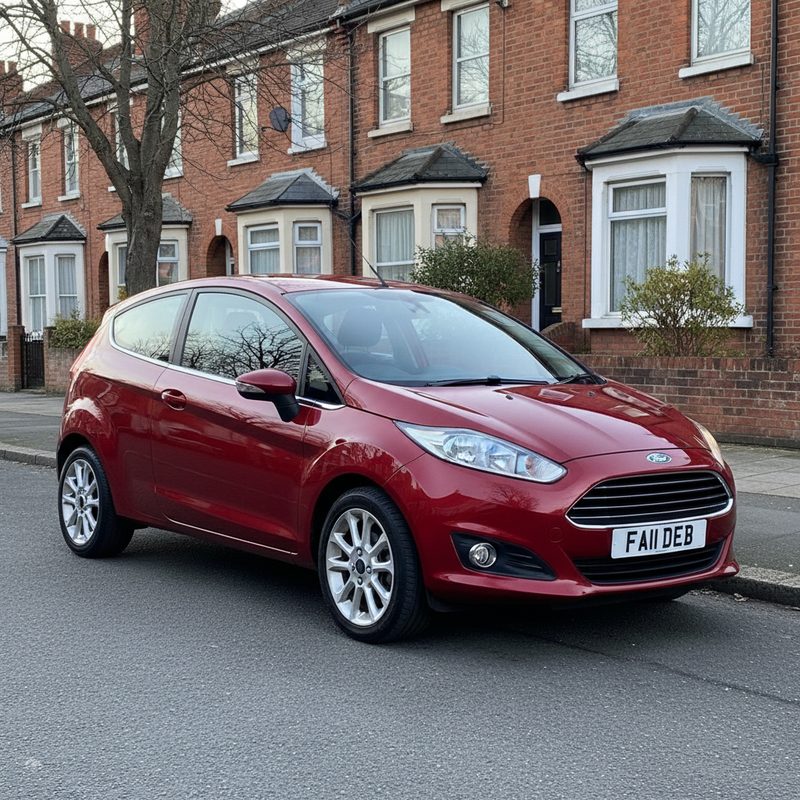
Ford Fiesta vs Vauxhall Corsa Reliability — MOT Data Compared
MOT data does not lie. Into pass rates, common advisories and real failure patterns to settle the Fiesta vs Corsa reliability debate once and for all.
Who Wins on Reliability?
Let me give you the headline first. The Ford Fiesta has a slight edge on reliability over the Vauxhall Corsa, but we are not talking about a chasm here. Both are solid, dependable superminis that will serve you well if they have been looked after. The difference shows up in MOT pass rates and the frequency of certain common faults, and it is the Fiesta that comes out a whisker ahead.
But here is the thing I always tell people -- the condition of the individual car matters far more than the badge on the bonnet. A well-maintained Corsa will outlast a neglected Fiesta every single time. So do not let reliability stats alone make your decision. Let them inform it.
MOT Pass Rates -- The Numbers That Matter
MOT data is one of the most honest sources of reliability information we have. These are not manufacturer claims or owner surveys with small sample sizes. This is data from millions of real tests on real cars.
The Ford Fiesta Mk7 (2008-2017) has a first-time MOT pass rate of around 80-83% at three years old. By the time it reaches five years, that drops to about 75-78%. The Mk8 Fiesta (2017 onwards) performs slightly better, with pass rates hovering around 83-86% at three years.
If you are weighing up alternatives, our guide to Kia e-Niro vs Hyundai Kona Electric covers similar ground from a different angle.
The Vauxhall Corsa Mk4 (2006-2014, updated to 2019) manages around 76-80% at three years and 70-75% at five years. The newer Mk5 Corsa (2019 onwards) is too young to have substantial long-term MOT data, but early indications are promising.
So the Fiesta consistently passes its MOT at a higher rate -- roughly 3-5 percentage points better across most age groups. That is a meaningful difference when you are looking at thousands of cars.
What Do They Fail On?
The most common MOT failure points for both cars are broadly similar -- this is typical of any supermini in this class:
For more on this topic, take a look at our Dacia Duster vs Suzuki Vitara guide.
If you are considering a Ford, you should also read our Used Ford Focus with 50k Miles guide for the full picture.
- Lighting: blown bulbs and misaligned headlamps (both cars equally)
- Tyres: worn below the legal limit or with damage (both cars equally)
- Suspension: worn bushes, drop links and shock absorbers (Corsa slightly worse)
- Brakes: worn pads, corroded discs and binding calipers (roughly equal)
- Emissions: catalyst efficiency and lambda sensor issues (Corsa slightly worse)
The Corsa tends to pick up more suspension-related advisories and failures, particularly around the front anti-roll bar drop links and lower wishbone bushes. These are not expensive fixes -- maybe £100-£200 at an independent garage -- but they do contribute to the lower pass rate.
Common Faults and Known Issues
Every car has its weak spots, and knowing what they are before you buy means you can check for them during a viewing. Here is what I see most often on each car.
You might also find our VW Golf vs BMW 1 Series guide useful alongside this one.
Our How Much to Offer on a Used Ford Fiesta guide covers another important aspect of owning this car.
Ford Fiesta Common Faults
Coolant leaks on 1.0 EcoBoost (2012-2014 models): This is the big one. Early versions of the EcoBoost engine had an issue where the coolant hose connections could fail, leading to overheating. Ford issued a recall and extended the warranty on affected components. If you are looking at an early EcoBoost, make sure this work has been done. Check the service history for evidence of coolant system repairs.
Door latch mechanism: Some Mk7 Fiestas had a recall for faulty door latches that could open unexpectedly. Again, most will have been sorted by now, but it is worth confirming with a quick check of the recall history.
Clutch judder: High-mileage Fiestas, particularly those used in stop-start city driving, can develop clutch judder. A new clutch is around £400-£600 fitted, so listen carefully during your test drive for any vibration or shuddering when pulling away.
Infotainment glitches: The SYNC system in Mk8 Fiestas can be temperamental. Screen freezes, Bluetooth dropouts, and slow responses are not uncommon. Annoying rather than serious, and often fixable with a software update.
Vauxhall Corsa Common Faults
Coil pack failure: This is the Corsa's Achilles heel, particularly on 1.2 and 1.4 engines. Symptoms include rough running, misfires, and the engine management light coming on. A new coil pack is £80-£150 fitted, but if it has not been addressed, it can lead to catalytic converter damage from unburnt fuel -- and that is a much bigger bill.
Thermostat housing leaks: The plastic thermostat housing on the 1.2 and 1.4 engines is known to crack and leak coolant. It is a £100-£200 fix, but if the coolant level drops without the owner noticing, overheating can follow. Check for coolant stains around the thermostat area.
Front suspension wear: As mentioned in the MOT section, the Corsa goes through front suspension components faster than average. Drop links, anti-roll bar bushes and lower wishbone bushes are the usual culprits. Budget for £150-£250 if they need doing.
Electric power steering issues: Some Mk4 Corsas suffer from intermittent power steering failure, accompanied by a warning light on the dashboard. This can be caused by a faulty steering column module, which is a £300-£500 repair. Test the steering thoroughly during your viewing -- turn lock to lock at low speed and feel for any inconsistency.
Water ingress: Older Corsas can suffer from water leaking into the boot area or footwells, usually through deteriorated seals. Check for damp carpets and a musty smell.
Long-Term Durability
Both cars are capable of covering 100,000 miles and beyond without major issues, provided they have been serviced regularly. The Fiesta's EcoBoost engine is particularly robust once you get past the early coolant issues -- I have seen plenty with 130,000-150,000 miles still running sweetly.
The Corsa's 1.4 engine is also a proven unit with a long track record. It is not as refined or efficient as the EcoBoost, but it is mechanically tough. The timing chain should last the life of the engine, which removes one of the biggest potential repair bills.
We have covered related ground in our Hyundai Ioniq vs Toyota Prius guide, which is worth reading if this subject interests you.
Gearboxes in both cars are generally reliable. The five-speed manual in each is a known quantity and rarely causes problems. I would avoid the automated manual (Easytronic) gearbox in the Corsa -- it is jerky, slow, and prone to actuator failures that cost £400-£700 to repair. Stick with the proper manual.
Recall History
Both cars have had recalls over the years, which is normal for any mass-produced vehicle. The important thing is whether the recalls have been actioned on the specific car you are looking at.
The Fiesta has had recalls for door latches, coolant system components, and airbag inflators (the Takata recall that affected many manufacturers). The Corsa has had recalls for steering issues, fuel leaks on some diesel models, and also the Takata airbag recall.
If things go wrong after purchase, Citizens Advice can help you understand your legal rights.
You can check whether a car has outstanding recalls using the DVLA's free recall checker. Do this before you buy -- it takes 30 seconds.
Dave's Reliability Verdict
The Fiesta is the slightly more reliable choice, backed up by better MOT pass rates and fewer common fault areas. But the Corsa is far from unreliable -- it is a solid car that has earned its place as one of the UK's best sellers.
The most reliable car is always the one that has been looked after. A full service history, evidence of recall work being completed, and a clean MOT record are worth more than any reliability survey.
The FCA has a useful guide to car finance that explains your rights and what to watch for.
Before you commit to either car, get a proper vehicle check done through Dave's service. It will flag outstanding recalls, finance agreements, write-off history, and mileage discrepancies. These are the hidden problems that no test drive will reveal, and they are the ones that will genuinely cost you money. Two minutes and a few quid is all it takes to buy with confidence.
Before choosing, check both models' MOT history on GOV.UK to compare real-world reliability. Look up insurance groups for both at Thatcham — the difference can be significant. Compare safety ratings at Euro NCAP. Check current market prices on AutoTrader to understand relative value. And verify any car's details using the DVLA vehicle enquiry service.
Check Ford Fiesta, instantly with Dave's free vehicle intelligence report.
Check whichever you're considering with Dave