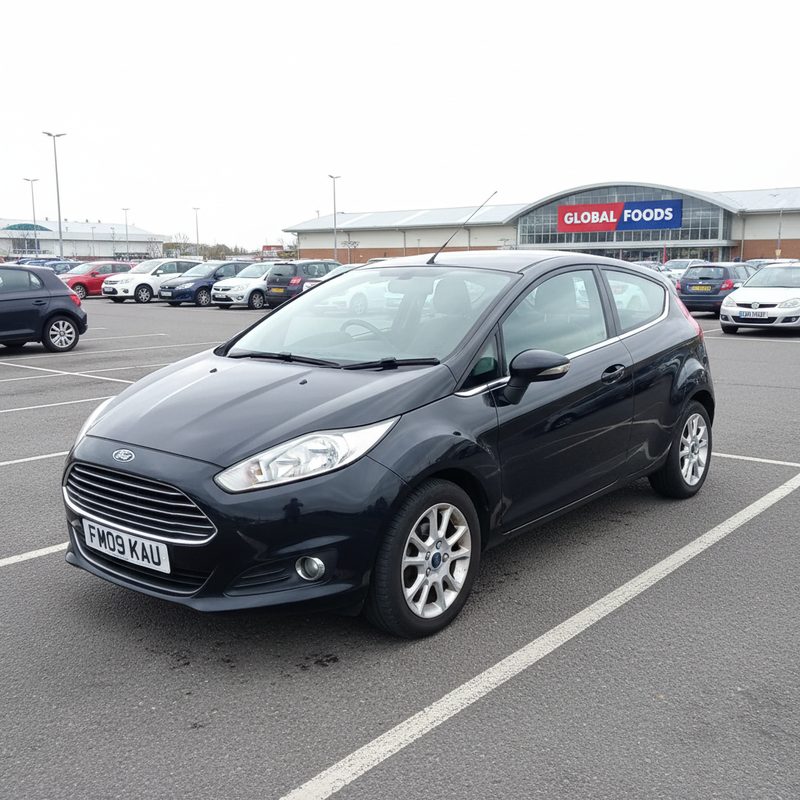
Ford Fiesta vs Vauxhall Corsa Used — Which Is Better Value?
Two of Britain's best-selling superminis go head to head. Which used car gives you more for your money - the Ford Fiesta or the Vauxhall Corsa.
Quick Verdict -- Which One Wins on Value?
Right, let me save you some scrolling if you are in a rush. The Ford Fiesta is generally the better value used buy, but it is not a landslide. Fiestas hold their value a touch better, which means you pay slightly more upfront, yet you also lose less when you come to sell. The Corsa is cheaper to buy into, particularly the older models, but it depreciates a bit harder. Both are sensible used purchases -- but the Fiesta edges it for overall value across most model years.
That said, if you are after a bargain basement runabout and you are not fussed about resale, the Corsa can save you a few hundred quid on day one. Swings and roundabouts, as they say.
Purchase Prices on the Used Market
Let me throw some real-world numbers at you. A 2017-2019 Ford Fiesta 1.0 EcoBoost in Zetec trim will typically set you back between £7,500 and £10,000 depending on mileage. The equivalent Vauxhall Corsa -- say a 2017-2019 1.4 SRi or Design -- tends to sit around £6,000 to £8,500.
If you are weighing up alternatives, our guide to Mazda CX-5 vs Hyundai Tucson covers similar ground from a different angle.
So the Corsa is cheaper to get into, no question. But here is where it gets interesting. A three-year-old Fiesta retains roughly 55-60% of its original value, while the Corsa holds around 45-52%. That gap matters if you plan on changing your car every few years.
For the newer models -- the Mk8 Fiesta (2017 onwards) and the Mk5 Corsa (2019 onwards) -- the price gap narrows considerably. The latest Corsa, built on the same platform as the Peugeot 208, is a much-improved car, and used prices reflect that. You will find both sitting in the £10,000 to £14,000 bracket for low-mileage examples.
For more on this topic, take a look at our Skoda Octavia vs Toyota Corolla guide.
What About Older Models?
If you are shopping under £5,000, the Mk7 Fiesta (2008-2017) and the Mk4 Corsa (2006-2014) are your hunting ground. Here, the Corsa is notably cheaper -- you can pick one up for as little as £1,500 to £2,500 for a decent runner. Fiestas of the same era sit a bit higher at £2,000 to £4,000. The Fiesta commands the premium because it has a better reputation for driving dynamics and reliability, which keeps demand strong.
Running Costs Compared
Running costs are where these two are remarkably close. Neither is going to bankrupt you, which is partly why they are the two most popular superminis in the country.
You might also find our Dacia Duster vs Suzuki Vitara guide useful alongside this one.
Insurance
insurance groups are similar across both ranges. A Fiesta 1.0 EcoBoost Zetec sits in groups 10-12, while a Corsa 1.4 Design falls into groups 8-11. For younger drivers, the Corsa can be marginally cheaper to insure, which is one reason it remains so popular with first-time buyers. The difference might be £100-£200 a year depending on your postcode and driving history, so it is worth getting quotes for both.
Fuel Economy
The Fiesta's 1.0 EcoBoost three-cylinder is one of the best small engines ever made. You will realistically see 45-50 mpg in mixed driving, and some owners report over 55 mpg on a long motorway run. The Corsa's 1.4 naturally aspirated engine is decent but not quite as frugal -- expect 38-44 mpg in the real world.
We have covered related ground in our Skoda Octavia vs Honda Civic guide, which is worth reading if this subject interests you.
If you are considering a Ford, you should also read our How Much to Offer on a Used Ford Focus guide for the full picture.
The newer Corsa with the 1.2 PureTech turbo engine (shared with Peugeot) closes the gap nicely, returning around 45-50 mpg. So if you are looking at post-2019 models, fuel costs are essentially a draw.
You can check any car's full MOT history for free on GOV.UK before arranging a viewing.
Servicing and Maintenance
Both cars are cheap to service. You are looking at £150-£200 for a basic service at an independent garage, and parts are plentiful and affordable for both. The Fiesta's EcoBoost engine does need its timing belt changed at around 10 years or 125,000 miles, which is a £350-£500 job. The Corsa's 1.4 uses a timing chain, which should last the life of the engine -- one less thing to worry about.
Tyres, brakes, and other consumables are broadly the same price for both cars. Neither one is going to catch you out with unexpected costs, provided you keep on top of the servicing schedule.
The FCA has a useful guide to car finance that explains your rights and what to watch for.
Depreciation -- Where Your Money Really Goes
This is the bit most people forget about, and it is often the single biggest cost of owning a car. As I mentioned earlier, the Fiesta holds its value better. Over three years of ownership, you might lose £4,000-£5,000 on a Fiesta versus £5,000-£6,500 on a Corsa, assuming average mileage.
Buying either car at around the three to four-year mark is the sweet spot for value. The steepest depreciation has already happened, but the car is still young enough to be reliable and modern. This is the window where you get the most car for your money with either model.
If you are buying an older car -- say six years plus -- depreciation becomes almost irrelevant. Both cars flatten out in value, and you are essentially paying for fuel, insurance, and the odd repair. At this point, whichever one you can find in better condition with a fuller service history is the one to go for.
Practicality and Everyday Usability
Neither of these cars is going to win any awards for boot space, but they are both perfectly adequate for daily life. The Fiesta offers 292 litres of boot space in Mk8 form, while the latest Corsa manages 309 litres. In the real world, that difference is negligible -- we are talking about one extra shopping bag.
Rear legroom is tight in both, particularly for taller passengers. The Corsa is marginally more accommodating in the back, but I would not want to do a long journey in either if I was over six foot. These are cars designed for a driver and one passenger, with occasional use of the rear seats.
The Fiesta has the better driving position and a more intuitive dashboard layout, particularly in Mk8 form. The Corsa has caught up significantly with the Mk5 model, which has a much-improved interior, but the Fiesta still feels a notch more polished.
Dave's Final Call
Here is how I would break it down depending on your situation:
First-time buyer on a budget? Go Corsa. It is cheaper to buy and insure, and you will find more of them available at the lower end of the market. Just make sure you get one with a full service history.
Commuter who wants the best drive? The Fiesta wins hands down. The EcoBoost engine is brilliant, the handling is sharp, and it makes a mundane commute genuinely enjoyable. The fuel economy is better too, which adds up over thousands of miles.
Family runabout or second car? Honestly, either will do the job. I would lean towards whichever one you can find in the best condition with the lowest mileage for your budget. Neither car has any glaring weaknesses as a practical runaround.
Buying to sell in a couple of years? Fiesta, without question. The stronger residual values mean you will get more of your money back when you move on.
Whichever way you are leaning, do yourself a favour and get a proper vehicle check before you hand over any cash. A history check will flag outstanding finance, write-off status, mileage discrepancies, and stolen markers -- all the stuff that can turn a bargain into a nightmare. Use Dave's vehicle check tool and go in with your eyes open. It takes two minutes and could save you thousands.
Check Ford Fiesta, instantly with Dave's free vehicle intelligence report.
Check whichever you're considering with Dave