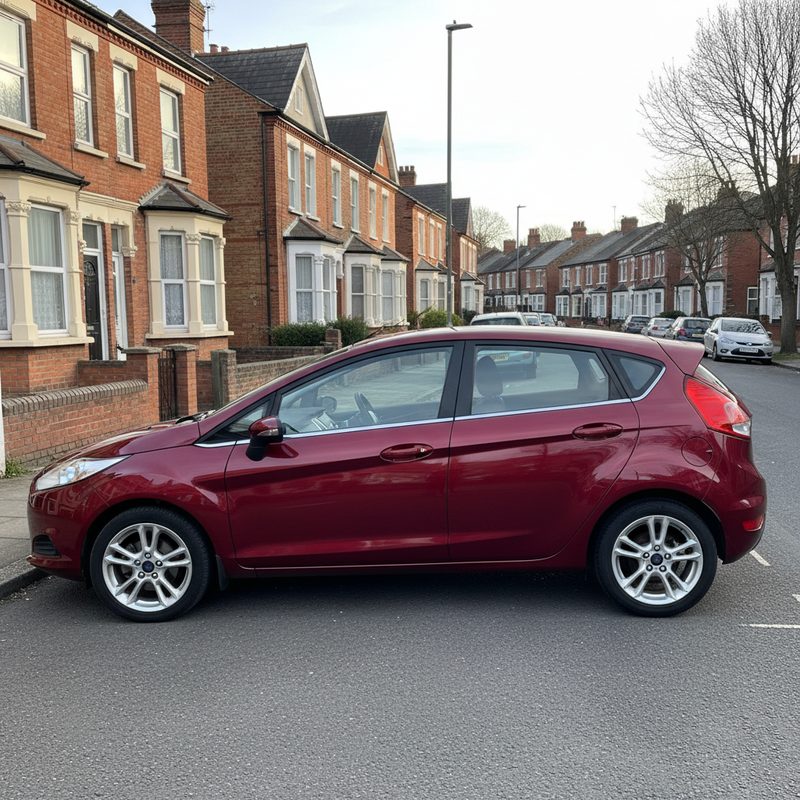
Used Ford Fiesta with 100k Miles — Worth the Risk?
One hundred thousand miles is a big number, but the Fiesta was built for exactly this kind of work. The question is whether the previous owners kept up their end of the bargain.
What to Expect from a Ford Fiesta at 100,000 Miles
Let me level with you. A six-figure mileage scares a lot of buyers off, and honestly, that works in your favour if you know what to look for. A Ford Fiesta with 100,000 miles on it can be an absolute steal -- or it can be a rolling money pit. The difference comes down to maintenance history and a bit of mechanical sympathy.
At 100k, a Fiesta has done proper service. It has been somebody's daily driver for years, pounding up and down motorways, sitting in rush-hour traffic, doing the school run, and everything in between. The engine will have found its rhythm. The gearbox will be well bedded in. And yes, plenty of things will be worn or approaching the end of their life. That is just physics.
The Fiesta's big advantage at this mileage is simplicity. These are not complicated cars. They do not have fancy air suspensions or delicate turbo systems (well, the EcoBoost has a turbo, but it is a robust little unit). When things wear out, they are cheap to fix. That is the whole point of buying a Fiesta -- the running costs stay low even as the miles pile up.
Components That Will Almost Certainly Need Attention
At 100,000 miles, I am not talking about things that might need doing. I am talking about things that almost certainly will need doing, if they have not been done already.
The Clutch Is Living on Borrowed Time
If the clutch has not been replaced by 100,000 miles, it is due. Full stop. On a petrol Fiesta, a clutch replacement will cost around £400-£600. On a diesel with a dual-mass flywheel, you are looking at £800-£1,100. Before you buy, test the clutch ruthlessly. Put it in fourth gear at 30 mph and floor it. If the revs climb but the speed does not follow, the clutch is slipping. Walk away unless the price reflects a clutch replacement.
Timing Belt on EcoBoost Models
The 1.0 EcoBoost has a timing belt (not a chain, despite what some sellers will tell you). Ford's interval is 125,000 miles or 10 years, whichever comes first. At 100k, that belt is getting old. If the car is also approaching 10 years of age, a belt change is due regardless of mileage. Budget £350-£500 for a timing belt and water pump replacement. If it snaps, the engine is scrap. Do not gamble on this one.
Suspension Overhaul
At 100,000 miles, expect the front shock absorbers to be tired. The car will feel floaty over bumps and might wander at motorway speeds. Front springs can also snap on high-mileage Fiestas, particularly around the top coil. A full front suspension refresh -- shocks, springs, drop links, bushes, and top mounts -- will cost around £400-£600 fitted. The rears are simpler and cheaper but might need attention too.
Wheel Bearings All Round
Fiesta wheel bearings, particularly the rears, are a known weak point. At 100k, there is a strong chance at least one or two bearings have been replaced already. If you can hear any droning or humming that changes with speed, that is a bearing on its way out. Budget £150-£200 per corner.
Exhaust System
The exhaust system on a 100k Fiesta will likely need some attention. The back boxes on Mk7 Fiestas are known to rust through, and the flexi joint on the front pipe can crack. A full exhaust replacement is around £300-£500 depending on the system. On diesel models, the DPF is a bigger concern -- a replacement DPF can cost £500-£800, and at 100k it might be getting blocked if the car has done mostly short journeys.
Is the Price Right at 100,000 Miles?
Here is the beautiful thing about a 100k Fiesta -- they are cheap. A 2016 Fiesta 1.0 EcoBoost Zetec with 100,000 miles might be priced at £4,500-£6,500 at a dealer. Privately, you could find one for £3,500-£5,000. Compare that to the same car at 50k (£9,000+) and you can see the appeal.
But -- and this is a big but -- you need to factor in the work that is due. If you are buying a 100k Fiesta and you need to do a clutch (£500), timing belt (£400), and front suspension refresh (£500), that is £1,400 before you have even filled the tank. Suddenly that cheap purchase price does not look quite so clever.
My advice at this mileage is to buy one that has already had the major work done. A Fiesta with a new clutch at 85k, a timing belt at 90k, and fresh shocks at 95k is worth significantly more than one that has had nothing done. Look for receipts and insist on seeing them.
If the car has not had the work done, negotiate accordingly. Take the asking price and deduct the cost of the items that need addressing. Most sellers at this mileage know they are not sitting on gold and will be flexible.
Red Flags in the MOT history at This Mileage
At 100,000 miles, the MOT history tells a story spanning many years. Read it carefully.
Critical Failures to Watch For
- Structural corrosion -- Any MOT failure for structural rust is a major concern. At 100k, a Fiesta should not have structural issues unless it has been neglected or lived in a coastal area. If you see this, walk away.
- Brake line corrosion -- Corroded brake lines are dangerous and expensive to replace properly. If the MOT mentions brake pipe corrosion as an advisory, it will likely become a failure at the next test.
- Suspension component failures -- Repeated suspension failures over multiple MOTs suggest the car has been driven hard on poor roads. The components might have been replaced with cheap pattern parts that wear out quickly.
The Mileage Pattern
At 100k, the MOT history should show a steady, consistent climb in mileage. Average out the annual mileage and check it makes sense. A car that supposedly did 5,000 miles a year for eight years and then suddenly covered 60,000 miles in two years has almost certainly been clocked at some point. The numbers must add up.
Advisory Trends
Look at what has been an advisory and whether it was subsequently fixed. A car that carries the same advisory for three years running has an owner who did not care about maintenance. That tells you everything you need to know about how the car has been treated.
Hidden Costs of a 100k Fiesta
Beyond the obvious mechanical items, there are some costs that catch people out at this mileage.
- Air conditioning regas: The A/C system will likely need regassing and might have a slow leak. Budget £50-£80 for a regas or £200+ if there is a leak to fix.
- Interior wear: Seats, steering wheels, and gear knobs will be worn. Replacement seat covers or a steering wheel cover might be wanted.
- Paint and bodywork: Stone chips, car park dents, and fading paint are inevitable at 100k. A smart repair might cost £100-£200 per panel.
- Battery: If the battery has not been replaced, it is almost certainly on its last legs. A decent battery is £80-£120.
Dave's Verdict -- Worth the Risk or Walk Away?
A 100,000-mile Ford Fiesta can be a brilliant buy, but only if you go in with realistic expectations. This is not a car you buy and forget about. This is a car you buy knowing it needs attention, and you budget accordingly.
The ideal 100k Fiesta has a complete service history with major items already addressed, consistent MOT mileage with no discrepancies, and an owner who can talk knowledgeably about the car's maintenance. If you find one like that, snap it up. It will give you another 50,000 miles of cheap, reliable motoring.
The 100k Fiesta to avoid is the one with a patchy history, MOT advisories that have never been addressed, and a price that seems too good to be true. At this mileage, cheap usually means expensive in the long run.
Do the smart thing before you buy -- run the registration through Dave's vehicle check. At 100,000 miles, you absolutely must verify the mileage history is genuine. My check cross-references every MOT reading to make sure nothing has been tampered with. It also checks for outstanding finance, insurance write-offs, and plate changes. Five minutes and a few quid could save you thousands. That is a trade I will make every single time.
Check Ford Fiesta, instantly with Dave's free vehicle intelligence report.
Check the MOT mileage history with Dave