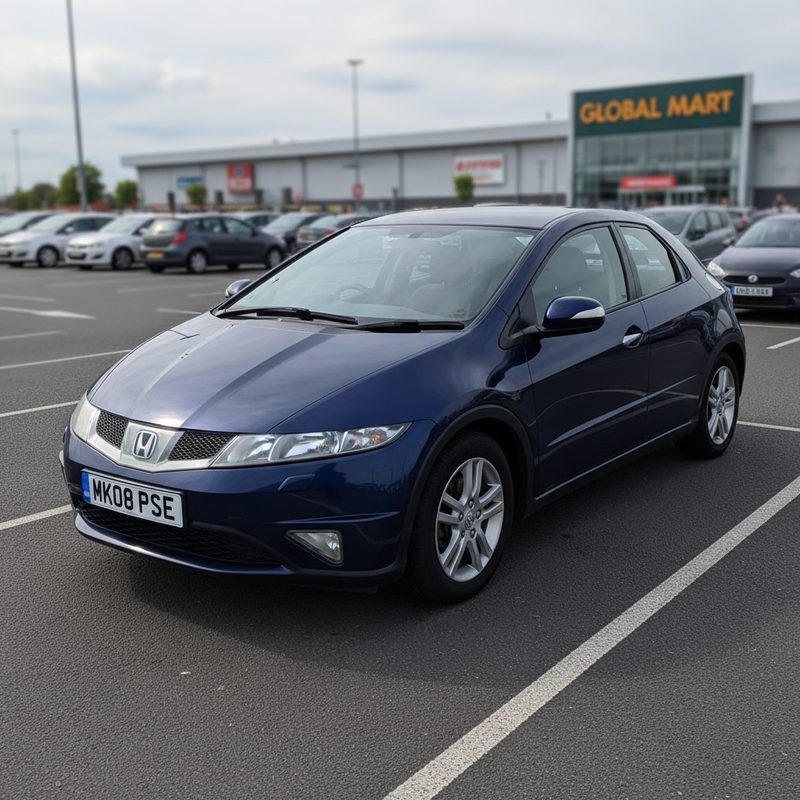
2008 Honda Civic 8th Gen: Reliable Hatch with a Difference
Honda built the 8th-gen Civic to last, and the data proves it. Even at 17 years old, this hatchback beats the national MOT failure average. The catch? Parts cost more than you expect.
Built to Last: And It Shows in the Data
The Honda Civic 8th generation (2006 to 2011) was a bold design statement with its dramatic split rear window, futuristic layered dashboard, and science-fiction interior styling that still looks distinctive today. More importantly beneath the striking bodywork, it was built to Honda's exacting reliability standards using engineering that was a generation ahead of most European competitors. At £2,000 to £4,000 for a 2008 model, it offers Japanese dependability in a practical five-door hatchback that still looks distinctive rather than dated, a rare quality in a 17-year-old car.
At 17 years old, the national average MOT failure rate exceeds 39%. The 8th-gen Civic consistently beats this average by a significant margin, and Honda's engineering quality advantage is clearly measurable in the MOT data. Where competitors from Ford, Vauxhall, and Volkswagen begin to develop electrical gremlins, engine sensor failures, and structural issues at this age, the Civic tends to need only routine wear items, brakes, suspension bushes, and exhaust components.
Engine Choices: Both Are Excellent
1.8 i-VTEC (140 bhp): The One to Buy
The 1.8-litre i-VTEC petrol is the standout engine in the 8th-gen Civic range. It uses a timing chain that requires no scheduled replacement, meaning you can forget about the £350 to £500 belt change that hangs over most rivals. The i-VTEC variable valve timing system provides a surprisingly broad powerband, the engine pulls cleanly from low revs for relaxed commuting but rewards higher revs with a sporty, engaging delivery that makes the car genuinely enjoyable to drive. It returns 38 to 44 mpg in mixed driving and sits in insurance groups 13 to 17.
The 1.8 i-VTEC is one of the most reliable naturally aspirated petrol engines of its era. These units regularly exceed 150,000 miles and more without needing any major internal work. There are no known significant design faults with the engine itself. If you find a 1.8 i-VTEC with a full service history showing regular oil changes, you can buy it with genuine confidence.
2.2 i-CDTi (140 bhp): Diesel Durability Champion
The 2.2-litre diesel is Honda's own engine, crucially, it was not outsourced to a third-party manufacturer as many competitors did during this era. Honda designed and built this diesel engine themselves, and the quality difference shows. It returns 48 to 55 mpg in mixed driving and sits in insurance groups 15 to 19. Like the 1.8 petrol, it uses a timing chain rather than a belt. The 2.2 i-CDTi is remarkably durable and regularly exceeds 200,000 miles without major issues. A DPF is fitted to all models, requiring regular motorway driving for regeneration.
1.4 i-DSI (83 bhp): Economy Focused but Limited
The 1.4 is adequate for urban driving but feels genuinely underpowered on motorways, particularly with passengers. It returns 44 to 50 mpg and sits in insurance groups 8 to 11. The timing chain is reliable. However, the fuel saving over the 1.8 is marginal in real-world driving, typically only 3 to 5 mpg difference, and the performance gap is enormous. For most buyers, the 1.8 i-VTEC is the significantly better car to live with daily.
Known Faults: Less Than Most, But Not Zero
Air Conditioning Compressor Failure
The A/C compressor is the 8th-gen Civic's Achilles heel and the single most commonly reported fault across all engine variants. The compressor fails, producing no cold air, and may make a clicking or grinding noise from the engine bay when the A/C button is pressed. Replacement costs £400 to £700 including refrigerant recharge. This is a frustrating failure because it is not cheap to fix and it affects comfort significantly during summer months. Always test the air conditioning thoroughly during any viewing, the A/C should produce noticeably cold air within 30 seconds of being switched on. If it does not, factor the repair cost into your offer.
Rear Shock Absorber Mounts
The rear upper shock absorber mounts deteriorate from around 60,000 miles onwards. Symptoms include clunking or banging from the rear when driving over bumps, and uneven rear tyre wear that indicates the shock absorbers are no longer controlling wheel movement correctly. Our component lifespan data shows shock absorbers typically last 50,000 to 100,000 miles, and on the 8th-gen Civic, the rubber mounts that connect the shocks to the body often fail before the dampers themselves. Budget MOT history for any exhaust emissions advisories on diesel models.
Paint Quality on Darker Colours
Honda's paintwork on this generation was not the most durable. Silver and white cars tend to be fine, but darker colours, particularly black and dark blue, can develop fading, clouding, and oxidation on horizontal panels like the bonnet and roof. This is entirely cosmetic and does not affect reliability or safety, but it does affect the car's appearance and resale value. Factor in £200 to £400 for a paint correction or respray of affected panels if appearance matters to you.
Excellent Rust Resistance
The Civic 8th gen has significantly better rust resistance than most competitors of the same age. Honda galvanised the body panels thoroughly during manufacture. Check the standard areas, wheel arches, sill edges, and 25,000: 50,000 miles at £90 to £220 per axle. Brake discs last 50,000 to 80,000 miles at £150 to £350 per axle. Annual fuel costs for the 1.8 i-VTEC at 10,000 miles per year are approximately £1,300 to £1,600. Total annual running costs are typically £2,000 to £3,000.
The Verdict
The 8th-gen Civic is one of the most reliable used cars you can buy at any price, let alone in the £2,000 to £4,000 bracket. The 1.8 i-VTEC manual is the pick of the range. It is genuinely fun to drive, it uses a maintenance-free timing chain, it resists corrosion better than almost any competitor, and it consistently beats MOT failure averages by a significant margin. The 2.2 i-CDTi is equally dependable for high-mileage drivers and will comfortably exceed 200,000 miles with basic maintenance.
Budget slightly more for parts than you would for a Focus or Astra, but budget significantly less for unexpected failures. The Honda will not surprise you with a catastrophic engine failure, a mystery electrical gremlin, or a gearbox that disintegrates at 80,000 miles. Check that the A/C works, inspect the rear suspension for clunking, verify the MOT history, and confirm the DVLA vehicle details.
Useful links: Honest John review · AutoTrader search · Euro NCAP rating · What Car? review