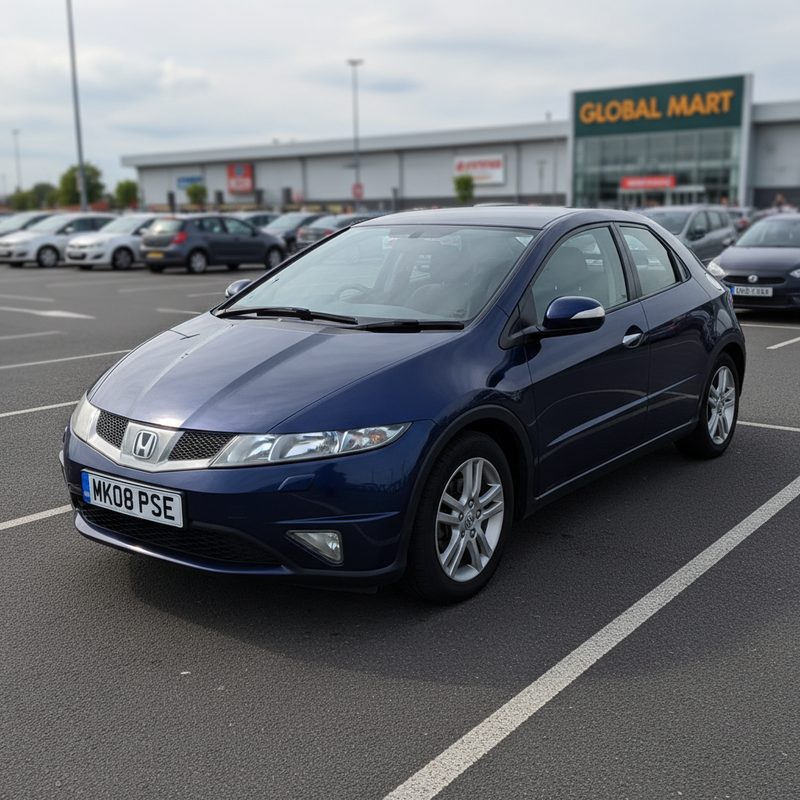
Honda Civic vs Toyota Corolla Reliability: MOT Data Compared
This guide compares the reliability of the Honda Civic and Toyota Corolla using MOT data, helping you make an informed decision on your next used car purchase.
The Honda Civic and Toyota Corolla are two of the most popular compact cars on the market, known for their reliability and practicality. When it comes to reliability, the Toyota Corolla edges out the Honda Civic, boasting a higher MOT pass rate of 79.9% compared to the Civic's 78.2%. This difference, while seemingly small, can indicate a more dependable vehicle in the long run, especially when considering common failure points and overall maintenance costs.
Key facts
- Honda Civic MOT pass rate: 78.2% based on 63,446 DVSA MOT tests.
- Toyota Corolla MOT pass rate: 79.9% based on 16,687 DVSA MOT tests.
- Common failure areas for Civic: Tyres (23.2%), Brakes (23%), Suspension (16%).
- Common failure areas for Corolla: Brakes (27.2%), Tyres (19%), Lights (15.9%).
- Best years for Civic: 2019 (10.3% fail rate), 2017 (10.7%).
- Best years for Corolla: 2019 (10.6% fail rate), 2001 (19.3%).
Running Costs Compared
When evaluating the running costs of the Honda Civic and Toyota Corolla, several factors come into play, including insurance groups, fuel efficiency, servicing costs, and tyre prices. Both vehicles are known for their economical operation, but there are subtle differences that can affect your wallet.
Insurance Groups
Insurance costs can vary significantly between models and years. The Honda Civic typically falls into insurance groups ranging from 10 to 20, depending on the variant. In contrast, the Toyota Corolla generally sits in a slightly lower range, often between groups 8 and 18. This means that if insurance costs are a primary concern, the Corolla may be the more budget-friendly option.
Fuel Efficiency
Fuel economy is another critical aspect of running costs. The Honda Civic, particularly the 1.0 VTEC model, can achieve around 50 to 55 miles per gallon (MPG) in real-world driving conditions. The Toyota Corolla, on the other hand, often delivers slightly better fuel efficiency, averaging around 55 to 60 MPG, especially in hybrid variants. This difference can lead to significant savings over time, particularly for those who do a lot of commuting.
Servicing and Maintenance
Both cars have a reputation for reliability, which translates into lower servicing costs. However, the Civic's more complex engine options can sometimes lead to higher maintenance costs, especially for turbocharged models. Typical servicing costs for the Civic can range from £150 to £300 annually, while the Corolla often sees lower costs, averaging between £120 and £250.
Tyre Prices
Tyre prices can vary based on the size and type required for each vehicle. Generally, the Civic may require slightly more expensive tyres due to its performance-oriented variants, while the Corolla tends to have more affordable options. Expect to pay around £60 to £100 per tyre for the Civic and £50 to £90 for the Corolla.
| Feature | Honda Civic | Toyota Corolla |
|---|---|---|
| Insurance Group Range | 10 - 20 | 8 - 18 |
| Real-World MPG | 50 - 55 | 55 - 60 |
| Annual Servicing Cost | £150 - £300 | £120 - £250 |
| Tyre Price Range | £60 - £100 per tyre | £50 - £90 per tyre |
Reliability Compared
Reliability is often the deciding factor for buyers looking at the Honda Civic and Toyota Corolla. Both cars have strong reputations, but the MOT data reveals some interesting insights into their reliability profiles.
MOT Pass Rates
The Honda Civic has an MOT pass rate of 78.2%, based on 63,446 tests, while the Toyota Corolla boasts a higher pass rate of 79.9% from 16,687 tests. This indicates that the Corolla is statistically more likely to pass its MOT than the Civic, which can be a significant consideration for buyers prioritising reliability.
Common Failure Points
Understanding the common failure points can also help you make an informed decision. For the Honda Civic, the most frequent issues arise from:
- Tyres: 23.2% of defects and advisories
- Brakes: 23% of defects and advisories
- Suspension: 16% of defects and advisories
- Lights: 15.5% of defects and advisories
- Windscreen: 4.5% of defects and advisories
In contrast, the Toyota Corolla shows a different pattern:
- Brakes: 27.2% of defects and advisories
- Tyres: 19% of defects and advisories
- Lights: 15.9% of defects and advisories
- Suspension: 12.9% of defects and advisories
- Corrosion: 5.3% of defects and advisories
The Civic's higher percentage of tyre and brake-related issues suggests that these areas may require more attention and maintenance. If you're considering a used model, it's wise to check the condition of these components closely.
Mileage Fail Rates
Mileage is another critical factor in reliability. The Civic's fail rates by mileage are as follows:
- Under 40,000 miles: 12%
- 40,000 to 80,000 miles: 20.7%
- 80,000 to 120,000 miles: 28.7%
- Over 120,000 miles: 33.4%
For the Corolla, the fail rates are slightly better:
- Under 40,000 miles: 11.4%
- 40,000 to 80,000 miles: 19.9%
- 80,000 to 120,000 miles: 26.4%
- Over 120,000 miles: 29.1%
These figures indicate that both vehicles become more prone to failure as mileage increases, but the Corolla maintains a slight edge in lower fail rates across all mileage bands.
Practicality Compared
When it comes to practicality, both the Honda Civic and Toyota Corolla offer ample space and comfort, but they cater to slightly different needs.
Boot Space
The Honda Civic typically offers around 478 litres of boot space, making it a solid choice for families or those needing extra cargo capacity. The Toyota Corolla, while slightly smaller, still provides a respectable 371 litres, which is sufficient for everyday use but may fall short for larger loads.
Rear Legroom
Rear legroom is another important consideration, especially for families. The Civic generally provides more rear legroom, making it more comfortable for taller passengers. The Corolla, while still decent, may feel a bit cramped on longer journeys.
Infotainment and Safety Kit
Both cars come equipped with modern infotainment systems, but the Civic often features a more advanced setup with larger screens and more intuitive interfaces. Safety is also a strong point for both, with both models typically coming with a range of airbags, stability control, and advanced driver assistance systems. However, the Corolla tends to have slightly better safety ratings in various crash tests, making it a safer option overall.
| Feature | Honda Civic | Toyota Corolla |
|---|---|---|
| Boot Space (litres) | 478 | 371 |
| Rear Legroom | More spacious | Adequate |
| Infotainment System | Advanced, larger screen | Standard, user-friendly |
| Safety Ratings | Good | Excellent |
Value for Money
In terms of value for money, both the Honda Civic and Toyota Corolla have their strengths. The Civic tends to depreciate faster than the Corolla, which can be advantageous for buyers looking for a bargain on a used model. However, the Corolla's slower depreciation means it holds its value better over time.
Depreciation Curves
The Civic's depreciation curve is steeper, particularly in the first few years, which can make it a more affordable option on the used market. In contrast, the Corolla tends to retain its value better, making it a smart investment for those who plan to keep their car for several years.
Sweet-Spot Age to Buy
For the Civic, the best years to buy used are typically around 2019, where the fail rate drops to just 10.3%. For the Corolla, the same year also stands out with a fail rate of 10.6%. This indicates that both models from 2019 are solid choices, but the Civic may offer better value due to its lower initial purchase price.
Dave's Final Call
Choosing between the Honda Civic and Toyota Corolla ultimately comes down to your specific needs and preferences. If you're after a car with slightly better reliability and lower running costs, the Toyota Corolla is the way to go. Its higher MOT pass rate and lower common failure points make it a dependable choice for everyday driving.
However, if you prefer a more spacious interior and a more advanced infotainment system, the Honda Civic could be your best bet. It offers a more engaging driving experience and better boot space, which can be a deciding factor for families.
In conclusion, both cars have their merits, and your choice should reflect your priorities. For those prioritising reliability and lower running costs, the Corolla stands out. For those who value space and technology, the Civic shines. Whichever you choose, make sure to check the specific model's history with a CarBuyerIQ Vehicle Check to ensure you're making a sound investment. Enter the car's registration to start with a free check today.