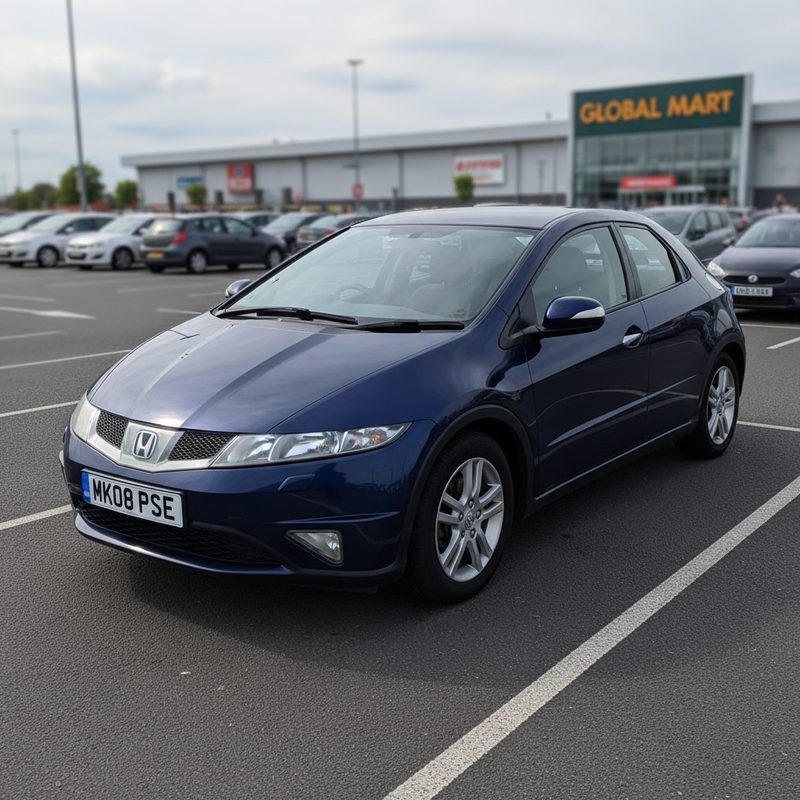
Honda Civic vs Toyota Corolla Used: Which Is Better Value?
Deciding between a used Honda Civic and a Toyota Corolla? This guide compares both models to help you make an informed choice.
Quick Verdict
When it comes to choosing between a used Honda Civic and a Toyota Corolla, the decision often boils down to personal preference and specific needs. The Honda Civic tends to offer a sportier driving experience with a more dynamic design, while the Toyota Corolla is renowned for its reliability and practicality. If you value a fun drive and modern aesthetics, the Civic might be your best bet. However, if you prioritise dependability and fuel efficiency, the Corolla could be the better value.
Running Costs Compared
Understanding the running costs of both vehicles is crucial for any potential buyer. This includes insurance groups, real-world fuel economy, servicing costs, and tyre prices. Below is a comparison of the two models based on these factors.
Insurance Groups
The insurance group can significantly impact your overall running costs. Generally, the Honda Civic falls into a slightly higher insurance group compared to the Toyota Corolla. For instance, the Civic typically ranges from group 15 to 30, while the Corolla usually sits between group 10 to 25. This means that for younger drivers or those with less driving experience, the Corolla might be a more budget-friendly option.
Real-World MPG
Fuel efficiency is another critical aspect to consider. The Honda Civic, especially the 1.0-litre turbocharged model, can achieve around 50 to 55 miles per gallon (MPG) in real-world conditions. On the other hand, the Toyota Corolla, particularly the hybrid variant, can reach up to 60 to 70 MPG, making it an excellent choice for those who do a lot of city driving or long commutes.
Servicing Costs
Both vehicles are relatively affordable to maintain, but there are some differences. The Honda Civic often requires more frequent servicing, particularly if you opt for the sportier variants. Expect to pay around £250 to £350 for a full service. The Toyota Corolla, with its simpler engine options, may cost slightly less, averaging around £200 to £300 for a full service.
Tyre Prices
Tyre prices can vary based on the model and size. Generally, the Civic may require slightly larger tyres, which can cost more. For example, a set of tyres for the Civic could range from £400 to £600, while for the Corolla, you might find a set for £350 to £500.
| Aspect | Honda Civic | Toyota Corolla |
|---|---|---|
| Insurance Group | 15 to 30 | 10 to 25 |
| Real-World MPG | 50 to 55 | 60 to 70 |
| Servicing Costs | £250 to £350 | £200 to £300 |
| Tyre Prices | £400 to £600 | £350 to £500 |
Reliability Compared
Reliability is a significant factor when considering a used car. Both the Honda Civic and Toyota Corolla have strong reputations, but there are nuances worth noting.
MOT Pass Rates
According to recent data, the Honda Civic boasts an impressive MOT pass rate of around 85%. In contrast, the Toyota Corolla has a slightly higher pass rate, often reaching 90%. This suggests that Corollas tend to have fewer issues that require attention before an MOT.
Common Failure Points
The Civic is known for its robust build, but some models have reported issues with the suspension and electrical systems, particularly in older versions. The Corolla, on the other hand, has fewer reported issues, with most problems arising from wear and tear rather than manufacturing defects. Common failure points include brake wear and battery issues, which are generally easy and inexpensive to fix.
What Actually Breaks
In real-world scenarios, Civics may experience more engine-related issues as they age, particularly if they have been driven hard. The Toyota Corolla, however, is often praised for its longevity, with many owners reporting that their vehicles have exceeded 200,000 miles with minimal problems. This reliability can make the Corolla a more attractive option for buyers looking for a dependable daily driver.
| Aspect | Honda Civic | Toyota Corolla |
|---|---|---|
| MOT Pass Rate | 85% | 90% |
| Common Failure Points | Suspension, electrical | Brake wear, battery issues |
| Longevity | 150,000 miles average | 200,000 miles average |
Practicality Compared
When it comes to practicality, both the Honda Civic and Toyota Corolla have their strengths. This section will delve into boot space, rear legroom, infotainment systems, and safety features.
Boot Space
The Honda Civic offers a boot space of approximately 478 litres, which is quite generous for a compact car. This makes it suitable for families or those who frequently carry larger items. The Toyota Corolla, while slightly smaller, still provides a respectable boot space of around 361 litres. If you often find yourself needing to transport bulky items, the Civic has the edge here.
Rear Legroom
In terms of rear legroom, the Civic again takes the lead, providing ample space for adult passengers. The rear seats are comfortable, making long journeys more enjoyable. The Corolla, while still offering decent legroom, may feel a bit cramped for taller passengers, particularly on longer trips.
Infotainment Systems
Both vehicles come equipped with modern infotainment systems, but there are differences in user experience. The Honda Civic features a more intuitive touchscreen interface, which many users find easier to navigate. The Corolla's system is functional but can be less responsive at times. If tech-savviness is a priority, the Civic may appeal more to you.
Safety Features
Safety is paramount, and both cars excel in this area. The Civic typically comes with advanced safety features, including lane-keeping assist and adaptive cruise control. The Corolla also offers a suite of safety technologies, including Toyota's Safety Sense package, which includes pre-collision systems and pedestrian detection. Both cars have received high safety ratings, making either a safe choice.
| Aspect | Honda Civic | Toyota Corolla |
|---|---|---|
| Boot Space | 478 litres | 361 litres |
| Rear Legroom | Ample for adults | Decent but slightly cramped |
| Infotainment System | Intuitive touchscreen | Functional but less responsive |
| Safety Features | Advanced safety tech | Toyota Safety Sense |
Value for Money
Value for money is a crucial consideration when purchasing a used vehicle. This section will explore depreciation curves, which model holds value better, and the sweet-spot age to buy each.
Depreciation Curves
Both the Honda Civic and Toyota Corolla experience depreciation, but at different rates. The Civic tends to lose value more quickly in the first few years, primarily due to its sportier appeal and higher insurance costs. However, it stabilises after about three years. The Corolla, known for its reliability, tends to hold its value better over time, making it a smart investment for long-term ownership.
Which Holds Value Better
In the used car market, the Toyota Corolla generally holds its value better than the Honda Civic. This is largely due to its reputation for reliability and lower running costs. Buyers are often willing to pay a premium for a Corolla, knowing it will likely serve them well for many years. If resale value is a significant concern, the Corolla may be the better choice.
Sweet-Spot Age to Buy
For the Honda Civic, the sweet spot is typically around three to five years old. At this age, the car has already depreciated significantly, yet it still offers modern features and reliability. For the Toyota Corolla, consider looking for models that are around two to four years old. This age range often provides the best balance of value and remaining warranty.
| Aspect | Honda Civic | Toyota Corolla |
|---|---|---|
| Depreciation Curve | Steeper in early years | Slower, holds value better |
| Best Age to Buy | 3 to 5 years old | 2 to 4 years old |
Dave's Final Call
Choosing between the Honda Civic and the Toyota Corolla ultimately depends on your lifestyle and preferences. If you are a commuter who enjoys a spirited drive, the Civic is likely to bring a smile to your face. Its sporty handling and modern design make it a joy to drive, especially on winding roads. However, if you are looking for a reliable family car that offers excellent fuel efficiency and practicality, the Corolla is hard to beat.
For families, the Civic's larger boot space and rear legroom make it a more suitable option, while the Corolla's lower running costs and higher reliability ratings make it an excellent choice for budget-conscious buyers. If you are considering either vehicle, it is wise to conduct a thorough vehicle history check to ensure you are making a sound investment. You can start with a free check using the CarBuyerIQ Vehicle Check by entering the car's registration.
In conclusion, both the Honda Civic and Toyota Corolla have their merits. Your choice should align with your specific needs, whether that is performance, reliability, or practicality. Whichever you choose, make sure to do your research and consider all factors before making a decision. Happy car hunting!