How To Spot A Clocked Car From Mot History — Dave Explains
Mileage clocking is one of the oldest tricks in the book, but MOT history is your secret weapon against it. You exactly what to look for.
Right, let me tell you something that still makes my blood boil after twenty-odd years in the motor trade. Mileage clocking -- winding back a car's odometer to make it look like it has done fewer miles than it actually has -- is still rampant in the UK Used Car market. And I mean rampant. Some estimates suggest that as many as one in every sixteen used cars on UK roads has had its mileage tampered with. That is a staggering number of buyers getting ripped off every single year.
But here is the good news. You have got a powerful weapon sitting right at your fingertips, and it is completely free. The MOT history database. Every MOT test recorded since 2005 logs the car's mileage at the time of the test, and that data is available for anyone to check. If you know what to look for, spotting a clocked car from its MOT history is actually not that difficult.
Let me walk you through exactly how to do it.
What Is Mileage Clocking and Why Does It Matter?
Clocking is the deliberate act of reducing the recorded mileage on a vehicle's odometer. In the old days, this meant physically turning back the mechanical dials. These days, with digital odometers, it is done using specialist software that can be bought online for as little as thirty quid. Some outfits even advertise it openly as a "mileage correction" service, which should tell you how widespread the problem is.
Why does it matter? Because mileage is one of the biggest factors affecting a used car's value. A car showing 60,000 miles is worth significantly more than the same car showing 120,000 miles. We are talking about differences of thousands of pounds. So there is a massive financial incentive for dishonest sellers to wind the clock back.
If you are weighing up alternatives, our guide to How to Spot a Taxi or Rental Car Being Sold Private covers similar ground from a different angle.
But the real danger goes beyond money. A car with genuinely high mileage needs more maintenance. Components wear out. Timing belts need replacing. Suspension bushes deteriorate. If you buy a car thinking it has done 60,000 miles when it has actually done 120,000, you will not be carrying out the maintenance that car needs. And that can lead to breakdowns, MOT failures, and in the worst cases, genuine safety risks.
How to Check MOT History for Mileage Discrepancies
The first thing you need to do is head to the [government's free MOT history checker](https://www.gov.uk/check-mot-history). You just need the car's registration number. Once you have pulled up the history, you will see a list of every MOT test the car has had, along with the recorded mileage at each test.
Here is what you are looking for. The mileage should go up consistently from one test to the next. The average UK driver covers roughly 7,000 to 10,000 miles per year. So if you see the mileage climbing by somewhere around 8,000 miles between each annual MOT, that is perfectly normal.
For more on this topic, take a look at our Gumtree Used Car Scams guide.
What you do not want to see is the mileage going backwards. If the car showed 85,000 miles at its MOT in 2021 and then only 52,000 miles at its MOT in 2022, that car has been clocked. Full stop. There is no mechanical fault that makes an odometer run backwards. If the mileage drops between tests, someone has deliberately wound it back.
If you are weighing up alternatives, our guide to Buying an Ex-Lease Car covers similar ground from a different angle.
Subtler Signs That Most Buyers Miss
Now, the obvious backwards jump is easy to spot. But the clever clockers know this. So they will sometimes clock the car and then wait a year or two before selling it, allowing the mileage to build back up naturally so the MOT history looks more plausible.
Here is how you catch them. Look at the annual mileage increments between each MOT. If the car was doing 12,000 miles per year consistently from 2015 to 2020, and then suddenly only did 3,000 miles per year from 2020 to 2023, something does not add up. Now, there could be legitimate reasons -- maybe the owner retired, maybe they bought a second car, maybe there was a pandemic. But a dramatic and sustained drop in annual mileage is a flag that warrants further investigation.
You might also find our Buying a Car With Mismatched Panels guide useful alongside this one.
Another clever trick is to clock the car before its very first MOT at three years old. Since there are no prior MOT mileage records, the clock gets wound back before any official record exists. To catch this, you need to look at the car's service history and compare it to the MOT data. If the first MOT shows 15,000 miles but the two-year service stamp shows 28,000 miles, you have got a problem.
Also watch out for gaps in MOT history. If there is a missing year, it could be that the car was off the road -- or it could be that the MOT from that year would have revealed an inconsistent mileage reading. Some clockers will even SORN a vehicle for a period specifically to create a gap in the MOT record.
What Physical Signs Confirm a Clocked Car?
MOT history is your starting point, but you should also look at the car itself. Does the physical condition match the mileage on the clock? Here are some things that give clocked cars away.
We have covered related ground in our V5 Logbook Red Flags guide, which is worth reading if this subject interests you.
The steering wheel is one of the best indicators. A car that has genuinely done 30,000 miles should have a steering wheel in near-perfect condition. If the leather or rubber is worn smooth and shiny, that car has done far more miles than the clock says. The same goes for the gear knob on a manual car and the pedal rubbers. These parts wear at a fairly predictable rate, and they are surprisingly difficult to replace convincingly.
Check the driver's seat bolster -- the bit on the edge of the seat that your leg rubs against every time you get in and out. On a low-mileage car, this should be in good nick. If it is sagging, creased, or the material is wearing through, that seat has had a lot more bottoms on it than the odometer suggests.
You might also find our Why Is This Car So Cheap guide useful alongside this one.
Look at the brake pedal rubber and the carpet around the footwell. Heavy wear here is hard to hide and tells you the car has been driven extensively.
You can check the exact safety score for any model on the Euro NCAP website.
Finally, check for stickers or evidence of dashboard removal. To clock a digital odometer, the instrument cluster usually needs to be taken out. Look for scratches around the dashboard trim, ill-fitting panels, or missing screws around the instrument binnacle.
The Real Cost of Buying a Clocked Car
Let me put some numbers on this so you understand what is at stake. Say you buy a family saloon showing 45,000 miles for around eight thousand pounds. Seems like a decent deal. But the car has actually done 110,000 miles.
First, you have overpaid. That car at its true mileage might be worth four to five thousand pounds. So you have lost three grand on day one.
If things go wrong after purchase, Citizens Advice can help you understand your legal rights.
Second, the maintenance bills are going to be brutal. At 110,000 miles, that car likely needs a timing belt change -- that is anywhere from three hundred to eight hundred pounds depending on the engine. The clutch might be on its way out -- another five hundred to a thousand pounds. The suspension will need attention. Brake discs and pads will need doing sooner than you expect.
Third, when you come to sell the car or trade it in, any half-decent dealer is going to run an MOT history check and spot the discrepancy. At that point, the car becomes virtually unsellable through legitimate channels. You could end up having to scrap a car that you paid eight grand for just a couple of years earlier.
The total cost of buying a clocked car can easily run into five figures when you add up the overpayment, unexpected repairs, and reduced resale value.
Before buying, you can check the exact road tax cost on GOV.UK using the registration number.
You can look up the exact insurance group for any car on Thatcham's website before getting quotes.
How to Protect Yourself
Here is my step-by-step approach that has never let me down.
Before you even go to see the car, check its MOT history online. Look at every single mileage reading and make sure the numbers go up consistently. Calculate the annual mileage between each test and look for any sudden drops or anomalies.
When you view the car, take the service book with you and cross-reference the mileage stamps with the MOT data. They should tell the same story.
Do the physical checks I mentioned above -- steering wheel, pedals, seats, gear knob. Trust your eyes. If the car looks like it has done 100,000 miles but the clock says 40,000, believe the car, not the clock.
The FCA has a useful guide to car finance that explains your rights and what to watch for.
Ask the seller for a straight answer about the mileage. Watch their reaction. An honest seller will have no problem discussing it and will likely have documentation to back up the mileage. A dishonest seller will get defensive or try to change the subject.
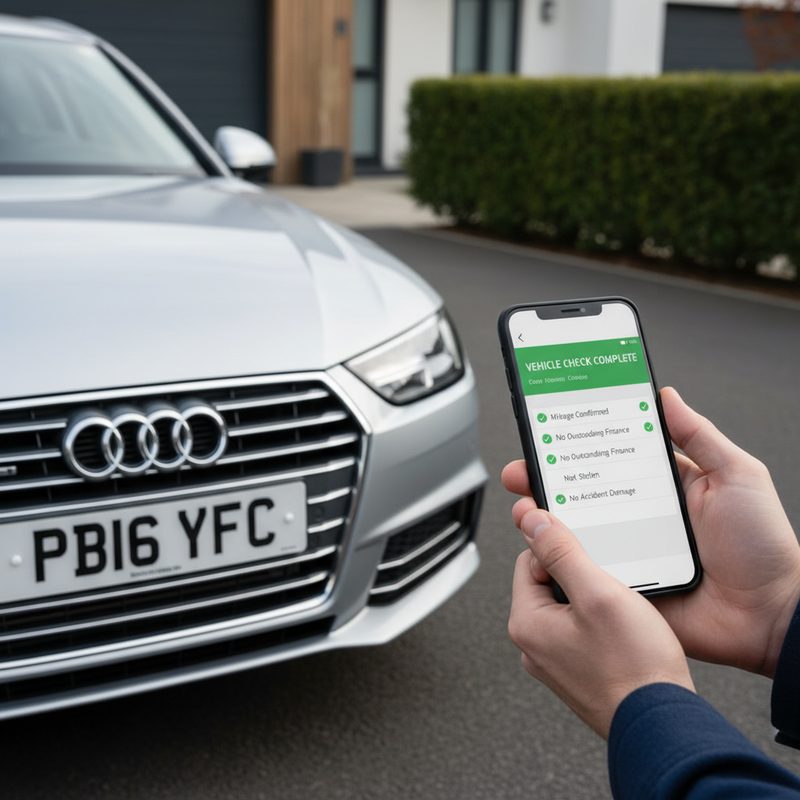
And for absolute peace of mind, run a full vehicle history check. A proper check will pull together MOT mileage data, previous keeper information, outstanding finance checks, insurance write-off status, and more. It is the single best investment you can make before Buying any used car.
Dave's Verdict: Deal-Breaker or Manageable?
This one is black and white for me. A clocked car is an absolute deal-breaker. Walk away. No negotiation, no second chances, no "but the rest of the car is lovely." If someone has deliberately tampered with the mileage, they are committing fraud, and you have no idea what else they might be hiding.
I have seen too many people try to rationalise it. "Well, the car drives nicely and the price is good even at the higher mileage." No. If the seller is dishonest about the mileage, you cannot trust anything else they have told you about the car. The service history could be fabricated. The accident damage could be concealed. The outstanding finance could be hidden. Once trust is broken, the whole deal is poisoned.
Mileage clocking is a criminal offence under the Consumer Protection from Unfair Trading Regulations 2008. If you discover you have bought a clocked car, you do have legal recourse -- but prevention is always better than cure.
Do yourself a favour. Before you hand over your hard-earned cash for any used car, run a proper vehicle check using Dave's tool. It takes two minutes, costs less than a tank of fuel, and could save you thousands. Check your car's MOT history with Dave -- because finding out after you have bought it is a very expensive lesson indeed.
Check your car's MOT history with Dave
Get Dave's free AI-powered vehicle check before you make a decision.