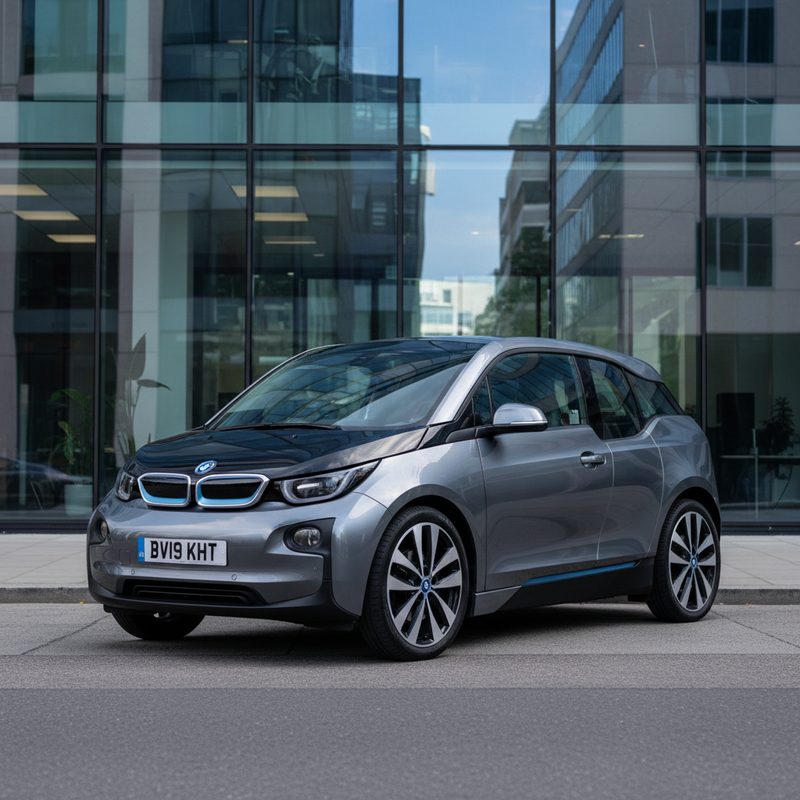
Used BMW i3 — Is It Worth Buying Used
Find out if the BMW i3 is worth buying used with our honest assessment of value, range limitations, running costs, and which model year suits your needs.
Used BMW i3 — Is It Worth Buying Used?
Few cars divide opinion quite like the BMW i3. Its radical styling, unusual materials, and compact dimensions mean it was never going to appeal to everyone. But strip away the polarising design and what remains is a genuinely innovative electric car that, on the used market, offers remarkable value. The question is whether that value translates into a worthwhile purchase for you.
What Makes the i3 Special
When BMW launched the i3 in 2013, it was not merely an electric conversion of an existing model. The company started from scratch, developing a bespoke platform built around a carbon-fibre-reinforced plastic (CFRP) passenger cell sitting on an aluminium chassis. The result was a car that weighed just 1,195 kg despite carrying a heavy battery pack — lighter than many superminis.
This engineering approach gives the i3 a driving character that few other EVs can match. The rear-wheel-drive layout, instant electric torque, and low kerb weight make it genuinely entertaining to drive in town. The tight 9.86-metre turning circle, meanwhile, makes urban manoeuvring effortless.
Inside, the i3 feels unlike any other BMW. Open-pore eucalyptus wood, recycled materials, and a minimalist dashboard design create an atmosphere that is more Scandinavian design studio than traditional German saloon. The coach-style rear doors (rear-hinged, opening backwards) add a touch of theatre, even if they are slightly impractical in tight car parks.
The Financial Case
This is where the used i3 truly shines. Cars that cost over £30,000 new can now be found for £8,000 to £15,000 depending on age, mileage, and battery size. That represents extraordinary depreciation for the original owner but tremendous value for the second-hand buyer.
The running costs are compellingly low. Zero road tax for pure electric models saves at least £190 per year. Full ULEZ exemption means no daily charges for London drivers. Charging at home on a standard electricity tariff costs roughly 3 to 5p per mile, dropping to 1 to 2p per mile on an off-peak EV tariff. For a detailed breakdown, read our BMW i3 charging costs guide.
Servicing costs are lower than a comparable petrol BMW. There is no engine oil to change, no clutch to wear, no exhaust to corrode, and brake pads last far longer thanks to regenerative braking. A typical annual service costs £150 to £250 at a BMW dealer, or less at a specialist independent.
For a full financial comparison with petrol alternatives, our guide on running costs versus petrol lays out the numbers.
Range: The Honest Truth
Range is the elephant in the room with any used i3, particularly the earlier models. Here is what you can realistically expect in UK driving conditions:
- 60 Ah (2013–2016): 60 to 80 miles in favourable conditions, 40 to 55 miles in cold winter weather
- 94 Ah (2017–2018): 100 to 120 miles normally, 70 to 90 miles in winter
- 120 Ah (2019–2022): 140 to 170 miles normally, 100 to 130 miles in winter
These figures assume a battery in good health. A degraded battery will deliver less. The key question is whether these ranges work for your daily needs. If your commute is under 30 miles each way and you can charge at home overnight, even the early 60 Ah model will cope. If you regularly need 100+ miles between charges, the 120 Ah model or a different EV altogether may be the better choice.
For longer journeys, the i3 can rapid charge at up to 50 kW via CCS (on suitably equipped models), adding roughly 80% charge in 40 to 50 minutes. Use Zap-Map to plan routes with charging stops. The expanding UK charging network, including providers like Pod Point, makes longer trips increasingly viable.
Which Model Should You Choose?
Pure Electric vs Range Extender
The i3 was available as a pure battery electric vehicle (BEV) and as a Range Extender (REx) with a small 647cc petrol generator. The REx adds approximately 80 kg of weight and slightly reduces boot space, but provides a psychological safety net for those worried about running out of charge.
In practice, the REx has become somewhat redundant as the UK charging network has improved. It also introduces additional maintenance requirements and potential common problems that the pure electric model avoids. For most buyers today, the BEV version is the simpler and better choice.
Battery Size
If budget allows, the 120 Ah model (2019 onwards) is the clear winner. Its 140 to 170 mile range makes it practical for a much wider range of journeys, and the battery is younger with less degradation. The 94 Ah model (2017 to 2018) offers a good middle ground with 100+ miles of range at a lower price. The 60 Ah model is only suitable for buyers with very predictable, short-distance daily driving.
Always verify battery health with a diagnostic check before committing, regardless of which model you choose.
Specification and Trim
The i3 was offered in several trim levels, with the i3s providing sportier suspension, wider tyres, and a slight power increase. The i3s is the more engaging car to drive, though the standard i3 is perfectly pleasant. Look for useful options including:
- DC rapid charging (CCS) — essential for longer journeys
- Heat pump — more efficient cabin heating that preserves range in winter
- Parking assistant — useful given the car limited rear visibility
- Professional navigation — includes real-time traffic and charging station information
Practicality and Daily Living
The i3 is a compact car, and there is no getting around that. At 4,011 mm long, it is shorter than a Volkswagen Golf. Boot space is a modest 260 litres (or 1,100 litres with the rear seats folded), which is adequate for a weekly shop but not for family holidays with luggage.
Rear passenger space is tight for adults, particularly with the narrow rear door openings. The coach doors require the front doors to be opened first, which can be awkward in tight parking spaces. These are not dealbreakers for most buyers, but they are worth experiencing on a test drive before you commit.
For urban and suburban use, however, the i3 is superb. Its compact dimensions, tight turning circle, and excellent visibility make it one of the easiest cars to park and navigate through congested city streets.
Safety
The BMW i3 earned a 4-star rating from Euro NCAP when tested in 2013, which was respectable at the time but below the 5-star standard achieved by many modern EVs. The CFRP passenger cell provides excellent structural protection, and all models come with stability control, multiple airbags, and ISOFIX child seat mounting points.
Later models received updates including improved pedestrian detection and additional driver assistance features. If safety ratings are a priority, seek out the newest model year you can afford.
Downsides to Consider
No car is perfect, and the i3 has some legitimate weaknesses:
- Limited range on early models can cause range anxiety for some drivers
- Rear seat access through coach doors is awkward
- Tyre costs are higher than average due to unusual sizes
- Specialist repairs can be expensive due to CFRP construction
- Limited towing capacity — BMW does not recommend towing with the i3
- Depreciation has been steep (though this benefits used buyers)
For a complete overview of known issues, consult our guide on common problems before buying.
The Verdict: Is It Worth It?
For the right buyer, the used BMW i3 is an absolute gem. If you need an affordable, enjoyable, and distinctive electric car for daily commuting and local journeys, it is hard to beat. The build quality, driving dynamics, and low running costs make it stand out in a crowded used EV market.
The ideal i3 buyer is someone who:
- Has access to home charging (a wallbox makes ownership vastly more convenient and affordable, with potential support from the OZEV grant via GOV.UK)
- Does not need more than 80 to 150 miles of daily range
- Appreciates distinctive design and premium materials
- Wants the lowest possible running costs
- Is comfortable with a compact car
If that sounds like you, then yes, the BMW i3 is absolutely worth buying used. Just make sure you check the battery health, review the MOT history, and choose the best model year for your needs. With those boxes ticked, you will have a brilliant electric car for a fraction of its original price.
Check BMW i3, instantly with Dave's free vehicle intelligence report.
Check your specific EV with Dave