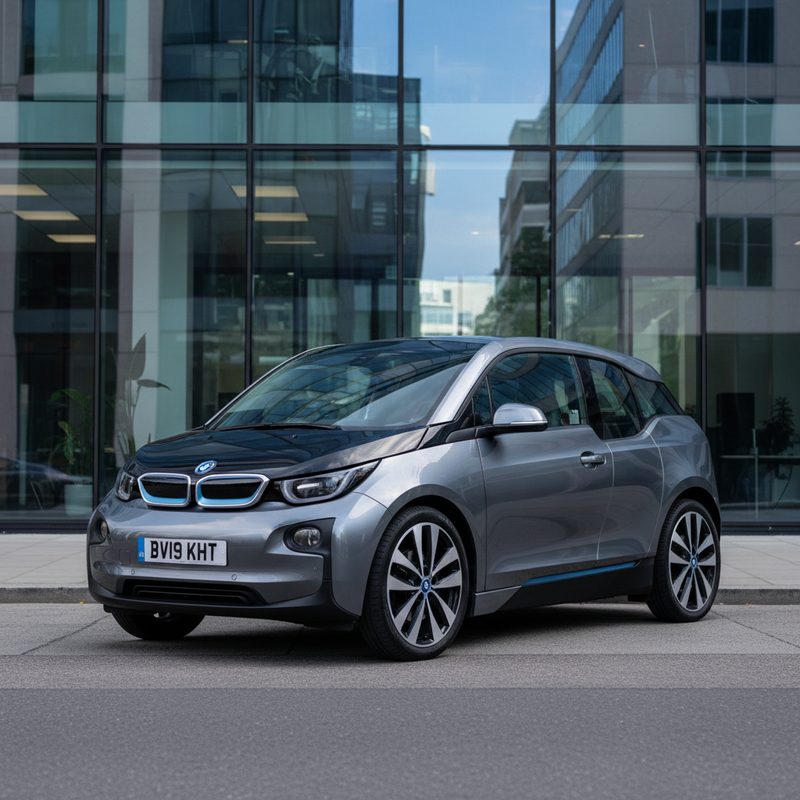
Used BMW i3 — Battery Degradation What To Expect
Understand BMW i3 battery degradation by model year, what SoH to expect, factors that accelerate ageing, warranty info and real-world owner data points.
Used BMW i3 — Battery Degradation: What to Expect
Battery degradation is the defining concern for anyone buying a used electric vehicle, and the BMW i3 is no exception. Understanding how lithium-ion batteries age, what factors accelerate degradation, and what levels of capacity loss are normal will help you make a confident purchasing decision. The good news is that the i3 battery has an excellent track record, but knowledge is still your best protection against an expensive mistake.
How Lithium-Ion Battery Degradation Works
Every lithium-ion battery loses capacity over time. This happens through two main mechanisms: calendar ageing (degradation that occurs simply from the passage of time, regardless of use) and cycle ageing (degradation caused by repeatedly charging and discharging the battery).
In the BMW i3, the Samsung SDI battery cells experience both types of ageing simultaneously. Calendar ageing is largely unavoidable — even a car sitting in a garage will lose a small amount of capacity each year. Cycle ageing depends on how the car is used, particularly how often it is charged, to what levels, and at what speeds.
The i3 battery management system (BMS) is designed to minimise degradation by keeping cells within optimal temperature and voltage ranges. It reserves a buffer at the top and bottom of the battery capacity, meaning you never truly charge to 100% or discharge to 0% at the cell level, even when the dashboard shows those figures.
Expected Degradation by Model Year
Based on real-world data from thousands of i3 owners across the UK and globally, here is what you can broadly expect for each battery variant:
60 Ah (22 kWh) — 2013 to 2016
These batteries are now 10 to 13 years old, and most show between 15% and 25% degradation. A typical example might have a State of Health (SoH) of 78% to 88%, translating to a usable capacity of roughly 14 to 16 kWh. In real-world terms, expect 50 to 70 miles of range rather than the original 80 miles.
Some well-maintained examples fare better, retaining 90% or more. Conversely, cars that were frequently rapid-charged or kept in hot climates may show worse degradation. At this age, individual variation between cars is significant, making a diagnostic check absolutely essential.
94 Ah (33 kWh) — 2017 to 2018
The 94 Ah battery was a substantial improvement, both in capacity and in degradation resilience. Most examples from this era show 8% to 15% degradation, with SoH typically between 85% and 93%. Usable capacity tends to be 23 to 25 kWh, giving a real-world range of 90 to 110 miles.
These batteries benefit from being slightly younger and from BMW learning from the first-generation cells. They represent the sweet spot for many used buyers — affordable enough to be good value, yet with sufficient remaining capacity for practical daily use.
120 Ah (42.2 kWh) — 2019 to 2022
The newest i3 batteries are holding up remarkably well. Most show less than 10% degradation, with many retaining 92% to 97% SoH. This translates to 35 to 37 kWh of usable capacity and real-world ranges of 130 to 160 miles.
Given their younger age and improved cell chemistry, 120 Ah batteries are expected to remain above 80% SoH for the foreseeable future under normal use. They are the least risky option for used buyers concerned about battery longevity.
Factors That Accelerate Degradation
Not all i3 batteries degrade at the same rate. Several factors can accelerate capacity loss:
Frequent rapid charging: DC rapid charging at 50 kW generates significantly more heat in the battery cells than slow AC charging. Heat is the primary enemy of lithium-ion batteries. An i3 that has been predominantly rapid-charged may show 5% to 10% more degradation than one that was home-charged on a 7 kW wallbox. The charging costs guide explains the different charging options in detail.
High ambient temperatures: Lithium-ion cells degrade faster in hot environments. While this is less of a concern in the UK than in warmer climates, imported i3s from southern Europe or the Middle East may have experienced more thermal stress.
Extreme state of charge: Regularly keeping the battery at 100% or depleting it to near 0% puts additional stress on the cells. The ideal daily range is 20% to 80%. Drivers who consistently charge to 100% overnight and run the battery down before recharging tend to see faster degradation.
High mileage and charge cycles: More miles generally means more charge cycles, which means more cycle ageing. However, a high-mileage car driven gently with home charging may have better battery health than a lower-mileage car that was frequently rapid-charged and driven aggressively.
Software version: BMW has released several software updates over the years that optimise battery management. Cars running the latest software may benefit from improved charging algorithms that reduce degradation. Ensure the car is up to date at the time of purchase.
How to Measure Battery Health
Before buying any used i3, you should verify the battery health through one of these methods:
- BMW dealer diagnostic: The most authoritative method, costing £50 to £100. The dealer can provide a detailed report including SoH, cell voltages, and any stored fault codes.
- OBD tools: Apps like BimmerLink, paired with a compatible Bluetooth OBD adapter, can read the SoH and cell voltage data directly. This costs around £30 to £50 for the adapter and app combined.
- Third-party battery health services: Companies are emerging that specialise in EV battery assessment and can provide independent reports.
Our comprehensive guide on battery health when buying a used i3 walks through each method step by step.
The BMW Battery Warranty
BMW offered an 8-year or 100,000-mile warranty on the i3 high-voltage battery, guaranteeing a minimum of 70% capacity retention. This is a meaningful safety net:
- A 2017 model would be covered until 2025
- A 2019 model would be covered until 2027
- A 2022 model would be covered until 2030
If you buy an i3 that is still within the warranty period and the battery drops below 70% SoH, BMW is obligated to repair or replace the battery at no cost. This makes newer models significantly less risky from a battery degradation perspective. Always verify warranty status with a BMW dealer before purchase.
Can Degradation Be Reversed?
In short, no. Battery degradation in lithium-ion cells is an irreversible chemical process. No software update, driving technique, or aftermarket product can restore lost capacity. Claims to the contrary should be treated with extreme scepticism.
What you can do is slow the rate of future degradation through good charging habits: charge at home on a slow charger whenever possible, keep the battery between 20% and 80% for daily use, and avoid leaving the car fully charged or fully depleted for extended periods.
Battery Replacement Costs
If degradation becomes severe enough to warrant replacement, the costs are significant but not catastrophic:
- Individual module replacement: £1,500 to £2,500 per module (the battery contains 8 modules)
- Complete battery pack replacement: £5,000 to £8,000 from BMW
- Refurbished or reconditioned packs: £3,000 to £5,000 from specialist third parties
In most cases, degradation is gradual and uniform across the pack, meaning full replacement is not needed until the car is very old. Individual cell or module failures are less common but do occur, and these can be addressed with a single module swap rather than replacing the entire pack.
Real-World Owner Experiences
The BMW i3 owner community is active and forthcoming with battery health data. Online forums and owner groups frequently share SoH readings, providing a valuable dataset for prospective buyers. Some notable real-world data points:
- A 2014 60 Ah i3 with 65,000 miles showed 83% SoH after 10 years
- A 2017 94 Ah i3 with 48,000 miles showed 91% SoH after 7 years
- A 2019 120 Ah i3 with 35,000 miles showed 95% SoH after 5 years
- A 2021 120 Ah i3 with 20,000 miles showed 97% SoH after 3 years
These figures paint a broadly positive picture, particularly for the later battery variants. The Samsung SDI cells used in the i3 appear to be among the more durable in the early EV market.
How Degradation Affects Running Costs
As the battery degrades, you will need to charge more frequently to cover the same distance. This increases your annual electricity consumption and, consequently, your charging costs. For a detailed analysis of charging expenses, see our BMW i3 charging costs guide.
However, the impact is proportional. A 10% reduction in capacity means roughly 10% more charging sessions — an increase of perhaps £40 to £60 per year for an average driver charging at home. This is a minor additional cost in the context of the overall savings that EV ownership provides compared to petrol. Our running costs versus petrol guide demonstrates that even a degraded i3 remains significantly cheaper to run than a comparable petrol car.
The i3 also benefits from zero road tax and ULEZ exemption regardless of battery health, so those savings remain constant. Use Zap-Map to find affordable public charging options if you need to top up away from home more frequently.
Summary
Battery degradation on the BMW i3 is a manageable concern rather than a dealbreaker. The Samsung SDI cells have proven themselves to be robust, and the vast majority of used i3s on the market today retain more than enough capacity for practical daily use. The key is to verify the State of Health before purchase using proper diagnostic tools, understand which battery variant you are buying, and maintain good charging habits going forward.
For most prospective buyers, a used i3 with 85% or higher SoH represents a sound purchase with years of useful life remaining. Combine this with the i3 low running costs, zero road tax, and engaging driving experience, and you have a used EV that makes both emotional and financial sense. Check the best model years to buy to find the right balance of price and battery condition for your budget.
Check BMW i3, instantly with Dave's free vehicle intelligence report.
Check your specific EV with Dave