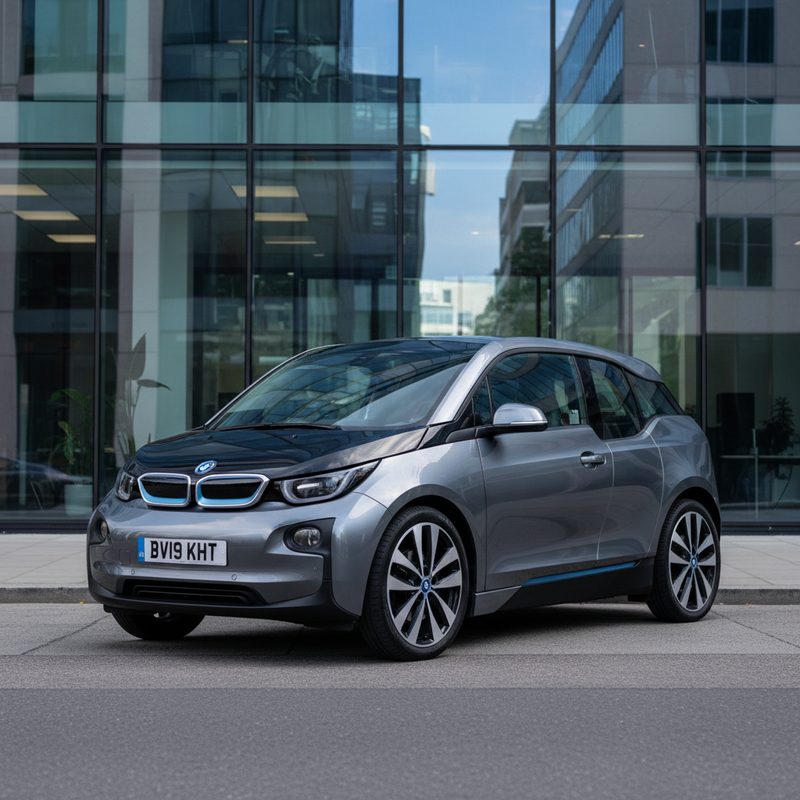
Used BMW i3 — Best Years To Buy Used
Find the best BMW i3 model year for your budget with our guide covering all battery variants, expected prices, SoH ranges and top buying recommendations.
Used BMW i3 — Best Years to Buy Used
The BMW i3 was produced from 2013 to 2022, meaning there is nearly a decade of production to choose from on the used market. Not all model years are created equal, however. Battery size, standard equipment, known issues, and value for money all vary significantly depending on when the car was built. This guide helps you identify the best model years to target based on your budget and requirements.
The i3 Production Timeline
Before diving into recommendations, here is a brief overview of how the i3 evolved:
- 2013–2016 (60 Ah): First generation with a 22 kWh battery. Range of 60 to 80 miles. Available as BEV or REx.
- 2017–2018 (94 Ah): Upgraded to a 33 kWh battery. Range increased to 100 to 120 miles. Facelift with LED headlights and updated interior.
- 2018 (i3s introduced): Sportier variant with wider track, firmer suspension, and 14 bhp power increase.
- 2019–2022 (120 Ah): Largest battery at 42.2 kWh. Range of 140 to 170 miles. Further interior refinements and technology updates.
- 2022: Final Edition models before production ended in June 2022.
Best Value: 2017 94 Ah Models
For the best balance of price and usability, the 2017 model year stands out as the sweet spot. Here is why:
Price: 2017 i3s typically sell for £9,000 to £14,000 depending on mileage and specification. This represents a massive saving over the original price of over £30,000.
Battery: The 33 kWh battery provides a genuine 100 to 120 miles of real-world range, which is sufficient for most daily commuting and local journeys. Battery health on 2017 models is generally still good, with most examples showing 85% to 93% State of Health. See our battery health guide for how to verify this.
Facelift benefits: The 2017 model received updated LED headlights, a refreshed interior with improved materials, and enhanced connectivity features. It feels noticeably more modern than the pre-facelift cars.
Known issues resolved: Many of the early production teething problems were addressed by 2017, including software updates for the battery management system and improvements to the 12V auxiliary battery longevity.
Warranty: Some 2017 models may still be within BMW 8-year battery warranty period, providing additional peace of mind against battery degradation.
Best for Range: 2019–2020 120 Ah Models
If range is your priority, the 120 Ah battery transforms the i3 from a city car into a genuinely versatile daily driver.
Price: 2019 to 2020 models typically sell for £14,000 to £20,000. More expensive than the 94 Ah models, but the additional range justifies the premium for many buyers.
Battery: The 42.2 kWh battery delivers 140 to 170 miles of real-world range. Battery health on these newer cars is excellent, with most showing 92% to 97% SoH. BMW 8-year warranty covers these batteries until at least 2027.
Technology: These models benefit from the latest iteration of the iDrive system, improved driver assistance features, and better integration with smartphone apps for remote monitoring and preconditioning.
Charging: The 120 Ah models support up to 50 kW DC rapid charging (where CCS is fitted) and 11 kW AC charging, making them compatible with the widest range of UK charging infrastructure. Use Zap-Map to check coverage in your area.
Best Budget Option: 2016 60 Ah Models
For buyers on a tight budget who have predictable, short daily journeys, the 2016 model year offers the best value among the 60 Ah cars.
Price: From £6,000 to £9,000, making it one of the cheapest ways to get into a premium electric car.
Why 2016 specifically: The 2016 model year benefited from three years of production refinements. Software updates improved battery management and range optimisation compared to the 2013 launch models. Build quality niggles from the earliest production were largely resolved.
Limitations: The 60 to 80 mile range (potentially less with battery degradation) restricts the car to urban and short-range suburban use. This is not the car for regular motorway journeys or days out far from home.
Ideal buyer: Someone with a commute of under 25 miles each way who can charge at home every night. For this use case, the 60 Ah i3 is an absolute bargain.
Best i3s: 2019 120 Ah i3s
If driving enjoyment is a priority, the i3s variant adds genuine sporting character to the i3 formula.
What the i3s adds: 184 bhp (up from 170 bhp), wider track, sportier suspension tuning, wider rear tyres, and subtle visual differences including dark wheel arch trims.
Price: Expect to pay a £1,000 to £2,000 premium over an equivalent standard i3.
Worth it? If you enjoy driving and can afford the premium, absolutely. The i3s feels noticeably more planted and responsive. The wider rear tyres provide better grip, and the stiffer suspension reduces body roll without significantly compromising ride comfort.
Years to Approach with Caution
2013–2014 Models
The very earliest i3s are now over a decade old, and while some have held up remarkably well, they carry the most risk:
- Battery degradation is most advanced, with some examples below 80% SoH
- Early production cars had more teething problems, including software bugs and build quality inconsistencies
- The original iDrive system feels dated by modern standards
- The 60 Ah battery provides a genuine range that may now be under 60 miles
These cars can still be worthwhile purchases at the right price (under £7,000), but only if the battery health checks out and you have realistic expectations about range. For a full rundown of potential issues, see our guide on common problems.
Range Extender Models (All Years)
The i3 REx is not necessarily a year to avoid, but rather a configuration to approach carefully. The small petrol engine adds complexity, weight, and potential maintenance issues. If the REx engine has been rarely used (common with owners who charge regularly), fuel system problems can develop. The expanding UK charging network, including providers like Pod Point, has made the REx safety net less necessary than it once was.
If you specifically want a REx, look for one where the previous owner ran the engine regularly and maintained it according to BMW service schedule.
Key Specifications to Prioritise
Regardless of model year, certain specifications significantly improve the i3 ownership experience:
- DC rapid charging (CCS): Essential for any journey beyond the daily commute. Some early models only had AC charging.
- Heat pump: Substantially improves winter range by heating the cabin more efficiently. Standard on later models, optional on earlier ones.
- Parking sensors and camera: The i3 rear visibility is limited, so parking aids are very useful.
- Professional navigation: Includes real-time traffic data and charging station locations.
- Comfort package: Adds heated seats and other comfort features.
Price Guide by Year
Approximate used prices as of early 2025 for good-condition examples:
| Model Year | Battery | Typical Price Range | Expected SoH |
|---|---|---|---|
| 2013–2014 | 60 Ah | £5,000–£8,000 | 75%–88% |
| 2015–2016 | 60 Ah | £6,500–£9,500 | 78%–90% |
| 2017 | 94 Ah | £9,000–£13,000 | 85%–93% |
| 2018 | 94 Ah | £10,000–£14,500 | 87%–94% |
| 2019 | 120 Ah | £14,000–£18,000 | 91%–96% |
| 2020–2021 | 120 Ah | £16,000–£22,000 | 93%–97% |
| 2022 | 120 Ah | £20,000–£26,000 | 95%–98% |
Our Top Recommendation
For most buyers, we recommend the 2017 or 2018 94 Ah model as the best overall choice. It offers the ideal combination of affordable purchase price, practical range, proven reliability, and years of remaining battery life. With zero road tax, ULEZ exemption, and charging costs as low as £1 to £2 per day on an off-peak tariff (check the OZEV grant on GOV.UK for help with home charger installation), it is hard to think of a better-value car on the used market today.
If your budget stretches further and range is important, the 2019 to 2020 120 Ah models are the definitive i3 and will serve you brilliantly for many years to come. Whichever model year you choose, always verify battery health, check the MOT history, and factor in the running costs to make a fully informed decision.
Check BMW i3, instantly with Dave's free vehicle intelligence report.
Check your specific EV with Dave