Best Electric Cars for Long Motorway Trips UK
Discover the top electric cars ideal for long motorway journeys in the UK, including range, comfort, and charging considerations.
Introduction
Electric vehicles (EVs) have come a long way in recent years, making them a viable option for long motorway trips across the UK. With advancements in battery technology, charging infrastructure, and overall vehicle design, many electric cars now offer impressive ranges and comfort levels suitable for extended journeys. This guide aims to provide you with detailed insights into the best electric cars for long motorway trips, focusing on range, comfort, charging costs, and common issues to watch out for.
Key Considerations for Long Motorway Trips
When selecting an electric car for long-distance travel, several factors come into play. These include battery health, real-world range, charging infrastructure, and running costs. Understanding these aspects will help you make an informed decision that suits your travel needs.
Battery Health
Battery health is paramount when considering an electric vehicle for long trips. Over time, batteries degrade, which can significantly impact range. Most manufacturers offer warranties that cover battery performance for a certain number of years or miles, typically around 8 years or 100,000 miles. However, it’s essential to check the specific battery health of any used EV you consider.
For example, the Used BMW i3 — Battery Degradation What To Expect guide provides insights into how battery health can affect your driving experience. When evaluating a used EV, consider getting a battery health report, which can often be obtained from the manufacturer or a trusted dealer. This report will give you a clearer picture of what to expect regarding range and performance.
Real-World Range vs Manufacturer Claims
Manufacturers often tout impressive range figures for their electric vehicles, but real-world performance can differ significantly. Factors such as driving style, load, and weather conditions can all affect how far you can travel on a single charge. For long motorway trips, you should look for vehicles that consistently deliver a range that exceeds your travel requirements.
For instance, many drivers report that the Tesla Model 3 can achieve around 300 miles on a full charge under optimal conditions, but this can drop to around 250 miles in colder weather or with a heavy load. Similarly, the Hyundai Kona Electric boasts a manufacturer-claimed range of up to 300 miles, but real-world tests often show slightly lower figures.
It’s advisable to check user reviews and forums for real-world experiences. Websites like AutoTrader often have owner reviews that can provide insights into how these vehicles perform in everyday scenarios.
Charging Costs and Infrastructure
The cost of charging your electric vehicle is another critical factor when planning long trips. Public charging stations can vary in pricing, with some offering free charging while others may charge per kWh. On average, you can expect to pay between £0.20 and £0.40 per kWh at most public charging points, which can add up depending on your vehicle's battery size.
Charging infrastructure in the UK has improved significantly, with networks like Ionity and ChargePoint providing fast charging options along major motorways. Fast chargers can replenish your battery to about 80% in around 30 minutes, making them ideal for quick stops during long journeys. However, it’s essential to plan your route and charging stops ahead of time to avoid running low on battery.
For a more detailed understanding of charging costs, you might want to check out the Used Renault Zoe — Charging Costs Guide, which breaks down the expenses associated with charging different EV models.
Common Problems Specific to EVs and Hybrids
While electric vehicles are generally reliable, they are not without their issues. Common problems can include battery degradation, software glitches, and issues with charging ports. For example, the BMW i3, while a popular choice, has been known to experience problems with its battery management system, which can lead to reduced performance over time.
Before purchasing a used electric vehicle, it’s wise to research common issues specific to the model you’re considering. The Used BMW i3 — Common Problems Before Buying guide offers insights into potential pitfalls and how to avoid them. Always ensure that any used EV has a full service history and has undergone any necessary recalls or updates.
Running Cost Savings vs Petrol/Diesel
One of the most significant advantages of owning an electric vehicle is the potential for lower running costs compared to petrol or diesel cars. EVs typically have fewer moving parts, which can lead to lower maintenance costs. Additionally, electricity is generally cheaper than petrol or diesel, especially if you charge at home during off-peak hours.
For example, charging a Tesla Model 3 at home might cost around £6-£8 for a full charge, translating to approximately 3p per mile. In contrast, a petrol vehicle might cost around 12p to 15p per mile, depending on fuel prices. This difference can lead to substantial savings over time, particularly for those who regularly undertake long journeys.
However, it’s essential to factor in the initial purchase price of electric vehicles, which can be higher than their petrol counterparts. You might want to consider the Used BMW i3 — Running Costs Vs Petrol guide for a detailed comparison of running costs between electric and petrol vehicles.
Top Electric Cars for Long Motorway Trips
Now that we’ve covered the essential considerations, let’s delve into some of the best electric cars suited for long motorway trips in the UK.
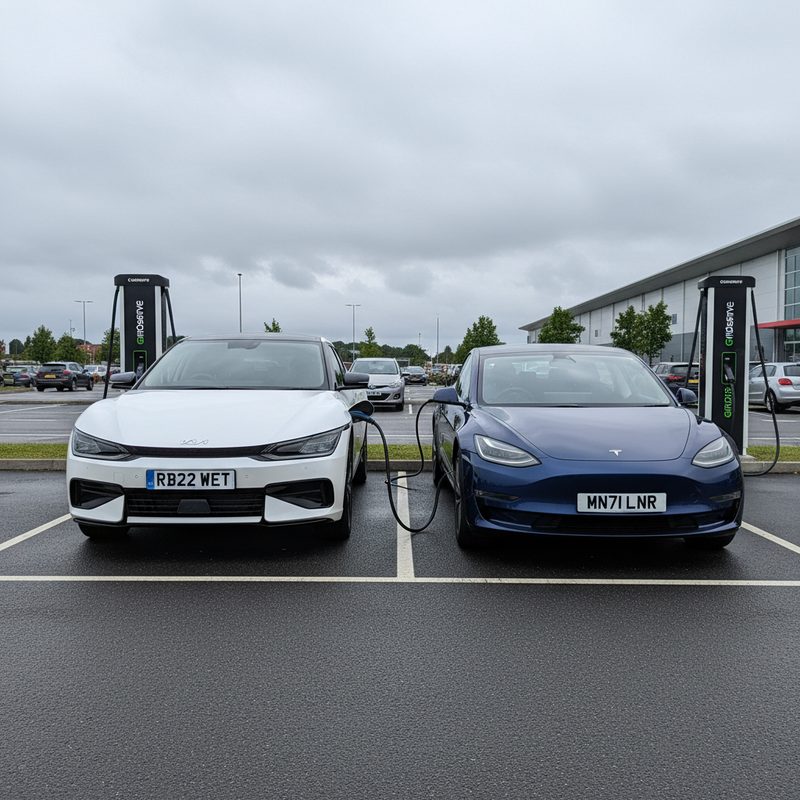
Tesla Model 3
The Tesla Model 3 is often hailed as one of the best electric cars for long journeys, thanks to its impressive range, fast charging capabilities, and extensive Supercharger network. With a range of up to 350 miles, it’s perfect for those who frequently travel long distances. The Model 3 also features a spacious interior, advanced autopilot features, and a minimalist design that enhances comfort on long trips.
Hyundai Kona Electric
The Hyundai Kona Electric is another excellent choice for long-distance travel. With a range of around 300 miles, it offers a comfortable ride and plenty of space for passengers and luggage. The Kona Electric supports rapid charging, allowing you to recharge your battery quickly during breaks. Its compact size makes it easy to manoeuvre, while still providing ample interior space.
Kia e-Niro
Similar to the Kona, the Kia e-Niro offers a practical blend of range and comfort. With a range of up to 282 miles, it’s well-suited for long journeys. The e-Niro features a spacious boot and rear seats, making it a family-friendly option. Its efficient energy use means you can travel further on a single charge, making it a solid contender for motorway trips.
Ford Mustang Mach-E
The Ford Mustang Mach-E is a stylish electric SUV that doesn’t compromise on performance. With a range of up to 300 miles, it’s designed for those who want a bit of flair on their long journeys. The Mach-E offers a spacious interior, advanced tech features, and a comfortable ride, making it a great choice for families or those who enjoy road trips.
Volkswagen ID.4
The Volkswagen ID.4 is an electric SUV that combines practicality with performance. With a range of up to 323 miles, it’s ideal for long-distance travel. The ID.4 features a spacious cabin, advanced safety features, and a comfortable ride. Its fast-charging capabilities mean you can quickly top up your battery during breaks, making it a convenient option for motorway trips.
Dave's Verdict — Is It Worth Going Electric?
Switching to an electric vehicle can be a smart move, especially for those who frequently undertake long motorway journeys. The savings on fuel and maintenance can be significant, and the growing charging infrastructure makes it easier than ever to travel long distances. However, it’s crucial to do your homework. Check the battery health of any used EV you consider, and ensure it meets your range requirements.
Before making a purchase, consider using Dave's free vehicle intelligence report to assess any electric car's history and condition. This tool can provide valuable insights into battery health, service history, and any potential issues, helping you make a well-informed decision.
In conclusion, the best electric cars for long motorway trips in the UK offer a combination of range, comfort, and charging convenience. With the right choice, you can enjoy the benefits of electric driving while embarking on your next adventure. Whether you opt for a Tesla Model 3 or a Kia e-Niro, you’ll find that electric vehicles are increasingly capable of meeting the demands of long-distance travel.
Remember, always check the vehicle’s MOT history on GOV.UK MOT history and consider a DVLA check for any used car you’re interested in. With the right information and preparation, you’ll be well on your way to enjoying your next long trip in an electric vehicle.
Check any electric car with Dave's free vehicle intelligence report
Get Dave's free AI-powered vehicle check before you make a decision.