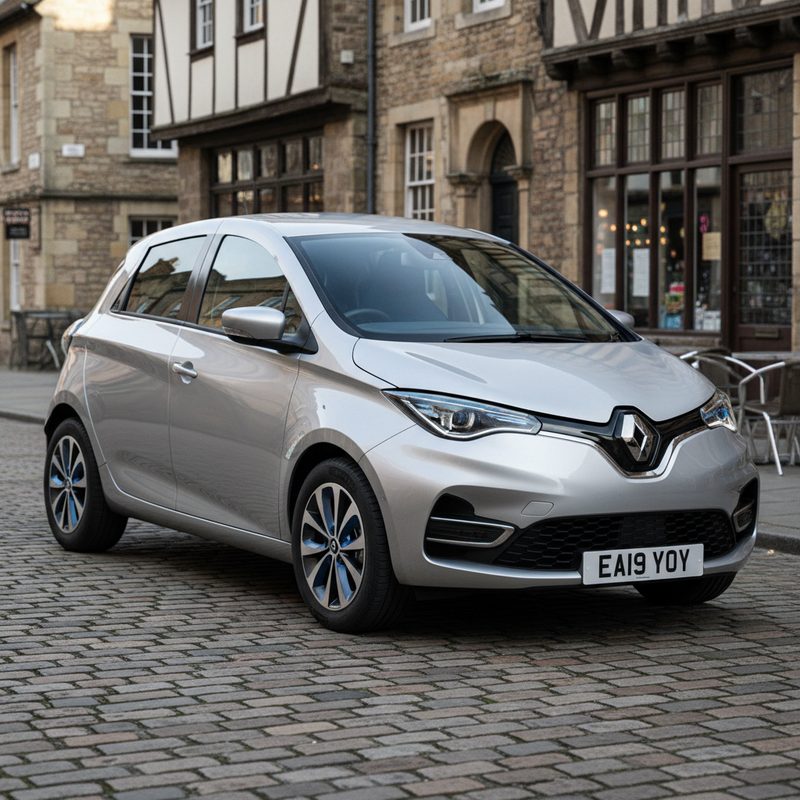
Used Renault Zoe — Charging Costs Guide
Discover what it really costs to charge a used Renault Zoe in the UK, from home wallbox tariffs to public rapid charging fees and money-saving tips.
Used Renault Zoe — Charging Costs Guide
The Renault Zoe has long been one of the most popular affordable electric cars on British roads, and for good reason. With tens of thousands now circulating on the second-hand market, it represents a genuinely accessible entry point into electric motoring. But before you sign on the dotted line, you need a clear picture of what it actually costs to keep a Zoe topped up with electrons. This guide breaks down everything from home charging tariffs to rapid charging expenses, so you can budget with confidence.
Why Charging Costs Matter More Than You Think
When people switch from petrol or diesel to electric, the fuel savings are often the headline attraction. And rightly so — the difference can be dramatic. But not all electricity is priced equally, and the way you charge your Zoe will have an enormous impact on your monthly outgoings. A driver who charges exclusively at home on a cheap overnight tariff will spend a fraction of what someone relying on public rapid chargers pays. Understanding these variables is essential to making the Zoe work financially.
The Renault Zoe has been sold in several battery configurations over the years. Early models (2013 to 2016) came with a 22 kWh battery, later upgraded to 41 kWh from 2017, and finally a 52 kWh pack from 2019 onwards. The size of your battery directly affects how much a full charge costs, so we will look at each variant in turn.
Home Charging — The Most Economical Option
Home charging is where the Zoe truly shines as a budget-friendly runabout. If you have off-street parking — a driveway, garage, or dedicated parking space — installing a home wallbox is the single best investment you can make as an EV owner.
A typical 7 kW home wallbox will fully charge a 22 kWh Zoe in roughly 3.5 hours, a 41 kWh model in about 6 hours, and the 52 kWh version in approximately 7.5 hours. The cost depends entirely on your electricity tariff.
At the current UK average electricity rate of around 24.5p per kWh (under the Ofgem price cap), here is what a full charge looks like:
- 22 kWh Zoe: approximately £5.39
- 41 kWh Zoe: approximately £10.05
- 52 kWh Zoe: approximately £12.74
Those figures assume you are charging from nearly empty to full, which in practice you rarely do. Most drivers top up regularly, keeping the battery between 20% and 80% for optimal battery health.
If you switch to an EV-specific tariff — such as Octopus Go, OVO Charge Anytime, or Intelligent Octopus — you can access off-peak rates as low as 7p per kWh. That transforms the economics entirely:
- 22 kWh Zoe: approximately £1.54
- 41 kWh Zoe: approximately £2.87
- 52 kWh Zoe: approximately £3.64
At those rates, you are looking at roughly 1 to 2p per mile, which is spectacularly cheap compared to any petrol car.
Wallbox Installation Costs
A home wallbox typically costs between £800 and £1,200 fully installed. The OZEV Electric Vehicle Homecharge Scheme (EVHS) previously offered a £350 grant towards installation for homeowners, though eligibility has changed over time. Renters and those living in flats may still qualify for support under the EV chargepoint grant on GOV.UK. It is well worth checking the latest criteria before purchasing.
Public Charging — What to Expect
Not everyone has the luxury of home charging, and even those who do will occasionally need to top up on the move. The UK public charging network has expanded enormously in recent years, with providers like Pod Point, BP Pulse, Osprey, and Gridserve offering thousands of chargepoints across the country.
Public charging costs vary widely depending on the speed and the network:
Slow and Destination Charging (up to 7 kW)
These chargers are commonly found at supermarkets, car parks, and workplaces. Some are still free to use — Tesco, in partnership with Pod Point, offers complimentary 7 kW charging at many of its stores. Where there is a fee, expect to pay around 30 to 40p per kWh.
Fast Charging (7 to 22 kW)
The Renault Zoe has always been well-suited to AC fast charging, with many models supporting 22 kW AC as standard. This is actually one of the Zoe party tricks — it charges faster on AC than many rivals. At public fast chargers, you will typically pay 40 to 55p per kWh.
For a 41 kWh Zoe, a full fast charge at 45p per kWh would cost around £18.45.
Rapid Charging (43 to 50 kW)
Here is where things get a bit complicated with the Zoe. Early models supported 43 kW AC rapid charging via a Type 2 connector, which was unusual but effective. Later models (particularly the ZE50 from 2019) added 50 kW DC CCS rapid charging capability.
Rapid charging is the most expensive way to charge, with rates typically ranging from 60p to 79p per kWh depending on the network. A full rapid charge of the 52 kWh battery could cost upwards of £35 to £40. This is still cheaper than filling a petrol car, but it does eat into the savings.
You can use Zap-Map to find the cheapest and most convenient chargepoints near you, filter by connector type, and check real-time availability.
Monthly and Annual Charging Cost Estimates
Let us put some real-world numbers together. The average UK driver covers around 7,400 miles per year. The Renault Zoe real-world efficiency sits at approximately 3.5 to 4.0 miles per kWh depending on the model, driving style, and season.
Using a figure of 3.7 miles per kWh for the 41 kWh model:
- Annual energy consumption: 7,400 miles at 3.7 mi/kWh = 2,000 kWh
- Home charging at 24.5p/kWh: £490 per year (£41 per month)
- Home charging at 7p/kWh (off-peak): £140 per year (£12 per month)
- Public charging at 55p/kWh: £1,100 per year (£92 per month)
Compare that to a similarly sized petrol car averaging 45 mpg at £1.40 per litre, and the same 7,400 miles would cost approximately £1,060 in fuel. The savings are clear, particularly if you are charging at home. For a broader comparison of running costs versus petrol, the Zoe remains one of the most cost-effective used EVs available.
The Battery Lease Trap — A Critical Consideration
One peculiarity of the Renault Zoe that catches many used buyers off guard is the battery lease arrangement. Many Zoes sold before 2018 (and some afterwards) were sold with a separate monthly battery lease, typically costing £49 to £110 per month depending on annual mileage.
If you buy a used Zoe with a battery lease still attached, you must continue paying it or negotiate a buyout with Renault. This can add a significant ongoing cost that completely changes the financial equation. Always check whether the battery is owned outright or leased before purchasing. A Zoe with an owned battery is generally the better buy, even if the upfront purchase price is slightly higher.
Understanding potential battery degradation is also important for any used EV purchase, as reduced capacity will affect your real-world range and therefore your charging frequency and costs.
Additional Savings Beyond Fuel
Charging costs are only part of the story. The Renault Zoe, like all pure electric vehicles, qualifies for zero road tax (Vehicle Excise Duty) — a saving of at least £190 per year compared to most petrol cars. It is also exempt from the London Ultra Low Emission Zone (ULEZ) charge and the Congestion Charge (with registration), which can save London drivers up to £15 per day.
Servicing costs are considerably lower too. No oil changes, no exhaust system repairs, no clutch replacements, and vastly reduced brake wear thanks to regenerative braking. Annual servicing for a Zoe typically costs between £100 and £200, compared to £250 to £400 for an equivalent petrol hatchback.
For a comprehensive look at common problems before buying a used EV, it is worth researching model-specific issues alongside general charging cost considerations.
Tips for Minimising Your Charging Costs
- Switch to an EV tariff — the single biggest saving you can make. Off-peak rates between midnight and 5am can slash your costs by 70% or more.
- Use free chargepoints — supermarkets, workplaces, and some council car parks still offer free charging. Plan your errands around them.
- Avoid rapid charging for daily use — reserve it for longer journeys. The cost premium is substantial.
- Charge to 80% — not only is this better for battery longevity, it also means the slower (and more expensive) final 20% is skipped.
- Monitor your efficiency — gentle acceleration, preconditioning the cabin while plugged in, and maintaining correct tyre pressures all improve miles per kWh.
- Get a charging app — apps like Zap-Map allow you to compare prices across networks and find the best deals near you.
Is the Renault Zoe Cheap to Charge?
In a word, yes — particularly if you can charge at home. The Zoe was designed from the outset as an affordable electric car, and its relatively modest battery sizes mean that even at standard electricity rates, a full charge rarely costs more than £13. On an off-peak tariff, it can cost less than a cup of coffee.
The real-world cost per mile — somewhere between 1p and 7p depending on how and where you charge — makes the Zoe one of the cheapest cars of any kind to run in the UK. When you factor in zero road tax, ULEZ exemption, and minimal servicing costs, the financial case is compelling.
If you are considering other affordable used EVs, our guide on whether the BMW i3 is worth buying used offers a useful comparison point. Both cars occupy a similar price bracket on the used market and offer genuinely low running costs for budget-conscious drivers.
The key takeaway is straightforward: do your homework on tariffs, check the battery lease status, and charge at home whenever possible. Get those three things right, and the Renault Zoe could well be the cheapest motoring you have ever experienced.
Check Renault Zoe, instantly with Dave's free vehicle intelligence report.
Check your specific EV with Dave