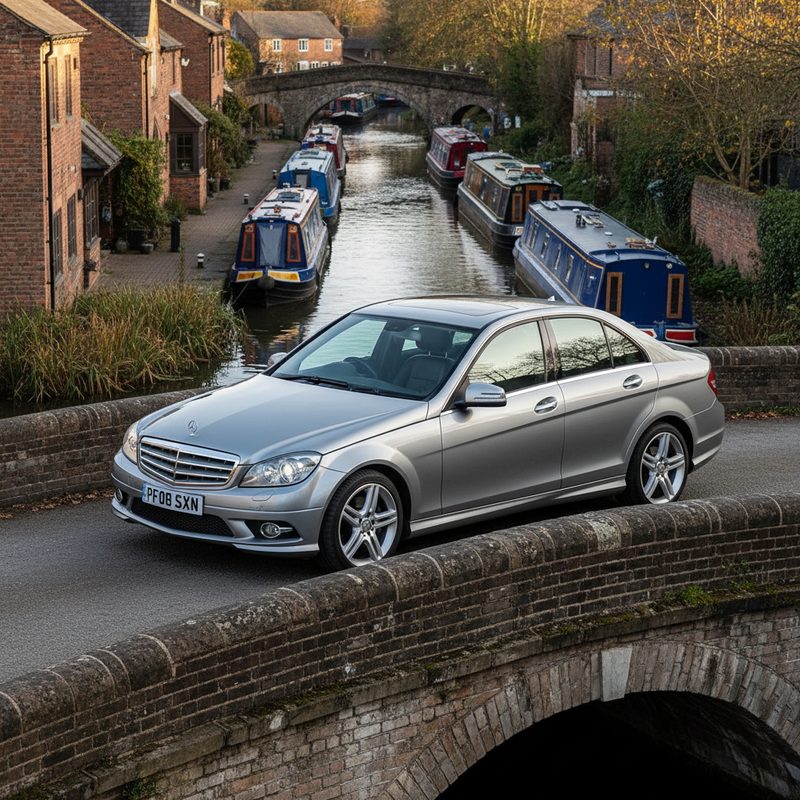
Mercedes C Class Depreciation: Best Year to Buy Used for Value
The Mercedes C Class is one of the UK's most popular executive cars -- and one of the biggest depreciators in the premium segment. Exactly when the C Class hits its value sweet spot and which versions are worth chasing.
The Mercedes C Class -- A Depreciation Heavyweight
If there is one car that perfectly illustrates the gap between what people pay for a brand-new premium saloon and what it is actually worth two or three years later, it is the Mercedes C Class. This car is a depreciation machine, and I mean that in the best possible way -- for used buyers, at least.
Consider this. A new Mercedes C220d AMG Line saloon lists at around £44,000 to £48,000. The Estate version adds another £2,000 on top. Load it with options and you can easily hit £52,000 to £55,000. Now fast forward three years. That same car, with 30,000 to 40,000 miles on it, is worth somewhere between £23,000 and £28,000. You have just witnessed £20,000 to £27,000 evaporate into thin air.
Why does this happen? The C Class is one of Mercedes' biggest sellers in the UK, and a massive chunk of production goes into corporate fleets and PCP deals. When those three-year contracts end, the used market is awash with C Classes. High supply, competitive pricing, aggressive depreciation. It is an iron law of the car market.
If you are weighing up alternatives, our guide to Ford S-Max Depreciation covers similar ground from a different angle.
How the C Class Loses Value -- The Numbers
Let me lay out the depreciation curve for a typical C220d AMG Line saloon:
- Brand new: £46,000
- After 1 year: Worth about £36,000 to £38,000 (down 17-22%)
- After 2 years: Worth about £30,000 to £33,000 (down 28-35%)
- After 3 years: Worth about £24,000 to £28,000 (down 39-48%)
- After 4 years: Worth about £20,000 to £24,000 (down 48-57%)
- After 5 years: Worth about £16,500 to £20,000 (down 57-64%)
- After 7 years: Worth about £11,500 to £15,000 (down 67-75%)
- After 10 years: Worth about £7,000 to £10,500 (down 77-85%)
The story is familiar: years one to three account for the lion's share of the depreciation. From year four onwards, the annual losses become progressively smaller. And from year seven or so, the C Class is losing so little per year that depreciation effectively becomes a rounding error in your overall ownership costs.
The Best Age to Buy a Used Mercedes C Class
I am going to give you three distinct buying strategies, because different budgets call for different approaches.
For more on this topic, take a look at our When Does a Ford Fiesta Stop Depreciating? guide.
Strategy One: Three Years Old
This is the classic sweet spot and the one I recommend to most people. At three years old, you are buying a car that has already lost 40-48% of its value. You are paying £24,000 to £28,000 for a car that cost £46,000 or more when new. The mileage will typically be 25,000 to 45,000, which is nothing for a modern Mercedes diesel.
Many of these cars come from fleet or lease returns and are in excellent condition -- they have been serviced on schedule, kept clean, and looked after because the driver knew they were handing it back. Your annual depreciation from this point is roughly £2,000 to £3,500, compared to the £6,000 to £9,000 per year the original owner was paying.
You might also find our Ford Fiesta guide useful alongside this one.
Strategy Two: Five to Six Years Old
At this age, the C Class enters proper bargain territory. A 2020/2021 C220d AMG Line with 50,000 to 65,000 miles can be had for £16,500 to £20,000. You are driving a genuine premium executive saloon for the price of a new Nissan Qashqai. Annual depreciation is now just £1,500 to £2,500.
The W206 generation C Class (2021 onwards) is the latest model, but the outgoing W205 (2014-2021) is what hits this price bracket right now. The W205 was a superb car -- elegant, refined, and loaded with technology. It ages well and remains competitive against newer rivals.
We have covered related ground in our Kia Ceed Depreciation guide, which is worth reading if this subject interests you.
Strategy Three: Eight to Ten Years Old
For budget-conscious buyers, older W205 C Classes are now available for £8,000 to £13,000. At this age, depreciation is virtually non-existent. Your costs are dominated by maintenance and potential repairs rather than value loss. Budget for an annual service at £300 to £500 and keep a contingency fund of £1,500 to £2,000 for unexpected mechanical issues.
Which C Class Variants Retain Value Best?
The C Class range is extensive, and the spread of depreciation rates across different models is wider than you might think.
If things go wrong after purchase, Citizens Advice can help you understand your legal rights.
AMG Line trim is the undisputed champion for resale value in the C Class range. It outsells every other trim combined and is what used buyers actively search for. The AMG-style body kit, larger wheels, sports seats, and carbon-look interior trim give it a presence that Sport and Avantgarde models cannot match. At any age, AMG Line holds £1,500 to £3,000 more than an equivalent Sport trim.
The C220d is the bread-and-butter engine. It is smooth, efficient, and reliable. Because there are so many of them, individual cars can struggle to stand out, but the sheer popularity means demand is always there. It is the safest choice for resale.
The C300d holds value slightly better in percentage terms. The extra performance and six-cylinder-like refinement attract buyers who want more than the 220d offers. Expect about 3-4% better retention at any given age.
The C300e plug-in hybrid has been a strong performer. Low BIK rates kept demand high, and the electric-only range is useful for commuting. At three years old, the C300e typically holds 5-8% more of its value than the equivalent C220d.
The C43 AMG and C63 AMG are in a different world entirely. These performance models depreciate much less in percentage terms because supply is limited and the enthusiast market keeps demand strong. A C63 that listed at £78,000 might hold £50,000 to £55,000 at three years -- that is roughly 29-36% depreciation versus 42-48% for a standard model. However, the absolute losses are still substantial given the high starting price.
The Estate (S206/S205) is worth mentioning separately. Estate versions traditionally hold their value slightly better than saloons -- typically 2-3% more at any given age. The extra practicality appeals to families and dog owners, and supply is lower relative to demand.
What Damages C Class Resale Values?
Beyond normal depreciation, watch out for these value killers:
Service history gaps. Mercedes buyers are fanatical about this. A full main dealer history is the gold standard. Independent specialists are acceptable if they are Mercedes-focused. But generic garage stamps or missing records will knock £1,500 to £3,000 off the value.
Excessive mileage. The C Class is an executive car, so moderate to high mileage is expected. But anything above 15,000 miles per year is considered heavy use. A three-year-old car with 60,000+ miles will be worth significantly less than one with 35,000.
Cosmetic neglect. Stone chips, kerbed alloys, worn leather, and faded exterior trim all reduce appeal. The C Class buyer is often image-conscious, so presentation matters enormously.
Accident history. Even minor accident damage can reduce a C Class's value by 10-20%. insurance write-off categories are particularly damaging -- a Category N marker alone can knock 15-25% off what a clean car would fetch.
Outstanding finance. As with all Mercedes models, a large proportion of C Classes are sold on PCP or HP deals. If you buy one with unsettled finance, the finance company can legally reclaim the vehicle. Check before you buy.
Keeping Depreciation in Check
Want to minimise your losses? Follow these steps:
- Buy at three to five years old. The savage early depreciation is behind you.
- Choose AMG Line trim. It is the resale king of the C Class range.
- Target the Estate if practicality matters. It holds value slightly better than the saloon.
- Maintain full service records. Every service, every record, every time.
- Keep mileage reasonable. Under 10,000 to 12,000 a year is ideal.
- Address cosmetic issues promptly. A small investment in refurbishment pays dividends at sale time.
- Sell privately if possible. You will achieve £1,500 to £3,000 more than a dealer trade-in.
Dave's Take on the Mercedes C Class
The C Class is a superb executive car -- comfortable, refined, technologically advanced, and genuinely pleasant to drive. It is also a car that loses enormous amounts of money for its first owner, which creates an exceptional opportunity for anyone buying used.
The FCA has a useful guide to car finance that explains your rights and what to watch for.
My recommendation? A three to four year old C220d or C300e in AMG Line trim, ideally an Estate if you need the boot space. Full service history, sensible mileage, and a clean MOT record. You will be driving a car that feels like it cost £50,000 for roughly half that.
But before you sign anything, run it through Dave's vehicle check. Finance checks, write-off history, mileage verification, outstanding recalls -- everything you need to know in one report. A two-minute check could save you thousands and give you the confidence to negotiate hard. Do not buy a C Class without it.
For current market values, search AutoTrader to see real asking prices by age and mileage. Check the MOT history on GOV.UK before buying, a clean MOT record supports stronger resale value. Look up insurance groups at Thatcham, lower groups cost less to own. Check Euro NCAP safety ratings for the model. And verify the car's details using the DVLA vehicle enquiry.