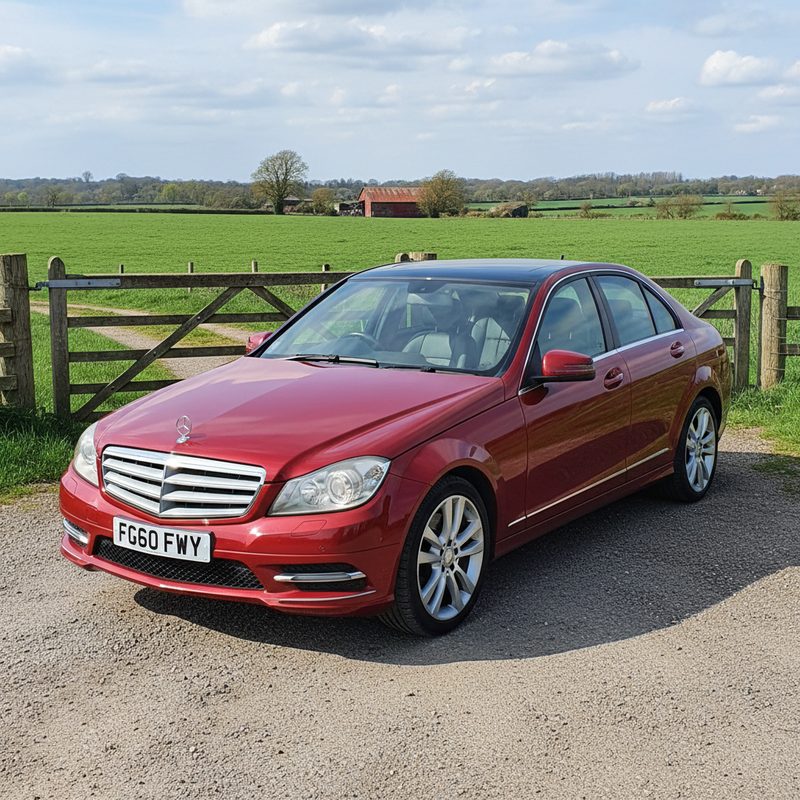
Mercedes C-Class vs BMW 3 Series — Which Depreciates Less
The Mercedes C-Class holds 2–3% more value than the BMW 3 Series from year 6 onwards. Depreciation curves, explains why, and identifies the best buying window for each.
Executive Depreciation: A Side-by-Side Race
Both the Mercedes C-Class (W205/W206) and BMW 3 Series (F30/G20) are among the UK's most popular executive saloons, with tens of thousands changing hands every year on the used market. Both depreciate significantly from their premium new prices — but at slightly different rates and for different reasons. Understanding these depreciation curves helps you buy at the right time, choose the right one, and sell before the next value cliff.
The Depreciation Curves Compared
Based on equivalent popular specifications: C220d AMG Line (new ~£38,000) vs 320d M Sport (new ~£40,000). Private sale values, average mileage (10,000–12,000 miles/year):
| Age | C-Class Value | C-Class % Retained | 3 Series Value | 3 Series % Retained | Difference |
|---|---|---|---|---|---|
| New | £38,000 | 100% | £40,000 | 100% | BMW £2k more |
| 1 year | £29,000 | 76% | £30,000 | 75% | Even (%) |
| 2 years | £24,500 | 64% | £25,000 | 63% | Even (%) |
| 3 years | £21,000 | 55% | £21,500 | 54% | Even (%) |
| 4 years | £17,500 | 46% | £18,000 | 45% | Even (%) |
| 5 years | £15,000 | 39% | £15,000 | 38% | Even (£) |
| 6 years | £13,000 | 34% | £13,000 | 33% | Merc +1% |
| 7 years | £11,500 | 30% | £11,000 | 28% | Merc +2% |
| 8 years | £10,000 | 26% | £9,500 | 24% | Merc +2% |
| 10 years | £7,500 | 20% | £6,500 | 16% | Merc +4% |
Key Findings
Years 1–5: Nearly Identical
Both cars lose approximately 55–62% of their new value in the first five years. The BMW starts £2,000 higher at new (M Sport is pricier than AMG Line) and tracks about £500–£1,000 above the Mercedes in absolute terms throughout this period — largely reflecting the higher new price rather than genuinely stronger residual values.
For buyers in this window, the choice between them is about preference, not depreciation. Pick the one you prefer to drive and live with.
Years 5–8: The Mercedes Pulls Ahead
This is where the C-Class advantage emerges. From year 6 onwards, the Mercedes retains 2–3% more value than the equivalent 3 Series. The gap widens to 4% by year 10. In cash terms, a 10-year-old C-Class holds approximately £1,000–£1,500 more than a 10-year-old 3 Series.
Total Depreciation Comparison
| Metric | Mercedes C220d AMG Line | BMW 320d M Sport |
|---|---|---|
| New price | £38,000 | £40,000 |
| 8-year value | £10,000 | £9,500 |
| Total depreciation | £28,000 | £30,500 |
| Depreciation advantage | £2,500 less | — |
| Annual average loss | £3,500 | £3,813 |
The Mercedes loses £2,500 less over 8 years — a meaningful difference that partially offsets any running cost variations between the two.
Why the C-Class Holds Value Better Long-Term
-
Interior durability: Mercedes uses harder-wearing materials in the C-Class. The synthetic leather (Artico) and real leather options both age better than BMW's equivalents. A C-Class interior at 80,000 miles typically looks noticeably better than a 3 Series at the same mileage — less bolster wear, fewer scratches on the centre console, and more resilient dashboard materials.
-
Brand prestige in the resale market: The three-pointed star carries slightly more weight with private used buyers in the executive segment. The C-Class is perceived as more "luxurious" while the 3 Series is perceived as more "sporty" — and luxury perception holds value better in older cars.
-
Diesel demand dynamics: The C220d is the volume seller and retains stronger used demand than the 320d, particularly among 35–55 year old buyers who represent the largest used executive car market segment.
-
Lower new car volume: BMW sells more 3 Series than Mercedes sells C-Class in the UK market, which means slightly more used supply pushing 3 Series values down relative to C-Class.
-
Design longevity: The W205 C-Class (2014–2021) aged exceptionally well visually — the design still looks current even at 10 years old. The F30 3 Series (2012–2019), while handsome, has a more noticeably dated design language.
Why the 3 Series Depreciates Faster
-
Higher new price: The M Sport package starts approximately £2,000 above AMG Line equivalent, meaning more money to lose in absolute terms
-
Fleet and company car sales: A higher proportion of 3 Series are sold into fleets and as company cars, which increases used supply when they return to the market after 3–4 years
-
Interior wear characteristics: The 3 Series leather and centre console plastics show wear patterns faster, particularly the driver's seat bolster (outer edge), steering wheel, and iDrive controller surround
-
Market perception shift: The BMW 3 Series has gradually shifted from "driver's car" to "business car" in some buyers' minds — reducing the emotional premium and enthusiast demand that supports used values
Practical Implications for Buyers
If You're Buying to Keep Long-Term
Best choice: The Mercedes C-Class at 4–5 years old (£15,000–£17,500). Buy at this sweet spot, hold for 4 years, and sell at £9,000–£10,000. Total depreciation over your ownership: approximately £6,000–£8,000 — that's just £125–£170/month for a premium executive saloon.
If You're Buying for Value
Best choice: The BMW 3 Series at 5–7 years old. Because it depreciates faster than the C-Class at the same age, you get more car for less money. A 2018 320d M Sport at £11,000–£13,000 is an extraordinary amount of car — genuine premium quality, excellent driving dynamics, and strong equipment levels.
If You're Buying to Resell Within 2–3 Years
Best choice: Either works, but the C-Class has a slight edge on percentage retention. Buy at 3 years old, sell at 5–6 years old, and the C-Class will typically lose £500–£1,000 less than the equivalent 3 Series over that period.
Trim-Level Impact on Depreciation
Both cars benefit significantly from their sportier trim levels at resale:
| Trim Level | Depreciation Advantage |
|---|---|
| AMG Line / M Sport | 8–12% stronger residual vs base Sport/SE |
| AMG Line Premium / M Sport Plus | 10–14% stronger — the most desirable used spec |
| Base SE (BMW) / Sport (Mercedes) | Weakest residuals — avoid if resale matters |
If you're buying with future resale in mind, always choose AMG Line (Mercedes) or M Sport (BMW). The used market overwhelmingly prefers these trims — base models sit on forecourts longer and sell for less.
Running Cost Comparison — Which Is Cheaper to Own?
| Cost Category | C220d AMG Line | 320d M Sport |
|---|---|---|
| Insurance | Group 28–32 | Group 26–30 |
| Fuel (12k miles) | £1,100–£1,300 | £1,050–£1,250 |
| Servicing (annual) | £300–£420 | £280–£400 |
| Tyres (18", set) | £420–£620 | £450–£650 |
| Annual running cost | £2,500–£3,200 | £2,400–£3,100 |
Running costs are remarkably similar — the difference is typically less than £200/year. The BMW has a slight edge on servicing and fuel economy; the Mercedes has slightly cheaper tyres. Neither is meaningfully cheaper to run day-to-day.
For detailed breakdowns, see:
- Dave's BMW 3 Series running costs guide
- Dave's BMW 3 Series vs Mercedes C-Class comparison
- Dave's Mercedes C-Class depreciation guide
When to Buy and When to Sell
| Action | Mercedes C-Class | BMW 3 Series |
|---|---|---|
| Best time to buy | 4–5 years old | 5–7 years old |
| Sell before | Year 8 (curve flattens) | Year 6 (accelerates vs Mercedes) |
| Best trim to buy | AMG Line Premium | M Sport Plus |
| Worst trim to buy | Sport (weakest residual) | SE (weakest residual) |
Dave's Depreciation Verdict
Over a full ownership cycle, the Mercedes C-Class is the better depreciation bet — it holds approximately £2,500 more value over 8 years than the equivalent BMW 3 Series. But the 3 Series' faster depreciation creates better buying opportunities at 5–7 years old, where you get an exceptional premium saloon for significantly less money.
Both depreciate at roughly 55–60% over five years — that's just how the premium executive market works. The key is buying at the right point on the curve. Always check MOT history, verify service records, and check current values on AutoTrader before making your decision.
Check Mercedes C-Class, instantly with Dave's free vehicle intelligence report.
Check any Mercedes C-Class's value with Dave's free report