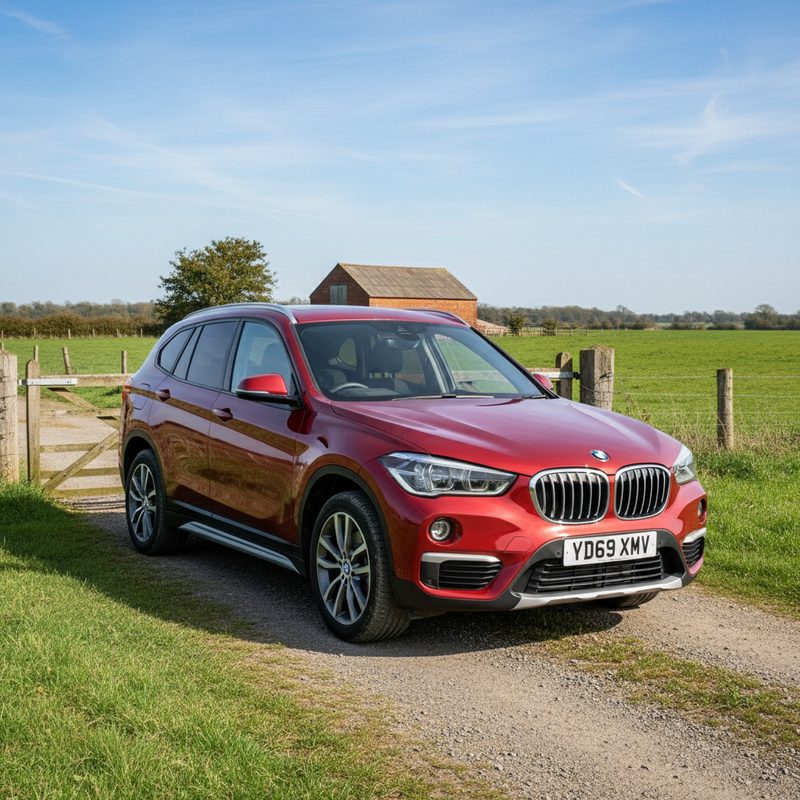
Should I Buy a 2019 BMW X1 xDrive
AWD on a small SUV sounds great, until you see the fuel bills. Here's what xDrive actually costs you versus sDrive, and whether UK roads even demand it.
Should I Buy a 2019 BMW X1 xDrive
The BMW X1 xDrive adds all-wheel-drive to BMW's entry-level SUV. It's a tempting option, after all, if you're buying an SUV, shouldn't it have four-wheel-drive? But in reality, the question is more nuanced than that. The xDrive system adds weight, complexity, fuel consumption, and purchase price. Let me help you decide whether it's actually worth it for how you drive.
What Is xDrive on the X1?
BMW's xDrive on the F48 X1 is a Haldex-type system. It's primarily front-wheel-drive, with a multi-plate clutch that sends torque to the rear wheels when the fronts lose grip. It's not a permanent all-wheel-drive system like you'd find on a Subaru or older Audi quattro. In normal dry driving, up to 100% of power goes to the front wheels. The system reacts to slip rather than preventing it proactively.
This matters because it means the X1 xDrive drives like a front-wheel-drive car 95% of the time. You're carrying the extra weight and complexity of a rear driveshaft, differential, and clutch pack for the 5% of occasions when traction is genuinely limited.
The xDrive system responds within milliseconds when slip is detected, and it does work well, BMW's calibration is excellent. On wet roundabouts, muddy car park exits, and light snow, the xDrive provides noticeably more confidence than the sDrive. But on dry roads? You genuinely cannot tell the difference.
xDrive vs sDrive: The Numbers
| Factor | sDrive18d | xDrive18d | xDrive20d |
|---|---|---|---|
| Power | 150 bhp | 150 bhp | 190 bhp |
| 0-62 mph | 9.2s | 9.6s | 7.6s |
| Combined MPG | 55-60 | 50-55 | 48-52 |
| CO2 | 119 g/km | 132 g/km | 137 g/km |
| Insurance group | 22-26 | 24-28 | 27-31 |
| Weight | 1,490 kg | 1,570 kg | 1,585 kg |
| Price premium (used) | baseline | +£1,000-£2,000 | +£2,500-£4,000 |
The xDrive18d uses the same 150 bhp B47 engine as the sDrive but adds 80 kg of weight. That makes it marginally slower, thirstier, and more expensive to insure. The xDrive20d bumps power to 190 bhp which more than compensates for the weight. It's genuinely brisk.
When xDrive Actually Makes Sense
You should buy xDrive if:
- You regularly drive on unsurfaced roads, farm tracks, or steep gravel drives
- You live in a hilly area that gets regular snow or ice (Scottish Highlands, Pennines, Lake District)
- You tow a trailer or caravan and need the traction security on wet grass or slippery launch ramps
- You want the peace of mind on winter school runs down ungritted lanes
You should buy sDrive if:
- You drive on paved roads 99% of the time
- You want the best fuel economy and lowest running costs
- You live in a relatively flat area without regular snow
- You'd rather spend the £1,000-£2,000 price premium on better spec or lower mileage
For UK drivers living in towns and suburbs, the honest answer is: sDrive is fine. Modern traction control systems are excellent, and the X1's ride height already gives it more ground clearance than a standard hatchback. A good set of winter tyres on an sDrive X1 will outperform summer tyres on an xDrive X1 in snow, Tyre Reviews has the data to prove it.
Common Problems Specific to xDrive
Everything that affects the sDrive X1 also affects the xDrive, EGR valve, timing chain concerns at high mileage, tailgate struts, infotainment glitches. Our 2018 BMW X1 sDrive18d guide covers these in detail. But xDrive adds its own potential issues:
Transfer Case Oil Seal: The most common xDrive-specific problem. The output seal on the transfer case (the unit that splits power between front and rear) can leak oil. You'll see a dark patch underneath the car, roughly in the centre. If caught early, it's a seal replacement at £300 to £500. Ignored, it can damage the transfer case internals, which means £1,500 to £2,500.
Rear Differential Bushes: The rear diff is mounted in rubber bushes that wear with age and mileage. Symptoms are a clunking sound from the rear under acceleration or deceleration. Fix: £200 to £400 at an independent.
Propshaft Centre Bearing: The propshaft running to the rear axle has a centre bearing that supports it mid-span. This bearing can fail at 80,000 to 120,000 miles, causing a vibration at speed. Fix: £250 to £450 for the bearing, or £500 to £800 for a complete propshaft if the bearing has damaged the shaft.
Haldex Clutch Service: The multi-plate clutch that engages the rear wheels needs fresh oil periodically. BMW doesn't specify a change interval (they call it "lifetime fill"), but specialists recommend every 40,000-60,000 miles. A Haldex service costs £100 to £200 and extends the life of a £2,000+ component. Ask whether this has been done, most owners haven't heard of it. Specialists like BM Automotive and local BMW indies can do this.
Running Costs: The xDrive Premium
Here's the annual cost difference between sDrive and xDrive based on 10,000 miles:
| Item | sDrive18d | xDrive18d |
|---|---|---|
| Fuel | £1,325 | £1,470 |
| Insurance | £500 to £800 | £550 to £850 |
| Servicing | £250 to £400 | £300 to £450 |
| Additional maintenance | , | £100 to £200 (transfer case, Haldex service amortised) |
| Annual total | £2,480 to £3,030 | £2,820 to £3,370 |
The xDrive costs roughly £300 to £400 more per year to run. Over five years of ownership, that's £1,500 to £2,000 on top of the higher purchase price. Not catastrophic, but worth knowing.
For the complete cost breakdown, see our BMW X1 running costs guide.
What Should You Pay for a 2019 X1 xDrive?
| Spec | Mileage | Price Range |
|---|---|---|
| xDrive18d SE | 40,000 to 60,000 | £15,000 to £18,000 |
| xDrive18d Sport | 30,000 to 50,000 | £16,500 to £19,500 |
| xDrive18d xLine | 30,000 to 50,000 | £16,500 to £19,500 |
| xDrive20d M Sport | 30,000 to 50,000 | £19,000 to £23,000 |
| xDrive20d M Sport X | 20,000 to 40,000 | £20,000 to £24,000 |
Cross-reference prices on AutoTrader. The xDrive20d M Sport is the strongest seller and holds residuals best.
Depreciation Picture
The X1 xDrive depreciates slightly slower than the sDrive because all-wheel-drive models are more desirable in the UK used market. A 2019 xDrive20d M Sport that cost £40,000 new is now £19,000 to £23,000, roughly 45-50% depreciation over six years. From here, expect to lose £1,200 to £1,800 per year.
Our BMW X1 depreciation guide covers the sweet spot age for both variants.
Pre-Purchase Checklist: xDrive Specific
In addition to the standard X1 checks, for xDrive models:
- Check underneath for oil leaks: Look around the transfer case (centre of the car) and rear differential
- Test the xDrive warning light: Start the car and check the dashboard for any drivetrain warnings. The xDrive system will flag faults
- Drive in a tight circle: Full lock in both directions. Listen for binding, clicking, or grinding from the drivetrain
- Ask about Haldex service: Has the transfer case oil been changed? If they don't know what you're talking about, it hasn't
- Check tyre wear: All four tyres should wear evenly. Uneven front-to-rear wear suggests a xDrive system issue or mismatched tyres (which can damage the system)
- Verify tyre sizes match: Running different tyre sizes or brands on front and rear can confuse the AWD system and cause premature clutch wear. All four should ideally be the same make, model, and tread depth within 2-3mm
Run an HPI check and verify the MOT history, standard for any used car purchase.
Dave's Verdict
The 2019 BMW X1 xDrive is a capable and practical premium SUV. But here's my honest advice: unless you have a genuine, regular need for all-wheel-drive, save the money and buy the sDrive. The £1,000-£2,000 you save on purchase price plus the £300-£400 per year in lower running costs adds up quickly. If you do need AWD, genuinely need it, not just want the badge, then the xDrive20d is the one to get. The extra 40 bhp compensates for the weight, and the car feels properly sorted with the more powerful engine. Either way, full service history, transfer case inspection, and a check for the known oil seal issue. Get those right and the X1 xDrive will serve you well.