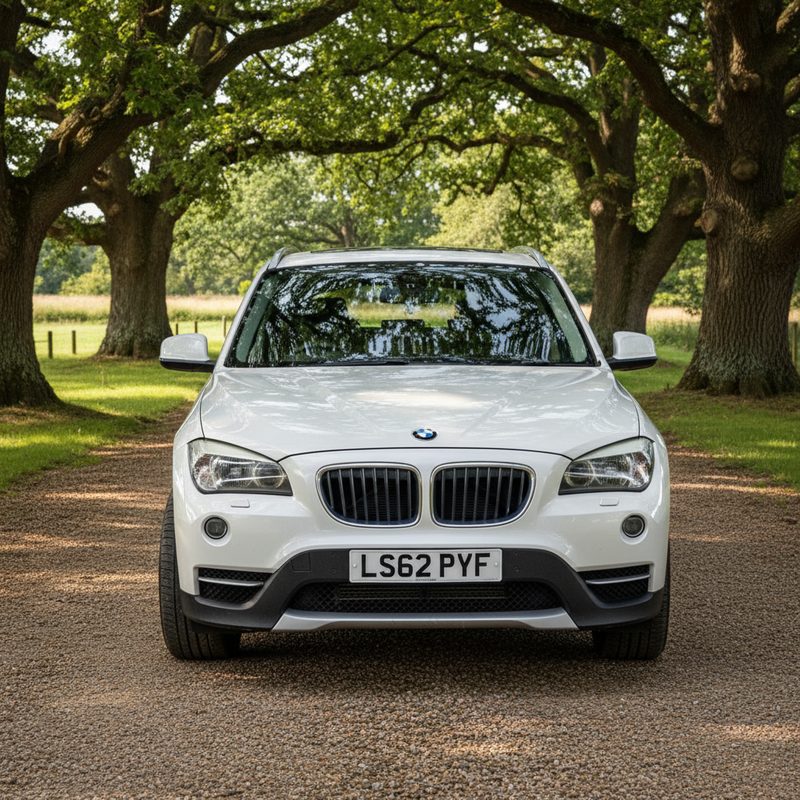
BMW X1 Depreciation — Best Year to Buy Used for Value
The BMW X1 is one of the most popular compact SUVs on UK roads, but it sheds value quicker than you might expect in the early years. Exactly when to buy, which versions to target, and how to keep depreciation losses to a minimum.
The BMW X1 and the Depreciation Problem Nobody Talks About
Right, let me tell you something that BMW dealers would rather you did not know. The X1 is a cracking little SUV -- practical, well-built, and pleasant to drive. But it depreciates at a rate that would make your eyes water if you bought it new.
A new BMW X1 sDrive18d Sport starts at around £36,000 to £38,000. The xDrive models with higher specs push well past £42,000. Within twelve months, you are looking at losing roughly £7,000 to £9,000 in value. That is 20-24% gone before you have even got through your first service.
Why does this happen? Simple. The X1 sits in a fiercely competitive segment alongside the Audi Q3, Mercedes GLA, and Volvo XC40. There are loads of them about, particularly ex-fleet and ex-PCP returns. When supply is high and competition is fierce, values drop.
How Fast Does the BMW X1 Depreciate?
I have tracked X1 values across multiple generations and the pattern is remarkably consistent. Here is the typical depreciation curve for an X1 sDrive18d Sport:
- New: £37,000
- Year 1: Worth roughly £29,000 to £30,000 (down 19-22%)
- Year 2: Worth roughly £24,000 to £26,000 (down 30-35%)
- Year 3: Worth roughly £19,500 to £22,000 (down 40-47%)
- Year 4: Worth roughly £16,500 to £18,500 (down 50-55%)
- Year 5: Worth roughly £13,500 to £15,500 (down 58-63%)
- Year 7: Worth roughly £10,000 to £12,500 (down 66-73%)
- Year 10: Worth roughly £6,000 to £8,500 (down 77-84%)
The first three years account for the bulk of the depreciation. After that, the curve levels off and annual losses become far more manageable. That levelling off is your buying window.
Dave's Sweet Spot -- The Best Year to Buy a Used X1
For most people, the absolute best time to buy a used BMW X1 is at three years old. Here is the logic, plain and simple.
At three years, you are saving roughly £15,000 to £18,000 compared to the new price. The car should have between 25,000 and 40,000 miles on it, which is nothing for a modern diesel or petrol turbo engine. You might still have the tail end of the manufacturer warranty, and the car will look and feel virtually new inside.
Before buying, you can check the exact road tax cost on GOV.UK using the registration number.
From years three to five, you will only lose about £4,000 to £6,000 total. That is roughly £2,000 to £3,000 a year in depreciation, compared to the £7,000 to £9,000 a year you would have lost buying new. You are paying a fraction of the cost for almost the same experience.
The Budget-Conscious Option
If you want even lower running costs, look at five to six year old examples. At this point, an X1 is worth around £13,000 to £15,500. Annual depreciation is now only £1,000 to £2,000. You will want to factor in potentially higher maintenance bills -- things like brake discs, suspension bushes, and possibly a clutch if it is manual -- but the overall ownership cost can be genuinely affordable.
The previous-generation X1 (F48, 2015-2022) is the one hitting this sweet spot right now. It was a massive step up from the original E84 in terms of interior space, build quality, and driving refinement.
Which X1 Variants Hold Value Best?
This is where it gets interesting, because not all X1 models depreciate equally.
xDrive models consistently hold value better than sDrive (front-wheel drive) variants. The all-wheel drive system is seen as more desirable, particularly in northern parts of the UK where winter weather makes a difference. Expect an xDrive X1 to retain about 3-5% more of its value at any given age.
M Sport trim is the clear winner for value retention. Just as with the 5 Series and 3 Series, the M Sport badge, body kit, larger wheels, and sport seats are what buyers want. An M Sport X1 will typically hold £1,500 to £2,500 more than an equivalent SE or Sport trim at three years old.
The xDrive25e plug-in hybrid has a mixed picture. It benefits from low BIK tax rates which keeps demand strong from company car drivers, but the battery range is modest and some private buyers are wary of the added complexity. Values are holding reasonably well for now, but watch this space as pure electric alternatives become more common.
Petrol models -- particularly the sDrive18i and sDrive20i -- are less common on the used market than diesels. This scarcity actually helps their resale values slightly. If you do low annual mileage (under 8,000 miles a year), a petrol X1 can make more financial sense than a diesel.
Colour and Spec Considerations
Stick with mainstream colours -- black, white, grey, and dark blue all sell well. The X1 in Phytonic Blue or Alpine White tends to move quickly on the used market.
Desirable options include the Navigation Plus package, parking sensors (front and rear), reversing camera, heated seats, and the panoramic sunroof. A well-specced X1 can hold £1,000 to £2,000 more than a base-spec example.
What Kills BMW X1 Resale Value?
There are several things that will hammer your X1's value more than normal depreciation:
Incomplete service history is the big one. BMW owners expect stamped books or digital service records from BMW or a BMW-approved specialist. Missing even one service can knock £1,000 to £2,000 off the price a buyer will pay.
High mileage hurts more on the X1 than on larger BMWs. Because many buyers view the X1 as a lifestyle or school-run car, anything above 15,000 miles per year is considered heavy use. A three-year-old X1 with 60,000 miles will be worth noticeably less than one with 35,000.
Accident damage history is a significant concern. Even fully repaired accident damage can reduce an X1's value by 10-20% compared to a clean example. Insurance write-off categories -- even Category N (non-structural) -- will put many buyers off entirely.
Outstanding finance remains one of the biggest risks in the used BMW market. A large proportion of X1s are sold on PCP or HP, and if the previous owner did not settle the finance, the car technically still belongs to the finance company. If you buy it without checking, you could lose everything.
Minimising Depreciation -- Dave's Practical Tips
If you want to keep your X1's depreciation as low as possible, follow these rules:
- Buy at three to four years old -- the biggest value drops are already done.
- Choose xDrive M Sport if your budget allows -- best combination for resale.
- Keep mileage under 10,000 a year if possible.
- Maintain it properly -- full BMW service history is worth real money at resale time.
- Protect the interior -- the X1 cabin shows wear quickly, so invest in decent floor mats and consider seat covers for the early months.
- Fix cosmetic damage before selling -- a set of refurbished alloys costs £200 to £300 and can add twice that to your sale price.
- Time your sale wisely -- SUVs and crossovers tend to hold value slightly better heading into autumn and winter when buyers want something that feels capable in poor weather.
Dave's Final Word on the BMW X1
The X1 is a genuinely good car that happens to depreciate heavily in the first few years. That makes it a terrible new buy in pure value terms, but a fantastic used purchase if you time it right.
Aim for a three to four year old xDrive M Sport with full service history, sensible mileage, and a clean MOT record. You will get a premium compact SUV for roughly half the price it cost new, and your ongoing depreciation will be a fraction of what the first owner paid.
But before you hand over any money, do yourself a favour and run the car through Dave's vehicle check. Outstanding finance, hidden write-off history, mileage discrepancies, and unresolved recalls can all lurk beneath the surface of an otherwise perfect-looking X1. A quick check gives you the full picture and the confidence to buy. Do not skip this step -- it could save you thousands.
Check BMW X1, instantly with Dave's free vehicle intelligence report.
Check a specific year with Dave