How to Choose Your First Car: Complete Guide, Dave Recommends
Choosing your first car is a big decision. From setting a realistic budget to knowing when to walk away, this guide covers every step.
Choosing your Best First Cars Under £3500 covers similar ground from a different angle.
Step 4: Understand Where to Buy
You have three main options for buying a used car in the UK, and each has its own set of advantages and risks.
Franchised Dealers
Buying from a manufacturer-franchised dealer (for example, a Ford dealership) typically offers the highest level of protection. Cars are usually inspected, prepared, and come with a dealer warranty. You have strong legal rights under the Consumer Rights Act 2015, which requires the car to be of satisfactory quality, fit for purpose, and as described.
For more on this topic, take a look at our Best First Car Under £3,000 That Will Not Break Down guide.
The trade-off is price. Dealers have higher overheads, and their cars are typically priced 10% to 20% above private sale equivalents.
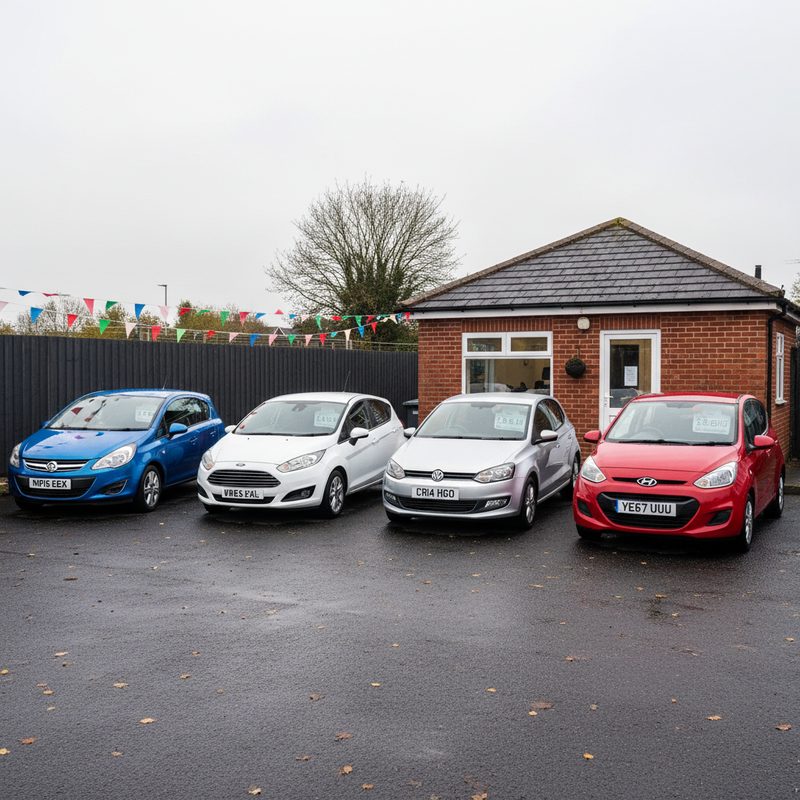
Independent Used Car Dealers
Independent dealers vary enormously in quality. Some are excellent, with proper workshops, transparent histories, and genuine care for their customers. Others are, frankly, a liability. Look for dealers with strong Google reviews, membership of trade bodies like the RAC Dealer Network, and a willingness to provide full service history documentation.
You might also find our Best First Cars Under £5000 guide useful alongside this one.
Your Consumer Rights Act protections still apply when buying from any business, including independent dealers.
Private Sellers
Buying privately typically offers the lowest price, but you have significantly fewer legal protections. The car must be "as described" by the seller, but there is no requirement for it to be of satisfactory quality. If the car develops a fault after purchase, you have very limited recourse.
We have covered related ground in our How To Insure A First Car Cheaply guide, which is worth reading if this subject interests you.
If you buy privately, a thorough pre-purchase inspection and vehicle history check are absolutely essential. You are relying on your own diligence rather than legal protections.
Before buying, you can check the exact road tax cost on GOV.UK using the registration number.
You can check any car's full MOT history for free on GOV.UK before arranging a viewing.
Step 5: Know What to Check Before You View
Before you even go to see a car in person, do your homework online:
- Check the MOT history on the government's free MOT check website. Look for patterns of advisory notes that suggest ongoing issues -- for example, recurring brake wear or corrosion warnings.
- Run a vehicle history check through Vehicle Intelligence to verify the car's background. This reveals outstanding finance, write-off history, mileage discrepancies, and stolen vehicle markers.
- Ask the seller for the full service history before travelling to view the car. If they cannot provide it, think carefully about whether the trip is worth your time.
- Verify the V5C (logbook) details match what the seller has told you -- name, address, VIN, and engine number should all align.
Step 6: Test Drive Like You Mean It
A test drive is not a leisurely pootle around the block. It is your opportunity to properly evaluate whether this car is right for you. Here is how to do it properly:
Before you drive:
- Walk around the car and check for uneven panel gaps, mismatched paint, or signs of filler (which indicate previous accident damage).
- Open and close all doors, the boot, and the bonnet. Everything should operate smoothly.
- Check that all lights, indicators, and wipers work.
- Look at the tyres. They should have at least 3mm of tread and be the same brand on each axle.
During the drive:
- Drive for at least 20 minutes, including town roads, a faster road (ideally dual carriageway), and some residential streets with speed bumps.
- Listen for unusual noises: knocking from the suspension, whining from the gearbox, rattles from the dashboard.
- Test the brakes firmly (when safe to do so). The car should stop straight without pulling to one side.
- Try every gear. The gearbox should shift cleanly without crunching or resistance.
- Check the clutch bite point. If it is very high (near the top of the pedal travel), the clutch may be wearing out.
- Turn off the radio and listen. A quiet cabin suggests good general health. Persistent noise from the engine or transmission is a warning sign.
After the drive:
- Leave the engine running and walk around the car. Check for smoke from the exhaust (blue smoke indicates oil burning, white smoke can indicate coolant issues).
- Look underneath the car for any fresh fluid leaks.
Step 7: Know When to Walk Away
This is perhaps the most important skill in car buying, and it is one that many people struggle with. If something does not feel right, walk away. You will find another car. Here are the situations where you should leave without looking back:
You can check the exact safety score for any model on the Euro NCAP website.
- The seller pressures you to make a quick decision.
- The mileage on the dashboard does not match the MOT history.
- The V5C is not present or the name on it does not match the seller.
- The car has obvious mechanical issues that the seller downplayed or failed to mention.
- Your gut tells you something is off.
Trust your instincts. A good car at a fair price will still be available next week, or a similar one will come along. A bad car will cost you money, stress, and potentially your safety.
Step 8: Consider the Best Time to Buy
The used car market in the UK follows seasonal patterns:
- March and September: New registration plates arrive, which floods the market with part-exchange trade-ins. This increases supply and can push used car prices down slightly.
- January and February: Post-Christmas budgets are tight, and demand drops. Sellers are more willing to negotiate.
- Summer: Convertibles and fun cars command higher prices. Practical cars can sometimes be found cheaper.
If your timing is flexible, buying in January, February, or October (just after the September plate change) typically offers the best value.
You can look up the exact insurance group for any car on Thatcham's website before getting quotes.
Your Decision Framework -- A Summary
- Calculate your total monthly motoring budget
- Get insurance quotes for potential models
- Create a shortlist of 3-5 cars that match your needs and budget
- Research specific examples online (MOT history, vehicle check, service records)
- View and test drive in person
- Walk away from anything that does not feel right
- Complete a comprehensive vehicle check before committing
Dave's Final Coaching Point
You are making a good decision by doing this research before buying. Most of the people who get burned by a bad car purchase are the ones who rushed in without a plan. You are not going to be one of them.
The FCA has a useful guide to car finance that explains your rights and what to watch for.
When you have found a car that ticks all your boxes, run one final check using Dave's vehicle check tool on Vehicle Intelligence. It is the last step in the process, and it is the one that gives you the confidence to hand over your money knowing exactly what you are getting. I am rooting for you. Go find yourself a brilliant first car.