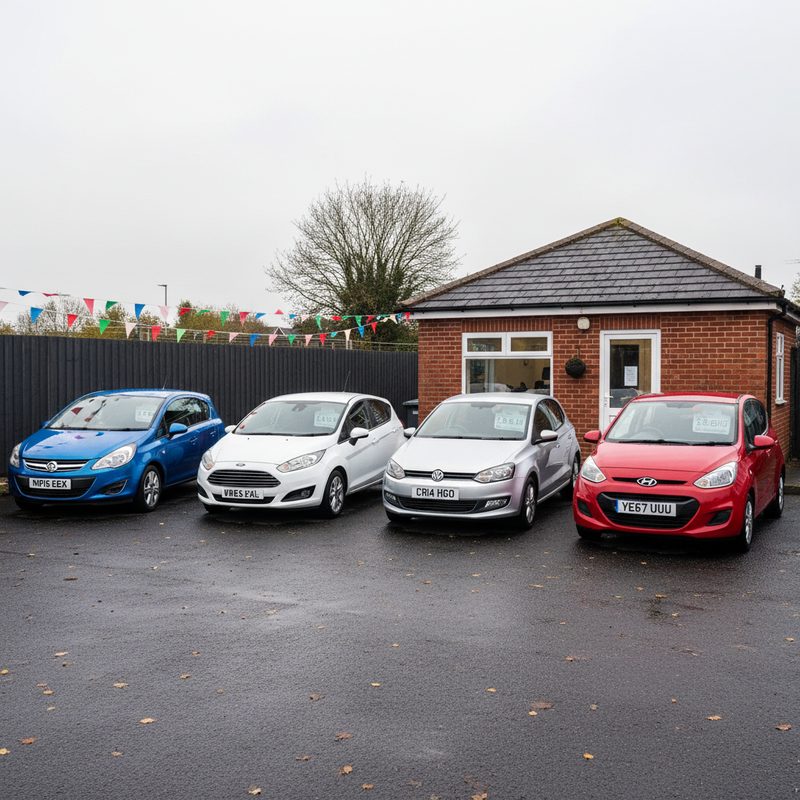
Best First Cars for Students UK — Dave Recommends
Being a student and running a car feels impossible, but it does not have to be. The best budget-friendly first cars for UK students -- covering insurance, fuel economy, and motors you can actually afford on a maintenance loan.
Alright, students -- gather round. I know the deal. You have got your provisional or maybe just passed your test, you are living off a maintenance loan that barely covers rent and Aldi meal deals, and you reckon a car might make life a bit easier. Weekend trips home, summer job commutes, maybe the odd IKEA run that you simply cannot do on the bus. The question is: can you actually afford to run a car as a student? And if so, what should you buy?
The short answer is yes, you can, but you need to be proper clever about it. Let me show you how.
The Real Cost of Running a Car at Uni
Before you start scrolling through Facebook Marketplace dreaming about Audi A3s, let us do some honest maths. The purchase price of the car is only part of the story -- and often the smallest part.
Here is what a typical year of student car ownership looks like:
- Car purchase: £1,500-£3,000 (one-off)
- Insurance: £1,200-£2,500 (the big one)
- Road tax: £0-£165 depending on emissions
- MOT: £54.85 (the test itself, not counting any repairs)
- Fuel: £50-£100 per month depending on mileage
- Maintenance and repairs: £300-£600 per year on an older car
- Parking permit: £0-£500 depending on your uni and accommodation
Add it all up and you are looking at roughly £2,500-£4,500 per year on top of the purchase price. That sounds terrifying, I know. But split it monthly, that is about £200-£375. If having a car means you can take a part-time job that pays better or is further away, or if it saves you expensive train fares home, it can actually work out.
Best Cars Under £2,000 for Students
This is where most students should be looking. You do not need anything flash -- you need something that starts every morning, sips fuel, and does not cost a fortune to insure.
Ford Ka (2008-2016)
The Ford Ka is the unofficial car of British students, and for good reason. You can find tidy examples with decent MOT history for £1,000-£1,800. The 1.2-litre engine returns around 50mpg, insurance sits in groups 2-3, and parts are everywhere. It is not exciting, it is not Instagram-worthy, but it does the job brilliantly.
Watch out for rust on earlier models and check the timing belt has been done -- it is an interference engine, which means if the belt snaps, the engine is toast.
Vauxhall Corsa D (2006-2014)
Another student staple. The 1.0-litre version is the one you want for insurance purposes -- it falls in groups 2-4. Budget around £1,200-£2,000 for a decent one. They are comfortable enough for motorway trips home, the boot is a reasonable size, and every mechanic in the country knows how to fix them.
The 1.2 and 1.4 versions are tempting for the extra power, but check the insurance difference first. It can be significant for young drivers.
Fiat Punto (2005-2018)
Slightly less common than the Corsa, which means slightly cheaper to buy. The 1.2-litre engine is groups 3-5 for insurance, fuel economy is around 45-50mpg, and they are surprisingly spacious inside. You can find clean examples for £800-£1,500.
The downsides? Fiat reliability is not legendary, and electrical gremlins can appear on higher-mileage examples. A proper check of the history is essential.
Toyota Yaris (2005-2014)
If reliability is your top priority -- and as a student with no spare cash for breakdowns, it should be -- the Yaris is hard to beat. Toyota builds these things to last. The 1.0-litre version is groups 2-5, runs forever with basic maintenance, and holds its value reasonably well.
Expect to pay £1,500-£2,500, which is a bit more than a Corsa or Punto, but you are paying for peace of mind. These cars regularly hit 150,000 miles without major drama.
Best Cars Between £2,000 and £3,000 for Students
Got a bit more budget? Maybe parents are helping out or you saved from a gap year job? This bracket gets you something newer and nicer.
Volkswagen Polo (2009-2014)
The Polo feels a step above the budget hatchbacks in terms of build quality and refinement. The 1.0 or 1.2-litre versions sit in groups 3-7, and you get a car that feels genuinely grown-up to drive. Budget £2,000-£3,000 for a tidy example.
Great for longer motorway trips home, comfortable seats, and a cabin that does not rattle itself to bits. Servicing is a touch more expensive than a Ford or Vauxhall, but nothing dramatic.
Hyundai i10 (2013-2019)
This little Korean cracker is genuinely one of the Best Small cars you can buy. Groups 3-5 for insurance, incredibly reliable, cheap to maintain, and the newer ones come with a surprisingly long manufacturer warranty that might still have time left.
Before buying, you can check the exact road tax cost on GOV.UK using the registration number.
At £2,500-£3,000 you can find relatively low-mileage examples that will see you through your entire degree without breaking a sweat.
Suzuki Swift (2010-2017)
If you want something with a bit of personality, the Swift is your car. It is genuinely fun to drive -- properly chuckable around country lanes -- while still being sensible on insurance (groups 5-8 for the 1.2). Budget £2,000-£3,000.
Suzuki reliability is excellent, running costs are low, and they have a bit of street cred that the Yaris lacks. Perfect if you care about enjoying the drive.
Dealing With Student-Specific Car Challenges
Term-Time Parking
This is the hidden nightmare. Many universities charge £200-£500 per year for a campus parking permit, and some do not offer them to first-years at all. City-centre unis like Leeds, Manchester, or Bristol can be even trickier, with residents parking zones requiring expensive permits.
Before you buy a car, check your accommodation and university parking policies. Some students find it cheaper to park at a friend's house nearby or use a slightly out-of-town car park.
If you are in a campus university with free or cheap parking, you are laughing. If you are in central London, honestly, do not bother with a car until you move somewhere more reasonable.
Insurance Hacks for Students
Your address matters enormously for insurance. You can legitimately insure the car at your home address if that is where the car is kept most of the time (holidays, weekends). If the car lives at your uni address, you need to use that -- do not be tempted to use your parents' address if the car is primarily at uni. That is called misrepresentation and it invalidates your policy.
Telematics (black box) insurance is practically designed for students. Companies like Marmalade, ingenie, and Veygo offer policies that reward good driving with lower premiums. If you are mainly doing short trips around campus and the occasional motorway run home, a black box can cut your insurance by 30% or more.
Multi-car policies sometimes work if your parents have cars too. Some insurers offer discounts when multiple family members insure with them, even at different addresses.
Fuel Economy for Weekend Trips Home
If you are doing regular runs back to see the folks, fuel economy matters. A car returning 50mpg versus 35mpg makes a real difference over a year of monthly round trips.
Say your parents are 150 miles away. A round trip of 300 miles at 50mpg costs about £40 in fuel at current prices. At 35mpg, that same trip costs about £57. Over 30 trips during your degree, that is a difference of over £500. Enough for quite a few Nando's trips with your mates.
Keeping Costs Down While at Uni
Here are a few more tricks to keep student motoring affordable:
- Do your own basic maintenance. YouTube will teach you how to change oil, replace wiper blades, check tyre pressures, and swap brake pads. These small jobs save £50-£150 each time compared to a garage.
- Join a student motoring group. Facebook groups and forums are brilliant for finding cheap local mechanics, sharing lifts to reduce fuel costs, and getting advice from fellow student drivers.
- Time your MOT strategically. Book it a week or two before the expiry date. If it fails, you have time to shop around for repair quotes rather than panicking and paying over the odds.
- Use cashback fuel cards. Supermarket loyalty points, Costco fuel (if a mate has a membership), and cashback credit cards can all shave a few percent off your fuel bill.
Do Not Forget the History Check
This is massive and I cannot stress it enough. Cheap student cars are exactly the type that dodgy sellers try to shift with hidden problems -- outstanding finance, previous write-offs, clocked mileage, or stolen markers. A car that looks like a bargain at £1,200 could have £4,000 of outstanding finance on it that you become liable for.
Before you hand over any money, use Dave's vehicle check to run a full history report. It takes a couple of minutes, costs a fraction of what a nasty surprise would, and gives you the full picture on any car. Check the MOT history too -- it is free on the DVLA website and tells you every advisory and failure the car has ever had.
Dave's Final Word for Students
Running a car at uni is completely doable if you buy smart. Stick to cars under £3,000, keep insurance groups below 8, prioritise reliability over looks, and budget honestly for the running costs. The freedom a car gives you at university -- from job opportunities to weekend trips to moving house every September -- is genuinely worth it.
Just do not buy that Audi A3 your mate is selling. Trust me on that one. Get yourself a sensible little runaround, look after it, and save the dream car for when you have got a graduate salary. You will thank me later.
Check any car with Dave
Get Dave's free AI-powered vehicle check before you make a decision.