How Much Should You Spend on a First Car?: Dave Recommends
The sticker price is only the beginning. Total cost of ownership, why the £3k-£5k range is the sweet spot, and how to budget properly so your first car does not become a financial headache.
One of the most common questions I get asked is dead simple on the surface but surprisingly tricky to answer properly: how much should I actually spend on my first car figures. For many new drivers, insurance is literally more expensive than the car. If you spend your entire budget on the car and have nothing left for insurance, you are going nowhere. Literally -- driving without insurance is illegal and the penalties are severe.
Building Your Total Budget: A Proper Framework
Instead of asking "how much should I spend on a car?", ask "how much can I afford to spend on motoring this year?" That is a fundamentally different question and it leads to much better decisions.
Here is the framework I recommend:
Step 1: Calculate Your Total Motoring Budget
Work out what you can realistically afford per month on all car-related costs combined. Be brutally honest. If you earn £1,200 per month from a part-time job, spending £400 per month on a car is reckless regardless of how you split it.
A sensible rule of thumb: spend no more than 15-20% of your take-home income on all motoring costs. If you earn £1,500 per month, that means a total motoring budget of £225-£300 per month, or roughly £2,700-£3,600 per year.
Step 2: Subtract the Fixed Costs First
Before you allocate a single penny to buying the car, subtract the costs you cannot avoid:
- Get real insurance quotes (not estimates -- actual quotes from comparison sites)
- Check road tax for the specific cars you are considering
- Budget £55 for the MOT plus £200-£400 for potential repairs
- Estimate your monthly fuel based on expected mileage
- Add £50-£70 for breakdown cover (essential for older cars)
For a typical new driver, these fixed costs eat up £2,000-£4,000 per year. Whatever is left from your total motoring budget is what you can spend on the car itself.
Step 3: Decide Whether to Save or Finance
If your remaining budget after fixed costs is £2,000-£5,000, you are in a solid position to buy outright. If it is less, you either need a cheaper car, a bigger overall budget, or you need to consider whether now is really the right time.
I will cover finance options later, but my strong preference for first cars is buying outright if at all possible. The reasons are practical, not ideological.
The Sweet Spot: £3,000 to £5,000
After helping hundreds of new drivers find their first car, I can tell you that the sweet spot for most people is between £3,000 and £5,000. Here is why that range works so well.
Below £1,500: High Risk Territory
Cars under £1,500 exist and some of them are perfectly fine. But statistically, the cheaper you go, the more likely you are to face expensive repairs. A car selling for £800 might need £600 of work within the first six months -- new tyres, a clutch, or some welding for the MOT. Suddenly your £800 bargain has cost you £1,400 and you still have an old car.
The exception is if you or someone close to you is handy with a spanner. If your uncle is a mechanic and can check the car over properly and handle basic repairs, a sub-£1,500 car can work brilliantly.
£1,500 to £3,000: Workable but Choose Carefully
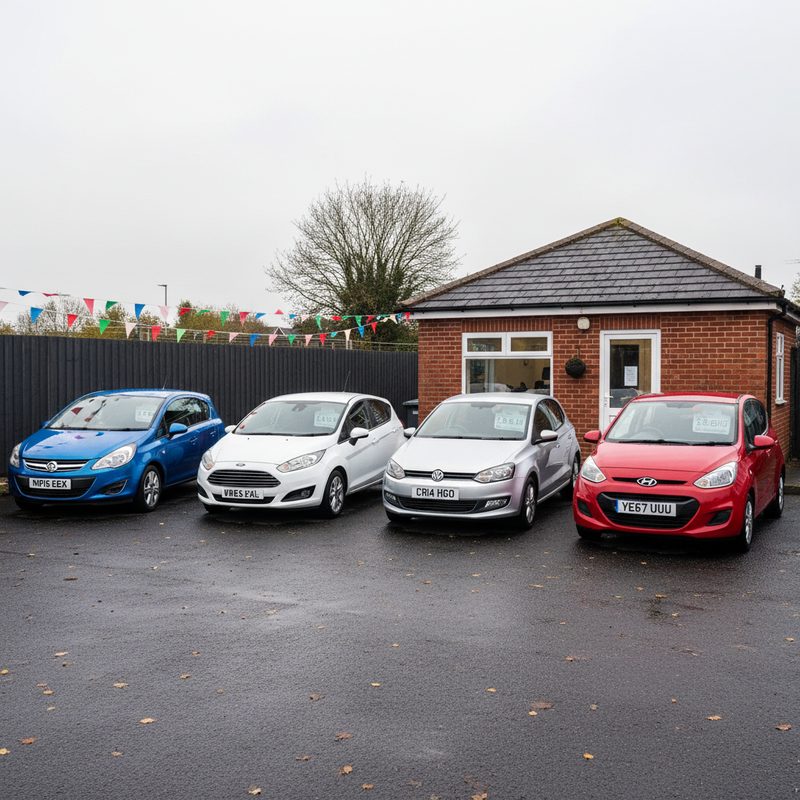
This range gets you a usable car if you pick wisely. You are looking at vehicles that are 8-15 years old with 60,000-100,000 miles. The key is choosing models known for reliability -- Toyota Yaris, Honda Jazz, Ford Fiesta, Hyundai i10 -- rather than anything exotic or prestigious.
At this price point, mechanical condition matters more than cosmetics. A car with a scratched bumper and faded paint but a full service history and clean MOT record is worth far more than a gleaming car with no paperwork.
£3,000 to £5,000: The Goldilocks Zone
This is where the magic happens. At £3,000-£5,000, you get:
- Cars that are 5-10 years old with 40,000-80,000 miles
- Models still within reasonable warranty periods on some components
- Generally reliable enough to avoid major repair bills in the first couple of years
- Enough choice to find exactly what suits you
- Modern safety features like multiple airbags, stability control, and ISOFIX
A 2016-2018 Ford Fiesta 1.0 EcoBoost in this range is a genuinely brilliant car. A 2015-2017 Volkswagen Polo is refined and well-built. A 2017-2019 Hyundai i10 or i20 could still have manufacturer warranty remaining. These are not compromise cars -- they are genuinely good vehicles.
£5,000 to £8,000: Nice but Not Necessary
You absolutely can spend more, and the cars in this range are newer and nicer. But here is the thing: as a first car, you are probably going to pick up a few scratches in car parks, maybe kerb a wheel, possibly have a minor bump. That stings a lot less on a £3,500 car than on a £7,000 one.
There is also the depreciation factor. A car bought for £7,000 might be worth £5,000 in two years. A car bought for £3,500 might be worth £2,500 in two years. The percentage loss is similar, but the actual cash loss on the more expensive car is double.
Above £8,000: Not for First Cars
I am going to be direct: spending over £8,000 on a first car is almost never a good financial decision. The insurance will be higher, the depreciation will be steeper, and the anxiety of damaging it will take the joy out of learning to drive in the real world.
The False Economy of Going Too Cheap
I need to spend a moment on this because it is a trap I see people fall into constantly. The logic goes: "I will just buy the cheapest car I can find, and if it breaks, I will scrap it and buy another cheap one." On paper, this sounds clever. In reality, it is miserable.
Every time a car breaks down, you are paying for recovery, potentially missing work or commitments, and spending time and stress sorting out a replacement. You might also need to re-insure a different vehicle mid-policy, which often means losing money on the existing policy.
The cheapest car to own is not the cheapest car to buy. It is the car that runs reliably for the longest time with the lowest total outlay. A £3,500 Toyota that runs faultlessly for three years is infinitely cheaper than two £1,000 Corsas that each last 18 months and cost £500 each in repairs.
Finance Options: Proceed With Caution
If you genuinely cannot save enough to buy outright, there are finance options available. But I want you to go in with your eyes wide open.
Before buying, you can check the exact road tax cost on GOV.UK using the registration number.
Personal Loan
A personal loan from your bank or a credit union is usually the best form of car finance because you own the car outright from day one. Interest rates for borrowers with thin credit files (common for young people) typically range from 7-15% APR. A £3,000 loan over 24 months at 10% APR costs about £138 per month with total interest of around £320.
HP (Hire Purchase)
HP through a dealer means you pay a deposit, make monthly payments, and own the car once the final payment is made. Interest rates can be reasonable (6-12% APR through mainstream lenders), but dealer-arranged finance often comes with higher rates. Always compare with a personal loan.
PCP (Personal Contract Purchase)
PCP is designed for new or nearly-new cars and is generally not suitable for first cars. The monthly payments look attractive, but there are mileage restrictions, condition requirements, and a large balloon payment at the end. Avoid PCP for your first car.
Borrowing From Family
If your parents or grandparents offer to help, consider a formal arrangement -- even a simple written agreement about repayment terms. This keeps the relationship healthy and teaches you financial discipline. Many families set up interest-free loans of £2,000-£3,000 repaid over 12-24 months.
The Budget That Actually Works
Let me put this all together with a realistic example. Say you are 19, working part-time and earning £1,200 per month.
Total motoring budget (20%): £240/month = £2,880/year
Fixed costs:
- Insurance (black box policy): £1,400/year
- Fuel (500 miles/month at 50mpg): £85/month = £1,020/year
- Road tax: £0-£30/year
- MOT and repairs: £250/year
- Breakdown cover: £50/year
Total fixed costs: £2,750/year
Remaining for car purchase: £130/year -- essentially nothing.
This is reality for many young people, which is why saving up before you buy or getting family help is so common. If you can save £150/month for 18 months before passing your test, you have got £2,700 for the car, and then your annual budget covers the running costs.
Protecting Your Investment
Whatever amount you decide to spend, protect it by doing your due diligence before buying. A proper vehicle history check confirms there is no outstanding finance, the car has not been written off, the mileage is genuine, and it has not been reported stolen. These are not theoretical risks -- they are real problems that affect thousands of used car buyers every year in the UK.
Use Dave's vehicle check tool before you commit to any purchase. It pulls together data from multiple sources and gives you a clear, honest picture of the car's background. Combined with a thorough test drive and inspection, it is the best protection you have got.
Dave's Bottom Line
Spend £3,000-£5,000 if you can. Budget for insurance first, car second. Choose reliability over looks. Buy outright if at all possible. And never, ever commit to a car without knowing its full history.
Your first car is a tool, not a status symbol. Get the budgeting right and you will enjoy genuine freedom on the road without the financial stress that ruins the experience for so many new drivers. That is what smart car buying looks like.