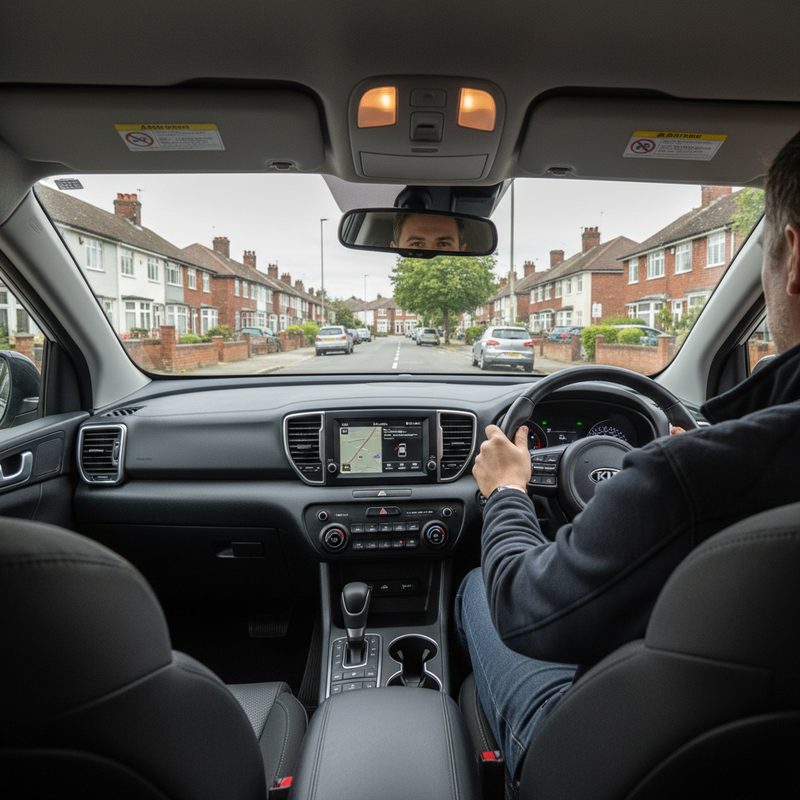
How To Test Drive A Used Car — Dave's Complete Guide
A test drive is your best chance to find faults before you buy. Exactly what to do, what to listen for, and the route you should take.
More Than Just a Spin Round the Block
A test drive is not a joyride. It is a diagnostic tool. Done properly, it can reveal faults that would cost you hundreds or thousands of pounds. Done badly, which is how most people do it, it tells you almost nothing.
I watch buyers all the time who take a car for a five-minute trundle round the nearest housing estate, declare it "drives lovely," and hand over the money. That terrifies me. Five minutes at 20 mph tells you virtually nothing about the condition of the engine, gearbox, brakes, suspension, or steering.
A proper test drive takes 20 to 30 minutes and covers a planned route that puts the car through its paces. Here is exactly How to do it.
Before You Turn the Key
Cold Start
Always insist on starting the car from cold. This is absolutely critical. Ask the seller not to warm the car up before you arrive. Many faults only show themselves on a cold start: noisy tappets, rattling timing chains, smoky exhausts, difficult starting, and rough idling all become apparent when the engine is cold and disappear once it warms up.
If you are weighing up alternatives, our guide to How to Buy a Used Car at Auction UK covers similar ground from a different angle.
If you arrive and the engine is already warm, be suspicious. The seller may have deliberately warmed it up to hide a problem. Ask them to leave it for 30 minutes and come back, or arrange to return another day and insist on a cold start.
If you are weighing up alternatives, our guide to How to Arrange Collection for a Used Car covers similar ground from a different angle.
Dashboard Warning Lights
Before starting the engine, turn the ignition to the "on" position (but do not start it). All the warning lights should illuminate briefly during the self-test. Count them. Check specifically for:
- Engine management light (typically amber)
- ABS light
- Airbag light
- Oil pressure light
- Battery charging light
- Traction control light
If any of these lights do not illuminate during the self-test, the bulb may have been removed to hide an active fault. This is a classic trick used by unscrupulous sellers.
For more on this topic, take a look at our Buying a Used Car With Cash vs Finance guide.
Check the Clutch
On a manual car, press the clutch pedal a few times before starting the engine. It should feel smooth and consistent. Note where the biting point is. If it is very high (near the top of the pedal travel), the clutch is worn and may need replacing soon. A clutch replacement costs £400 to £900 depending on the car.
Planning Your Route
Do not just drive wherever the seller suggests. They may have a carefully planned route that avoids speed bumps, hills, and faster roads that would reveal problems. Plan your own route that includes:
For more on this topic, take a look at our How to Get a Used Car Inspected Before Buying guide.
- Urban streets with speed bumps and potholes to test the suspension
- A stretch of dual carriageway or A-road to check the car at 50-60 mph
- Hills to test the engine under load and check the clutch for slipping
- A quiet car park for low-speed manoeuvring and checking the steering
- A stretch of rough road to listen for rattles and knocks
What to Check While Driving
The Engine
Listen to the engine at idle. It should run smoothly without missing, hunting (revs going up and down), or making unusual noises. Accelerate firmly through the gears and listen for:
You might also find our Should You Buy Extended Warranty on a Used Car? guide useful alongside this one.
- Knocking or tapping that increases with engine speed (could indicate worn big-end bearings or hydraulic lifters)
- Rattling on start-up that disappears after a few seconds (could be a timing chain issue)
- Whining or whistling under acceleration (could be a turbo problem or power steering pump)
- Hesitation or flat spots when accelerating (fuel system, ignition, or sensor problems)
Check the temperature gauge. It should rise to the normal operating position within a few minutes and stay there. If it creeps towards the red or fluctuates, there could be a cooling system problem.
The Gearbox
On a manual, shift through every gear including reverse. Each change should be smooth and precise. Listen for:
- Crunching when changing gear (worn synchromesh)
- Difficulty engaging a gear (linkage or synchromesh wear)
- Grinding in reverse (common but excessive grinding is a concern)
- The car jumping out of gear under acceleration (worn selector forks)
On an automatic, the gearbox should shift smoothly and promptly between gears. Harsh, jerky, or delayed shifts suggest the gearbox fluid needs changing or there is internal wear. Automatic gearbox repairs start at £1,000 and can exceed £3,000.
You might also find our Used Car Vs New Car Cost Comparison guide useful alongside this one.
We have covered related ground in our How to Do a Test Drive Properly guide, which is worth reading if this subject interests you.
The Brakes
Test the brakes at various speeds. The car should stop in a straight line without pulling to either side. Listen for:
- Squealing (often just a wear indicator, meaning the pads need replacing)
- Grinding (the pads are completely worn and the metal backing plate is scoring the disc, which means new pads and discs are needed)
- Pulsing through the pedal (warped brake discs)
Check the handbrake holds the car on a hill. If the handbrake lever comes up a long way before engaging, it needs adjustment or the cable needs replacing.
The Steering
The steering should feel direct and responsive. Check for:
- Wandering at speed (alignment issues or worn steering components)
- Vibrations through the wheel at 50-60 mph (unbalanced wheels, worn CV joints, or warped brake discs)
- Knocking when turning at low speed (worn CV joints)
- Heavy steering (power steering pump or rack issue)
- Play in the steering wheel (worn steering rack or track rod ends)
The Suspension
Drive over some speed bumps and rough roads. Listen for:
- Clunking over bumps (worn anti-roll bar links, ball joints, or bushes)
- Banging over larger bumps (worn shock absorbers or broken springs)
- Creaking when turning at low speed (worn suspension bushes)
The car should feel composed and controlled over bumps, not wallowy or bouncy. If it continues to bounce after a bump, the shock absorbers are worn.
The FCA has a useful guide to car finance that explains your rights and what to watch for.
We have covered related ground in our What Documents Do You Need to Buy a Used Car? guide, which is worth reading if this subject interests you.
The Exhaust
While driving, have someone follow you or use a mirror to check the exhaust. Once the car is warmed up:
- Blue smoke under acceleration means the engine is burning oil
- White smoke (not steam) means coolant is entering the combustion chamber, which could be a head gasket failure
- Black smoke from a diesel suggests a fuelling problem or blocked DPF
After the Drive
Let the Engine Idle
After your test drive, let the engine idle for a couple of minutes. Watch the temperature gauge for any sign of overheating now that airflow through the radiator has stopped. Listen for any new noises that have developed now the engine is hot.
Check Underneath
Have a quick look underneath the car for any new drips or leaks that have appeared during the drive. A freshly warmed engine will push oil or coolant through any weak seals or gaskets.
Check the Electrics
Now is a good time to check all the electrical features:
- Air conditioning (should blow cold within 30 seconds)
- Heated seats and steering wheel
- Infotainment system and Bluetooth
- Parking sensors and reversing camera
- Electric windows and mirrors
- Sunroof if fitted
- All interior lights
Red Flags That Should Stop the Sale
- The seller will not let you test drive the car
- The engine was already warm when you arrived
- Warning lights that do not illuminate during the self-test
- Excessive smoke from the exhaust when warm
- Grinding or crunching from the gearbox
- The car pulls heavily to one side under braking
- Knocking from the engine at any speed
- The temperature gauge rises towards the red
Any one of these is a reason to walk away or, at minimum, insist on a professional inspection before proceeding.
Dave's Test Drive Summary
A proper test drive protects you from expensive surprises. But even the best test drive cannot tell you everything about a car's history. Before you get to the test drive stage, run a vehicle check through Dave. It reveals outstanding finance, write-off history, mileage discrepancies, and stolen markers that no amount of driving will uncover. Combine a thorough test drive with a comprehensive vehicle check and you have covered every angle. Use Dave to check any car you are considering.
Check any car's full MOT history for free on GOV.UK before viewing. Verify the car's registration and tax status via the DVLA vehicle enquiry service. Check the road tax cost so there are no surprises after purchase. Look up insurance groups at Thatcham. And if something goes wrong with a dealer purchase, Citizens Advice explains your consumer rights under the Consumer Rights Act 2015.
Use Dave to check any car you're considering
Get Dave's free AI-powered vehicle check before you make a decision.