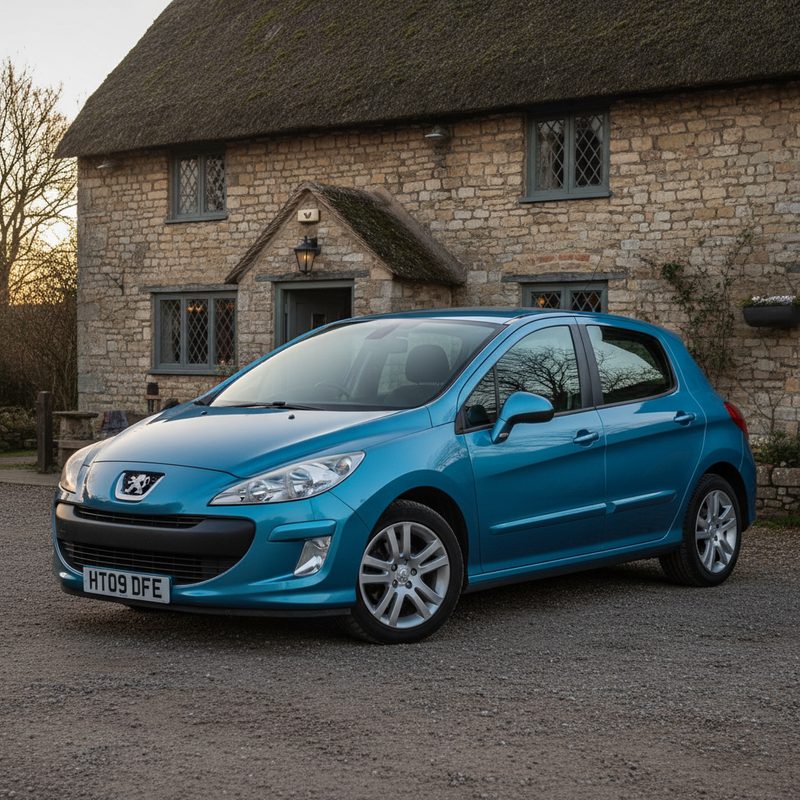
2010 Peugeot 308 T7 — Budget Family Car Nobody Remembers
The 308 T7 has French flair that the Focus lacks — but Peugeot's electrical reputation follows it. The 1.6 HDi diesel is a strong motorway cruiser if you can navigate the known pitfalls.
French Style in a Conservative Market
The Peugeot 308 T7 (2007–2013) was Peugeot's contender in the fiercely competitive family hatchback segment, going up against the Ford Focus, Volkswagen Golf, and Vauxhall Astra. It offered something none of those rivals could match — distinctive French styling with a quality of interior design that surprised many reviewers at launch. The dashboard layout, the quality of materials in higher trims, and the overall sense of visual flair were genuinely impressive for the price point. At £1,500–£3,500 for a 2010 model, the 308 T7 significantly undercuts the Focus Mk2 — but it brings Peugeot's documented electrical reliability concerns along for the ride.
At 15 years old, the national average MOT failure rate sits at approximately 39%. The 308 T7 lands at or slightly above this average, with electrical system failures and suspension wear being the dominant categories. The car's MOT history is absolutely essential reading before any purchase — check for recurring electrical advisories at gov.uk and verify mileage consistency through the DVLA vehicle check. A 308 with clean, consistent MOT history is a fundamentally different ownership proposition from one with escalating advisories.
Engine Choices
1.6 VTi Petrol (120 bhp) — Acceptable with Caveats
The 1.6-litre VTi naturally aspirated petrol produces 120 bhp and returns 40–45 mpg in mixed driving. Insurance groups sit at 11–15. The engine is timing chain driven, but critically, it uses the same problematic chain tensioner system found in the exhaust emissions advisory guide for more detail on DPF-related MOT issues.
2.0 HDi Diesel (136 bhp) — Diesel Muscle for Motorway Cruisers
The 2.0-litre HDi diesel produces 136 bhp and 320 Nm of torque, making the 308 a relaxed, refined motorway cruiser. It returns 48–55 mpg and sits in insurance groups 14–18. The timing belt interval is more generous at 120,000 miles or 10 years. The engine is DPF-equipped, so the same short-journey caveats apply. The 2.0 HDi is a fundamentally solid engine if maintained correctly — it is used across the Peugeot, Citroen, and Ford ranges (as the DW10) and has a strong reliability record when serviced on schedule. For buyers who cover high annual mileage predominantly on motorways, the 2.0 HDi offers the best combination of performance, economy, and refinement in the 308 range.
Known Faults
Electrical System and BSI Failures
The 308 T7 inherits Peugeot's BSI (Body Systems Interface) architecture from the 207, and with it comes the same category of electrical problems. The BSI manages central locking, windows, instrument cluster, immobiliser, and various sensor inputs. When it malfunctions, the symptoms can be bewildering — random warning lights appearing on the dashboard, particularly the anti-pollution and engine management lights; central locking operating intermittently or not at all at a repair cost of £80–£200; and the instrument cluster losing backlighting or displaying incorrect readings at £150–£300 for repair. The anti-pollution warning is particularly common and often indicates a sensor fault rather than a genuine emissions problem, but diagnosis still costs £50–£100 to identify the specific cause. BSI repair or replacement costs £200–£500. During the viewing, systematically test every electrical function — windows, locks, lights, wipers, heater blower, stereo, and instrumentation. Any electrical anomaly on a 308 should be treated as a red flag requiring investigation before purchase.
Suspension Wear and MOT Advisory Patterns
The 308's front suspension uses MOT history for any sudden emissions failure that might indicate a previous cat replacement with a lower-quality unit.
Turbo Failure on THP Engines
For THP-equipped 308s, turbocharger failure typically occurs between 50,000 and 90,000 miles. Symptoms include blue or white exhaust smoke, excessive oil consumption, loss of boost pressure, and a whistling noise from the turbo that changes in pitch with engine speed. Replacement costs £800–£1,400 for the turbo unit plus labour. Combined with the potential for timing chain work and fuel pump replacement, the total cost of THP ownership can easily exceed £3,000 over a few years — more than the car's purchase price. This is why the THP is strongly recommended against for budget buyers.
Brake Disc and Pad Wear Patterns
The 308's front brakes handle the majority of stopping force and AutoTrader for current availability. The 1.6 HDi 90 in SR or S trim offers the best value-to-risk ratio.
Running Costs
Road tax ranges from £30 for the most efficient 1.6 HDi models to £165 for higher-emission petrol variants. Insurance groups span 10–18 across the range. Servicing at an independent garage costs £130–£230 per visit, with diesel models at the upper end due to fuel filter replacement. Brake pads last MOT history specifically for electrical and suspension advisory trends, verify the DVLA details, and read Honest John owner feedback for real-world ownership perspective. Budget £400–£700 for first-year maintenance to bring the car up to a solid baseline.
Useful links: Honest John review · AutoTrader search · Euro NCAP safety rating
Check 2010 Peugeot 308, instantly with Dave's free vehicle intelligence report.
Check any Peugeot 308 instantly with Dave's free vehicle intelligence report