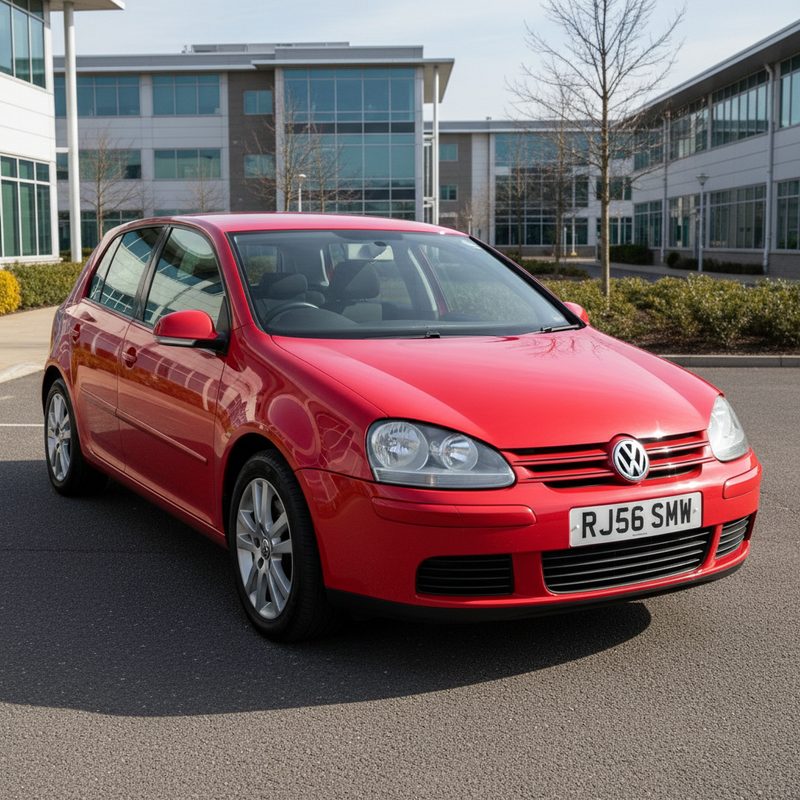
Used VW Golf or Ford Focus? True Running Cost Comparison
Badge prestige is one thing, but what hits your bank account month after month? The VW Golf and Ford Focus through a proper running cost audit.
Which One Is Cheaper to Live With?
I am going to level with you straight away. If running costs are your primary concern, the Ford Focus is the car to buy. It is cheaper on fuel, cheaper to service, cheaper to repair, and cheaper to insure. The VW Golf is not ruinously expensive by any stretch, but there is a consistent premium attached to owning one, and it adds up over the years.
Now, cheaper to run does not automatically mean better. The Golf offers a more premium ownership experience, and some people are happy to pay for that. But if you want cold, hard numbers, here they are.
Fuel Economy -- Pennies Per Mile
Let me start with the cost you notice most often -- filling the tank.
The Ford Focus 1.0 EcoBoost (the most popular used engine choice) returns a genuine 45-52 mpg in mixed driving. Ford's three-cylinder turbo engine has won more awards than I can count, and it deserves every single one. It is responsive, refined, and genuinely frugal without feeling gutless.
The VW Golf 1.5 TSI (the equivalent popular choice) manages 42-48 mpg in the same conditions. It is a good engine -- smooth and quiet -- but the Focus has a measurable advantage at the pump.
If you are weighing up alternatives, our guide to Nissan Juke vs Hyundai Kona covers similar ground from a different angle.
For the diesel buyers out there, the Focus 1.5 EcoBlue returns 55-62 mpg in the real world, while the Golf 2.0 TDI manages 50-58 mpg. Again, the Ford edges it.
Annual Fuel Costs
Based on 12,000 miles per year at £1.45 per litre for petrol:
- Focus 1.0 EcoBoost at 48 mpg: approximately £1,645 per year
- Golf 1.5 TSI at 45 mpg: approximately £1,755 per year
That is around £110 per year in the Focus's favour. Not a fortune on its own, but keep reading -- the savings compound.
insurance Costs
Insurance groups for these two cars reflect their market positioning. The Focus 1.0 EcoBoost in Zetec trim sits in groups 11-14. The Golf 1.5 TSI in Match trim falls into groups 14-17.
For more on this topic, take a look at our Used Honda Civic or Toyota Corolla? True Running Cost Comparison guide.
For a 35-year-old driver with five years no claims and no convictions, the difference is typically £80-£150 per year. For younger drivers, the gap can widen to £200-£350. The Focus is consistently cheaper to insure across virtually every driver profile.
The performance models widen the gap further. A Focus ST is significantly cheaper to insure than a Golf GTI, despite offering comparable performance. If you are tempted by a hot hatch, the Ford's insurance advantage becomes even more relevant.
Servicing -- Where the VW Tax Really Bites
This is the area where the cost difference between these two cars is most pronounced, and it surprises a lot of Golf buyers.
You might also find our Nissan Qashqai vs Hyundai Tucson guide useful alongside this one.
A standard service at a VW dealer runs to £200-£300. At an independent garage, you are looking at £180-£250. The Focus at a Ford dealer costs £160-£250, and at an independent, £140-£200. These are not dramatic differences on a single visit, but across three services over two years, you could save £150-£250 by owning the Ford.
Parts Costs
VW parts carry a premium. Here are some common replacement items compared:
| Part | Golf (approx) | Focus (approx) |
|---|---|---|
| Front brake pads and discs | £220-£280 | £150-£200 |
| Rear brake pads and discs | £180-£240 | £120-£170 |
| Clutch replacement | £550-£750 | £400-£600 |
| Front shock absorbers (pair) | £300-£400 | £200-£300 |
| Water pump | £250-£400 | £180-£280 |
Across the board, Focus parts are 20-30% cheaper. When you are paying for repairs, that difference is significant.
We have covered related ground in our Peugeot 208 vs Renault Clio guide, which is worth reading if this subject interests you.
The DSG Gearbox Factor
If you are looking at an automatic Golf, it almost certainly has VW's DSG (Direct Shift Gearbox). This is a brilliant piece of engineering -- fast, smooth, and efficient. But it requires a specific oil and filter change every 40,000 miles, costing £200-£300 at an independent garage.
Skip this service and you risk a gearbox failure that could cost £2,000-£4,000 to repair. I have seen it happen, and it is not pretty.
The Focus offers either a conventional torque converter automatic or a manual. The automatic does not require any special gearbox servicing beyond normal fluid changes, and the manual is as simple as it gets.
You can check any car's full MOT history for free on GOV.UK before arranging a viewing.
road tax
For post-April 2017 cars, both sit on the standard £190 per year rate, so there is no difference.
For pre-2017 cars, the Focus 1.0 EcoBoost often falls into lower tax bands thanks to its impressive CO2 figures -- some qualify for free road tax (£0 per year). The Golf 1.4 TSI typically costs £20-£30 per year. Marginal, but the Focus wins again.
Repair Bills and Unexpected Costs
Both cars are reliable enough, but when things do go wrong, the Golf tends to be more expensive to fix.
The Golf's more complex electronics mean that diagnostic work often requires VW-specific equipment, which not every independent garage has. This can push you towards VW specialists or even dealers, where labour rates are higher.
If things go wrong after purchase, Citizens Advice can help you understand your legal rights.
The Focus is a more straightforward car to work on. Every independent garage in the country has the tools and knowledge to diagnose and repair a Ford. Competition among garages keeps prices keen.
Common unexpected costs I see on Golfs include water pump failures (£300-£500), turbo actuator issues on diesel models (£400-£700), and infotainment system glitches that require software updates at a dealer (£80-£150).
Common Focus issues include coolant leaks on early EcoBoost engines (£150-£300, mostly sorted on later models), rear suspension knocking (£100-£200), and the occasional powershift automatic gearbox issue on pre-2017 models (avoid the Powershift if you can -- opt for manual or the newer conventional automatic).
You can look up the exact insurance group for any car on Thatcham's website before getting quotes.
The Full Annual Running Cost Picture
Here is the complete breakdown for a typical owner covering 12,000 miles per year:
| Annual Cost | Focus 1.0 EcoBoost | Golf 1.5 TSI |
|---|---|---|
| Fuel | £1,645 | £1,755 |
| Insurance | £520 | £640 |
| Road tax | £190 | £190 |
| Servicing | £175 | £220 |
| Tyres (annual share) | £80 | £90 |
| Total | £2,610 | £2,895 |
The Focus saves you roughly £285 per year -- that is nearly £24 a month. Over three years of ownership, you are looking at saving around £850 just on running costs, before you factor in the lower purchase price.
Dave's Running Cost Verdict
The Focus is the clear winner on running costs. It is cheaper in every single category, and while no individual saving is enormous, they compound into a meaningful amount over the course of ownership.
The FCA has a useful guide to car finance that explains your rights and what to watch for.
The Golf is not expensive to run by any reasonable standard -- it is a mainstream family hatchback, not a luxury car. But the VW premium applies to ownership as well as purchase price, and you should factor that into your budget.
My advice? Whichever car you choose, make sure you are not inheriting someone else's problems. Outstanding finance, hidden damage, clocked mileage -- these hidden issues will cost you far more than the difference in servicing bills. Run the car through Dave's vehicle check before you commit. It is quick, affordable, and it gives you the full picture of what you are actually buying.
Check VW Golf, instantly with Dave's free vehicle intelligence report.
Check whichever you're considering with Dave