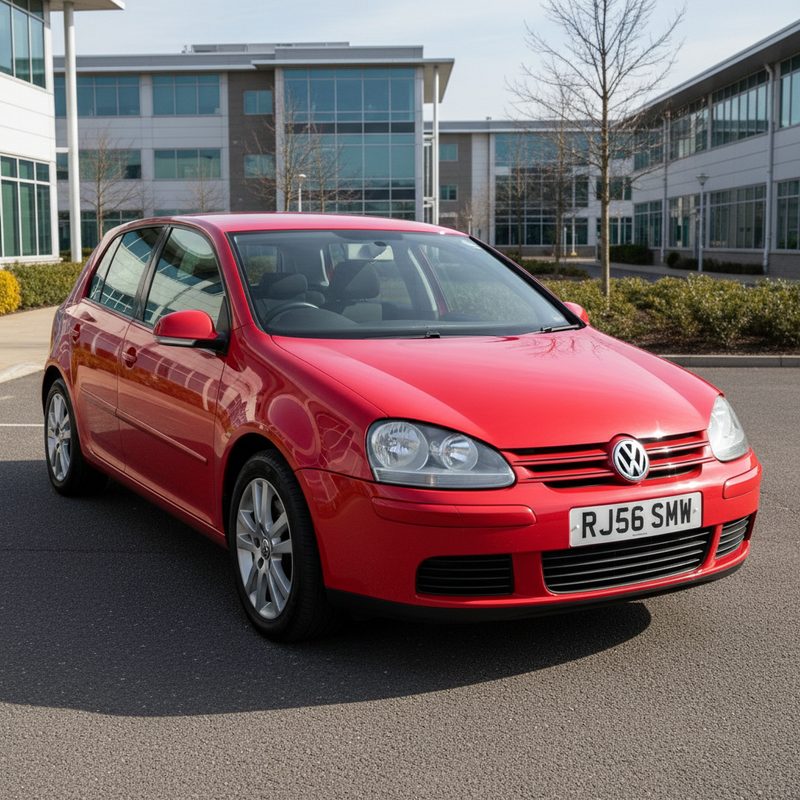
VW Golf vs Ford Focus Used — Which Is Better Value?
The VW Golf commands a premium, but does it justify the extra cost over a Ford Focus? Both through a no-nonsense value comparison for used buyers.
Quick Verdict -- Which Delivers More for Your Money?
This is a proper heavyweight bout. The VW Golf and Ford Focus are two of the best family hatchbacks ever made, and they have been fighting it out on UK driveways for decades. So which one is the better value on the used market?
Here is my straight answer: the Ford Focus is the better value buy in almost every scenario. You get a comparable or better car for less money, it depreciates at a similar rate in percentage terms, and it costs less to maintain. The Golf is undeniably a quality product -- it feels a bit more premium inside and carries more badge prestige -- but you pay a meaningful premium for that, and it does not always translate into a better ownership experience.
That said, the Golf holds its value in pounds better, so if you are planning to sell in a couple of years, the maths gets more interesting. Let me walk you through it all.
If you are weighing up alternatives, our guide to SEAT Leon vs Skoda Octavia covers similar ground from a different angle.
Purchase Prices on the Used Market
The price gap between these two is one of the first things you will notice when searching. A 2018-2019 VW Golf 1.5 TSI in Match or SE trim typically costs £13,000-£16,000 on the used market. The equivalent Ford Focus 1.0 EcoBoost in Zetec or Titanium trim sits at £10,000-£13,000.
That is a £2,000-£3,000 difference for cars of similar age, mileage, and specification. And it is consistent across most model years. The Golf always commands a premium -- it is the Volkswagen tax, as people in the trade call it.
For more on this topic, take a look at our Nissan Juke vs Hyundai Kona guide.
Older Models
At the budget end, the gap persists. A 2014-2016 Mk7 Golf 1.4 TSI will cost you £7,000-£10,000, while a 2014-2016 Mk3 Focus 1.0 EcoBoost sits around £5,000-£8,000. Even going back to the Mk6 Golf and Mk2 Focus era (2008-2012), you will pay £1,000-£2,000 more for the VW.
The question is whether that extra money buys you a genuinely better car or just a more prestigious badge. My honest view? A bit of both, but mostly the badge.
You might also find our BMW 3 Series vs Audi A4 guide useful alongside this one.
Running Costs Side by Side
The Focus wins here, and it is not particularly close.
Fuel Economy
The Focus 1.0 EcoBoost returns 45-52 mpg in real-world driving. It is the same brilliant three-cylinder turbo engine from the Fiesta, just tuned slightly differently for the heavier car. The Golf 1.5 TSI manages 42-48 mpg -- perfectly respectable, but the Ford has the edge.
The Focus 1.5 EcoBoost is available too, offering more power with similar fuel economy to the Golf. So Ford gives you the choice of better economy or more performance at the same price point.
We have covered related ground in our SEAT Ateca vs Skoda Karoq guide, which is worth reading if this subject interests you.
Insurance
insurance groups are broadly similar. The Focus 1.0 EcoBoost Zetec sits in groups 11-14, while the Golf 1.5 TSI Match falls into groups 14-17. For most drivers, that is a £100-£200 difference per year. Not massive, but it all adds up.
Servicing Costs
This is where the Golf gets expensive. VW servicing is pricier than Ford, whether you go to a dealer or an independent. A basic service at an independent garage costs about £180-£250 for the Golf versus £150-£200 for the Focus. VW parts carry a premium too -- a set of front brake pads and discs might be £200-£280 for the Golf and £150-£200 for the Focus.
You can check any car's full MOT history for free on GOV.UK before arranging a viewing.
The Golf's DSG automatic gearbox also requires a specific fluid change every 40,000 miles, which costs £200-£300. The Focus uses a conventional torque converter automatic that is cheaper to maintain, or a manual that needs no special attention.
Over three years of ownership, servicing and maintenance costs for the Golf can easily run £500-£800 more than the Focus. That is a significant chunk of money.
If things go wrong after purchase, Citizens Advice can help you understand your legal rights.
Before buying, you can check the exact road tax cost on GOV.UK using the registration number.
Depreciation -- The Hidden Cost
Here is where the Golf claws back some ground. The VW badge carries weight on the used market, and Golfs retain their value stubbornly well.
You can look up the exact insurance group for any car on Thatcham's website before getting quotes.
A Golf bought at three years old for £14,000 might be worth £9,000-£10,000 three years later. A Focus bought at three years old for £11,000 might be worth £6,500-£7,500 over the same period. So the Golf loses roughly £4,000-£5,000 and the Focus loses about £3,500-£4,500.
In percentage terms, they are remarkably similar -- both losing around 30-35% of their value over three years of used ownership. But because the Golf starts higher, you lose more in absolute pounds. The Focus buyer is out of pocket less overall.
The FCA has a useful guide to car finance that explains your rights and what to watch for.
If you are considering a VW, you should also read our Used VW ID.3 guide for the full picture.
Practicality and Quality
Both cars are excellent family hatchbacks with enough room for four adults and a decent boot.
Boot Space
The Focus Mk4 offers 375 litres of boot space, which is class-leading. The Golf Mk7/Mk8 provides 380 litres -- essentially identical. Fold the rear seats down and the Focus has the edge with 1,354 litres versus the Golf's 1,270 litres. Neither will leave you struggling on a family holiday.
Interior Quality
The Golf wins here, and this is where the premium feels justified. The materials are a cut above, the switchgear has a satisfying precision, and the cabin feels like it belongs in a more expensive car. The Focus is perfectly fine inside -- the Mk4 in particular is a big step up from earlier models -- but it does not match the Golf's sense of quality.
However, VW went a bit overboard with touch-sensitive controls in the Mk8 Golf (2020 onwards), and many owners find them frustrating to use. The Focus's physical buttons and more intuitive infotainment system are actually easier to live with day to day.
Driving Experience
The Focus is the better car to drive. It has sharper steering, more engaging handling, and a livelier feel from behind the wheel. The Golf is composed, refined, and comfortable, but it lacks the Focus's sparkle. If you enjoy driving, the Ford wins. If you want to arrive feeling relaxed, the VW has the edge.
Dave's Final Call
Best outright value? The Focus wins. You get a comparable car for less money, with lower running costs and similar depreciation in percentage terms. It is the rational choice.
Want premium feel on a budget? The Golf is the one. That interior quality and badge prestige make it feel like a more expensive car, and some buyers are happy to pay for that. Just go in with your eyes open about the higher running costs.
Family car for the school run and weekends? Either will do brilliantly, but the Focus's slightly larger boot and lower running costs make it the practical choice.
Company car or image matters? Golf. Like it or not, the VW badge carries more weight in certain circles. It should not matter, but it does.
Whichever way you lean, do not skip the vehicle history check. Both of these cars are popular with finance buyers, and there are plenty on the market with outstanding finance agreements attached. A quick check through Dave's vehicle check service will flag finance, write-offs, stolen markers, and mileage discrepancies before you hand over your hard-earned cash. It is two minutes well spent.
Check VW Golf, instantly with Dave's free vehicle intelligence report.
Check whichever you're considering with Dave