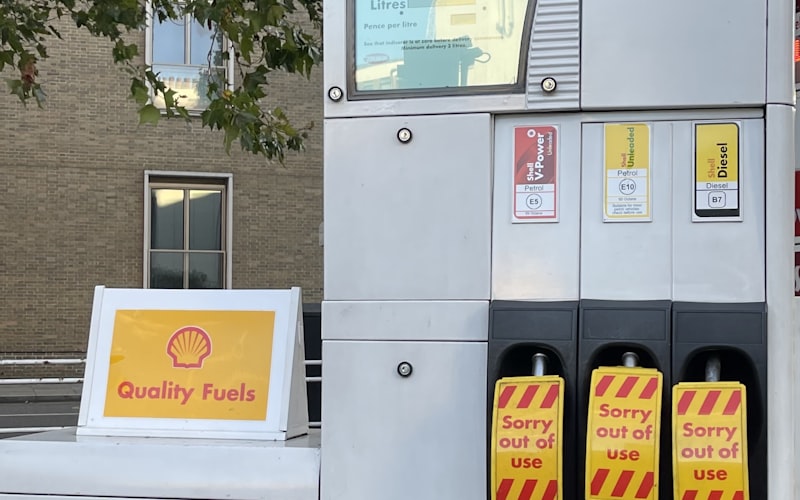
Supermarket Fuel vs Branded: Is There Really a Difference?
All UK fuel meets the same legal standards and often comes from the same refineries — the only real difference is the additive package, and for most drivers, supermarket fuel is perfectly fine.
Your mate swears by Shell V-Power. Reckons his car runs smoother, sounds better, probably thinks it adds horsepower just sitting in the tank. Your other mate fills up at Tesco every single time because it's 6p cheaper and right next to where he does the weekly shop. They've been having this argument for years, probably over a pint, and neither one is backing down.
So who's actually right? As with most things in life, the answer is a bit more nuanced than either of them wants to admit. But I'll give you the honest breakdown; the stuff the fuel companies would rather you didn't think too hard about.
The Base Fuel Is Identical
All petrol and diesel sold in the UK has to meet exactly the same legal standards. Petrol must comply with EN 228, and diesel must comply with EN 590. These are European standards that dictate the chemical composition, octane rating, and quality of every single drop of fuel sold at every single forecourt in the country.
What's more most of that fuel comes from the same refineries. The UK has six major refineries, and fuel is distributed through a shared pipeline and terminal network. That means the base petrol going into a Shell tanker and the base petrol going into an Asda tanker could literally have come from the same storage tank at the same terminal that morning. The GOV.UK fuel standards page confirms the regulations all suppliers must meet, and there's no wiggle room.
Whether you're filling up at a gleaming BP forecourt or a Morrisons pump tucked behind the car park, the base fuel is the same stuff. It has to be. It's the law. So if anyone tells you supermarket fuel is "watered down" or "inferior," they're flat-out wrong. That's a myth, and it needs putting to bed.
Where the Difference Actually Lies
Right, so if the base fuel is identical, why do branded stations charge more? The answer is additives. And to be fair, this is where things get genuinely interesting.
Every fuel retailer adds a package of chemical additives to their fuel before it leaves the terminal. These additives include detergents and cleaning agents designed to prevent carbon deposits building up inside your engine - specifically around the fuel injectors, intake valves, and combustion chambers. Clean injectors mean better fuel atomisation, which means more efficient combustion, which means marginally better performance and fuel economy.
The difference is in the quality and quantity of those additive packages. Branded fuel companies like Shell, BP, and Esso invest heavily in their proprietary additive blends. Shell's V-Power Nitro+ uses what they call their "DYNAFLEX" technology. BP's Ultimate claims friction-reducing molecules. These are genuine chemical formulations backed by genuine research.
Supermarkets, on the other hand, tend to use the minimum additive package required to meet the legal standard. They're not breaking any rules, they're just not going above and beyond. It's the difference between a car that's been serviced to the manufacturer's schedule and one that's been serviced with a bit of extra care. Both are perfectly roadworthy.
The AA fuel advice page covers the different fuel types available in the UK, and it's worth a read if you want the technical details. But the bottom line is this: the additives in branded fuel can help keep your engine slightly cleaner over time. Whether that translates into a real-world difference you'd actually notice is another question entirely.
The Price Gap in Real Numbers
Let's talk money, because that's really what this comes down to for most of us. According to RAC Fuel Watch, the typical price gap between supermarket fuel and branded fuel sits somewhere between 3p and 7p per litre. It fluctuates, but that's a reasonable average.
Say you drive 10,000 miles a year, which is roughly the UK average. If your car does 40 miles per gallon, a fairly typical figure for a modern petrol hatchback, you'll use about 1,136 litres of fuel per year. At the low end of the price gap (3p per litre), that's an extra £34.09 per year for branded fuel. At the high end (7p per litre), that's £79.55 per year.
If you're driving more, say 15,000 miles, those numbers jump to roughly £51 and £119 respectively. You can work out your own figures using our trip calculator, which lets you plug in your actual mileage and consumption.
Now, £34 to £80 a year isn't life-changing money. But it's not nothing, either. That's a couple of decent meals out, a streaming subscription, or a chunk towards your next MOT. When you're already looking at running costs like insurance, tax, tyres, and servicing, every saving adds up. The question is whether those branded additives deliver enough benefit to justify the premium.
Check our fuel price trends page to see how the gap between supermarket and branded fuel has shifted over recent months. Sometimes supermarkets get more aggressive on pricing; sometimes the gap narrows to almost nothing. It pays to keep an eye on it.
When Branded Fuel Might Be Worth It
I'm not going to sit here and tell you branded fuel is always a waste of money, because that's not quite true. There are specific situations where the extra additive package might genuinely earn its keep.
Older engines with existing carbon build-up. If you've got a car with 80,000 miles on the clock that's been run exclusively on budget fuel its whole life, switching to a tank or two of branded fuel with heavy detergent additives could help clean things up a bit. It won't perform miracles, but it might help restore a fraction of lost efficiency. If your car's already showing signs of engine trouble, though, check our guide on cars to avoid before throwing money at premium fuel when the real issue might be mechanical.
High-performance engines. If you're driving something with a turbocharged, direct-injection engine that was engineered to fine tolerances, keeping the fuel system spotlessly clean matters more. Carbon build-up on intake valves is a known issue with gasoline direct injection (GDI) engines, and the better additive packages in branded fuel can help mitigate this.
Very high mileage drivers. If you're doing 30,000 or 40,000 miles a year, the cumulative effect of better additives over tens of thousands of miles might make a measurable difference to injector cleanliness and long-term engine health.
But for the average driver doing 8,000 to 12,000 miles a year in a modern car with a port-injection engine? Honestly, you're unlikely to notice any difference whatsoever.
The Premium Fuel Question
Shell V-Power and BP Ultimate aren't just regular fuel with better additives they're actually higher octane fuel. Standard UK petrol is 95 RON (Research Octane Number). Premium fuels are typically 97 to 99 RON. And they come with a price tag to match, often 15p to 20p per litre more than standard.
Higher octane fuel resists premature detonation (known as "knocking") better than lower octane fuel. This matters in engines with high compression ratios or forced induction (turbochargers and superchargers) that are specifically designed to take advantage of higher octane fuel. These engines can advance their ignition timing with higher octane fuel, extracting genuinely more power and efficiency.
But here's what most people don't realise: if your car is designed to run on 95 RON, putting 99 RON in it does essentially nothing. Your engine's ECU isn't going to magically find extra performance. It's like putting aviation fuel in a lawnmower - it'll run, but you haven't gained anything. You've just spent more money.
Check your owner's manual. If it says 95 RON, save your cash. If it specifies 98 RON or "premium unleaded recommended," then yes, premium fuel is what your engine was built for, and using standard fuel might actually reduce performance and economy. Some performance cars from Audi, BMW, and Mercedes specify higher octane fuel, so it's worth checking rather than assuming.
What the Data Says
Consumer groups have investigated this question properly, and the results are pretty consistent. The Which? fuel investigation into fuel quality found no meaningful performance difference for typical modern cars running on supermarket fuel versus branded fuel. The Energy Saving Trust has also noted that driving style has a far greater impact on fuel economy than fuel brand - smooth acceleration, proper tyre pressures, and sensible speeds will save you vastly more than switching fuel brands ever could.
Independent tests have shown that while branded additives do keep engines marginally cleaner in laboratory conditions, the real-world impact on fuel economy, emissions, and performance for a modern car driven normally is negligible. We're talking fractions of a percentage point , well within the margin of error.
The biggest factor in your fuel costs isn't which brand you buy. It's where and when you buy it. Prices vary enormously between forecourts, even in the same town. Our live fuel map shows real-time prices near you, and you might be shocked at the variation. I've seen differences of 10p per litre between stations less than a mile apart. That dwarfs any additive benefit.
Dave's Honest Verdict
Right, no more sitting on the fence. Supermarket fuel is absolutely fine for the vast majority of drivers. If you're running a normal car such a Ford Focus, a VW Golf, a Vauxhall Corsa, whatever, and you're doing average mileage, supermarket fuel will not damage your engine, will not reduce your performance in any way you'd notice, and will save you real money over the course of a year.
The base fuel is identical. The legal standards guarantee that. The only difference is the additive package, and for modern engines with modern fuel injection systems, the minimum additive package is perfectly adequate.
If you drive a high-performance car that specifies premium fuel, buy premium fuel. If you've got an older car and want to give it an occasional treat, a tank of branded fuel every few months won't hurt. But making it your default when your car doesn't need it? That's money you could spend better elsewhere.
Your mate at the pub who insists Shell V-Power transformed his fifteen-year-old Mondeo is experiencing the placebo effect. Your other mate who fills up at Tesco every time is making a perfectly sound financial decision. Buy the cheapest fuel that's convenient, drive smoothly, keep your car serviced, and stop worrying about it.
That's the honest truth, and no amount of marketing spend from the fuel companies changes it.
Compare fuel prices near you
Get Dave's free AI-powered vehicle check before you make a decision.