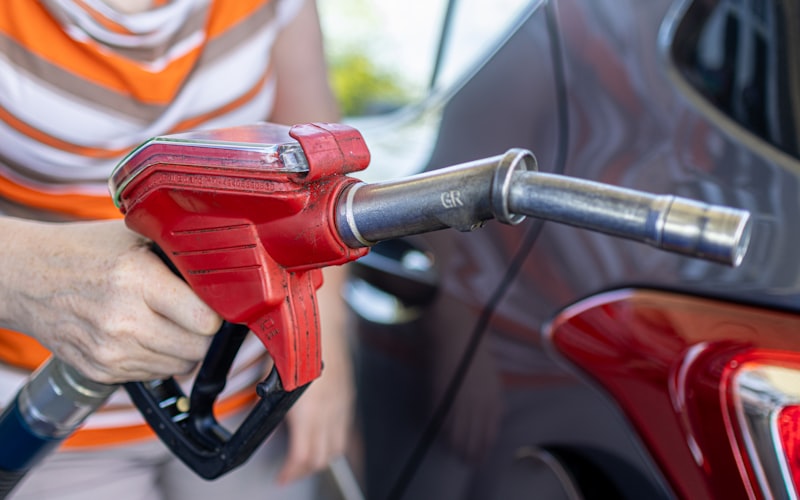
Should You Fill Up or Top Up? The Maths Behind Fuel Strategy
The great fuel debate settled with actual maths. We break down weight penalties, price timing, fuel pump risks, and spending psychology to reveal whether filling up or topping up really saves you money.
This is one of those debates that comes up every time mates talk about cars. Do you brim the tank, or just stick in £20 at a time? I've heard every argument under the sun. From the bloke who insists he's saving money by only putting in a tenner at a time, to the one who fills up religiously every Sunday morning like it's a sacred ritual. And honestly? Most people have never actually done the maths. So let's fix that, shall we?
I'm going to break this down properly, with real numbers, because I'm sick of hearing pub wisdom dressed up as fuel strategy. Buckle up.
The Weight Penalty Argument
This is the big one that the "top up" crowd love to wheel out. "A full tank is heavier, so you use more fuel carrying all that extra petrol around!" And technically, they're not wrong. But let's look at what that actually means in practice.
A typical family car has a fuel tank somewhere between 45 and 55 litres. Let's call it 50 litres for nice round numbers. Petrol weighs roughly 0.74 kg per litre, so a full tank weighs about 37 kg. If you're running around with only 10 litres in the tank, you're carrying about 7.4 kg. That's a difference of roughly 30 kg.
Now, the generally accepted rule of thumb is that every extra 50 kg of weight increases fuel consumption by about 1-2%. Let's be generous to the top-up crowd and call it 2% for 50 kg. Our 30 kg difference gives us roughly 1.2% extra consumption.
So what does 1.2% actually cost you? If you're an average UK driver doing about 7,400 miles a year in a car that does 40 mpg, you're using roughly 841 litres of fuel annually. At, say, 145p per litre, that's about £1,220 a year on fuel. And 1.2% of £1,220 is... £14.64.
But hang on. You're not carrying a full tank all the time. On average, your tank is about half full versus a quarter full if you're a top-upper. So the real-world difference is more like half that. We're talking maybe £7 a year. Seven quid. That's not even two pints down the pub.
If someone tells you they're saving serious money by carrying less fuel, they either drive a tank transporter or they haven't done the arithmetic. Next argument, please.
The Convenience Factor
Here's something the £20-at-a-time brigade never factor in: how much time and money they waste stopping at petrol stations twice as often.
If you're filling a 50-litre tank from near-empty, you might visit the station every 400-odd miles. If you're only putting in £20 worth (roughly 14 litres at current prices), you're going back every 150 miles or so. That's almost three times as many visits to the forecourt.
Each stop costs you roughly 10-15 minutes when you factor in the detour, queuing, filling up, paying, and getting back on your way. Over a year, that could easily add up to an extra 15-20 hours spent at petrol stations. What's your time worth?
And then there's the sneaky cost nobody talks about. Every time you walk into that shop to pay, there's a meal deal staring at you, a discounted chocolate bar, maybe a coffee that "only" costs £2.50. Research consistently shows that frequent petrol station visits lead to significantly more impulse spending. If you're spending just an extra £3 per unnecessary visit on snacks and drinks, and be honest, you probably are, that's potentially £80-100 a year in impulse purchases. That's already blown your supposed weight-saving benefit out of the water.
When I'm planning a longer journey, I use a trip calculator to work out exactly what the fuel will cost me. It takes the guesswork out entirely and means I can fill up strategically before I leave, rather than scrambling to find a station mid-route.
The Price Volatility Play
The theory goes like this: if prices are on the way down, only buy a little bit because it'll be cheaper tomorrow. If prices are low, fill up because they'll rise again. Sounds clever, doesn't it?
And in principle, there's some logic to it. Fuel prices do fluctuate, sometimes by 5-10p per litre over the course of a few weeks. On a 50-litre fill, that's a difference of £2.50 to £5.00. Not nothing, but not exactly a fortune either.
The problem? You can't actually predict fuel prices with any reliability. Trust me, I've tried. You can check fuel price trends to see historical patterns, and sites like RAC Fuel Watch do a brilliant job of tracking wholesale costs versus pump prices. But even with all that data, timing the market on fuel is about as reliable as timing the stock market - which is to say, not very.
What you can do is shop around on any given day. Prices between stations in the same town can vary by 8-12p per litre, which is far more significant than any timing strategy. Use our live fuel map to find the cheapest station near you. That's where the real savings are and not in trying to play Mystic Meg with the oil markets.
My honest advice? If you spot a genuinely cheap station, fill up. If prices look particularly high, maybe just get enough to see you through the week. But don't stress about it. The difference between perfect timing and terrible timing over a whole year is probably £30-50 at most. Life's too short.
What About the Interest on Your Money?
Oh, I love this one. Some properly financially-minded people argue that by only topping up, you keep more money in your bank account earning interest, rather than "investing" it in fuel sitting in your tank.
Let's actually crunch this. Say the difference between filling up and topping up means you've got an extra £40 sitting in your account at any given time. With a decent savings rate of, let's be generous, 4.5% AER, that £40 earns you... about £1.80 a year. One pound eighty. You'd find more than that down the back of your sofa.
Even if you're earning 5% interest, we're talking pennies per week. The transaction costs of thinking about this strategy are worth more than the strategy itself. If you're optimising your finances to this degree, I'd respectfully suggest your time would be better spent checking whether you're on the best deal for your running costs overall - insurance, tax, servicing, the lot. That's where the real money is.
For context on the broader costs of car ownership, the AA's fuel advice pages have some useful breakdowns, and GOV.UK can help you check you're paying the right amount of vehicle tax. Those are the areas where you can save hundreds, not pennies.
The Real Risk: Running Low
Now here's where I get properly serious for a moment, because this is the one thing the "just stick a tenner in" crowd need to hear.
Your fuel pump sits inside your fuel tank, submerged in fuel. That fuel doesn't just feed your engine it also cools and lubricates the pump itself. When you consistently run your tank down to the last fumes, that pump is working harder, running hotter, and wearing out faster.
A replacement fuel pump costs somewhere between £200 and £500 depending on your car, and that's before labour. Some cars are worse than others. If the pump is inside the tank (which most modern ones are), you're looking at a good couple of hours' workshop time on top.
Running low also means you're picking up all the sediment and gunk that settles at the bottom of your tank over the years. That crud gets sucked through your fuel system, potentially clogging your fuel filter and injectors. A fuel filter replacement might only be £50-80, but injector cleaning or replacement can run into the hundreds.
The Energy Saving Trust recommends maintaining your car properly for efficient driving, and that absolutely includes not treating your fuel tank like it's always running on emergency reserves.
This is the hidden cost that nobody calculates. You might save a few quid a year in weight savings by running light, but one knackered fuel pump wipes out a decade's worth of those savings in one hit.
The Psychology of Fuel Spending
This is something I find genuinely fascinating. People who top up £20 at a time almost universally believe they spend less on fuel than people who fill up. But when you actually track the numbers, it's often the opposite.
When you fill up from near-empty, you get a clear number: "That tank cost me £72." You know exactly what you're spending, you can track it, and you can compare it week to week. When you're dribbling in £20 here, £15 there, maybe £30 on a Friday because you've got a long weekend planned, it all blurs together. You lose track.
It's the same psychology that makes contactless payments dangerous for budgeting. Small, frequent amounts feel painless. One big amount focuses the mind.
I'd encourage anyone who's serious about managing their fuel costs to track their spending properly. If you're looking at the bigger picture of car ownership costs, especially if you're shopping for something economical, our guide to budget cars breaks down what to look for in an efficient runaround. And AutoTrader is always worth a browse if you're thinking about switching to something more frugal - sometimes the best fuel strategy is simply driving a car that sips rather than glugs.
The bottom line is this: visibility beats false economy. A full tank gives you a clear, trackable cost per fill. Topping up gives you a warm fuzzy feeling that evaporates the moment you actually add it all up.
Dave's Verdict
Right, I've done the maths, weighed up the arguments, and here's where I land because unlike some motoring writers, I'm not going to give you a wishy-washy "it depends" and call it a day.
Fill up your tank. Almost always.
The weight penalty is negligible. We're talking single-digit pounds per year. The interest argument is laughable. The convenience of fewer stops saves you time, money on impulse buys, and general life frustration. Filling up gives you better visibility of your spending. And critically, keeping a decent amount of fuel in your tank protects your fuel pump from premature failure, which could cost you hundreds.
The only caveat? If you happen to spot that prices have spiked unusually high and you've still got half a tank, sure, just get enough to tide you over. And if you spot a bargain, absolutely fill up to the brim.
My golden rule: never let it drop below a quarter tank. That keeps your fuel pump happy, gives you a decent buffer for unexpected journeys, and means you're never desperately filling up at the most expensive motorway services because you've got no choice.
The topping-up strategy isn't clever financial management. It's false economy dressed up as thriftiness. Fill up, drive on, and spend your mental energy worrying about something that actually makes a meaningful difference to your wallet.
Now stop arguing about this and go check whether your tyre pressures are correct. That'll save you more fuel than any filling strategy ever will.
Calculate your trip fuel cost
Get Dave's free AI-powered vehicle check before you make a decision.