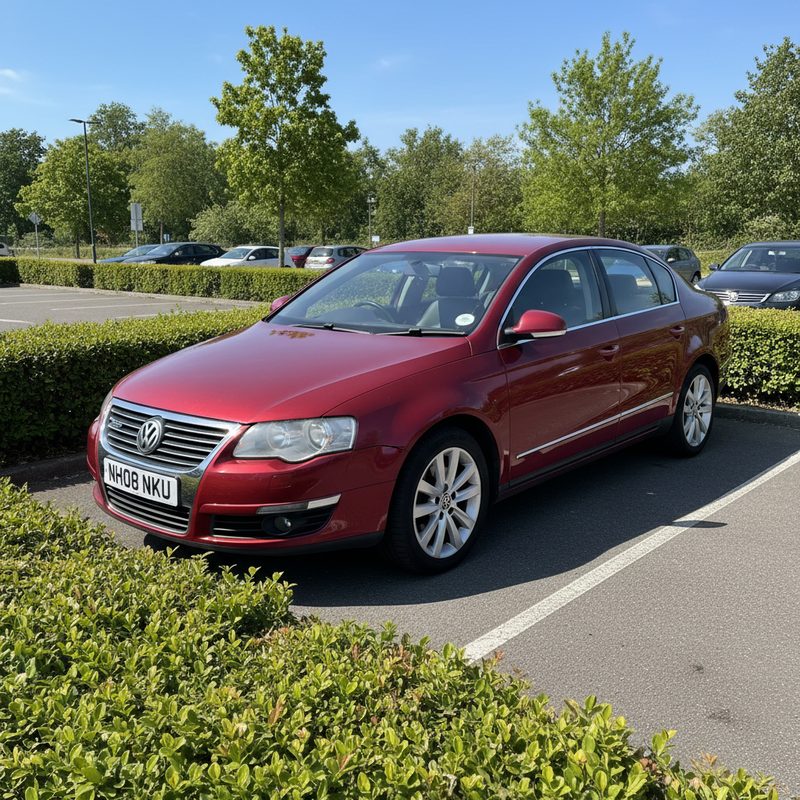
Volkswagen Passat Depreciation: Best Year to Buy Used for Value
The Volkswagen Passat is the consummate all-rounder for motorway miles and family duties. Covering the depreciation sweet spot and which specs to target for the best value.
The Motorway King and Its Depreciation Profile
The Volkswagen Passat occupies a fascinating niche in the UK market. It sits between the mainstream family cars (Focus, Astra) and the premium Germans (3 Series, A4), offering a blend of quality, space, and refinement that neither group quite matches. The Passat has always been the fleet manager's friend -- reliable, comfortable, and sensible. But that fleet-heavy sales mix has implications for depreciation that every used buyer should understand.
The Mk8 Passat (B8, 2015-2023) was a genuinely accomplished large car. The Mk9 (2024 onwards) has gone estate-only in the UK, with prices starting at around £38,000. The outgoing Mk8 was available from about £26,000 for a base SE Nav to over £40,000 for a GTE PHEV in R-Line trim. The estate consistently outsold the saloon in the UK, which tells you something about British buyer preferences.
Passat depreciation falls between the mainstream brands (where it performs much better) and the premium Germans (where it performs slightly worse). That middle ground creates excellent value for used buyers.
Mk8 Passat Depreciation Data
For a Volkswagen Passat 1.5 TSI R-Line Estate (approximately £34,000 new):
- Year 1: Falls to roughly £24,500 (28% loss, about £9,500 gone)
- Year 2: Falls to roughly £20,500 (16% further decline)
- Year 3: Falls to roughly £17,200 (16% further decline)
- Year 4: Falls to roughly £14,800 (14% further decline)
- Year 5: Falls to roughly £12,800 (14% further decline)
- Year 6: Falls to roughly £11,100 (13% further decline)
- Year 7: Falls to roughly £9,700 (13% further decline)
A 28% first-year loss is impressive for the large car segment. The Ford Mondeo lost 35%, the Vauxhall Insignia a staggering 38%, and even the Skoda Superb lost around 30%. The VW badge and the Passat's strong reputation among fleet and private buyers combine to support values.
After five years, the Passat retains roughly 38% of its original value. That is strong for a large car and competitive even with premium alternatives. The annual depreciation in pound terms settles to around £1,500 to £1,700 from year four onwards, which is very manageable.
The GTE plug-in hybrid had a list price of £38,000 to £42,000. It depreciates faster in percentage terms due to the company car ownership pattern -- many GTEs were chosen purely for the tax benefit and are now flooding the used market. A three-year-old GTE Estate might cost £18,000 to £21,000, representing 45-50% total depreciation. However, from that point, the GTE's running cost advantages (electric commuting, lower road tax) support values.
When to Buy Your Passat
The Mk8 Passat is now entering its prime used-buying window. I recommend targeting three to five-year-old examples.
A 2022 Passat Estate R-Line with the 1.5 TSI and 35,000 miles will cost you around £16,000 to £18,500. At that price, you are getting a car that cruises motorways in near-silence, has a massive boot (650 litres), and an interior that rivals anything from BMW or Audi. Hold it for three years and expect total depreciation of £4,500 to £6,000, working out at £1,500 to £2,000 per year.
The GTE at three to four years old is where the equation gets really compelling. A 2022 GTE Estate with 25,000 miles costs approximately £19,000 to £22,000. That is a plug-in hybrid with 35 miles of electric range and a combined output of 218PS for the price of a basic new Golf. If you commute within electric range and charge at home, your fuel costs could be pennies.
The pre-facelift Mk8 (2015-2019) is now seven to eleven years old and represents outstanding value. A 2018 or 2019 model in SE Nav or R-Line trim with 60,000 miles costs £9,000 to £12,000. Depreciation at this age is around £1,000 to £1,300 per year. These are refined, capable cars that will comfortably serve as a family's main vehicle for years to come.
Which Passat Specs Protect Value
Estate vs Saloon
The estate outsells the saloon in the UK by a significant margin, and it holds value approximately 5-7% better. The saloon is slightly harder to sell because buyers in this segment overwhelmingly prefer the estate's practicality. Always choose the estate unless the saloon is significantly cheaper.
Engine Analysis
The 2.0 TDI (150PS) was the default fleet engine and remains the most common on the used market. It is a smooth, efficient motorway cruiser that returns 50-55mpg. Values are stable because demand from high-mileage drivers is consistent.
The 1.5 TSI (150PS) is increasingly popular as petrol gains favour. It holds value comparably to the 2.0 TDI and is a better choice for lower-mileage drivers. The cylinder deactivation feature genuinely improves fuel economy.
The 2.0 TDI in 190PS form commands a small premium (£500 to £800) and is worth having if you tow or want effortless motorway performance. The 2.0 TSI (190PS or 272PS in the R-Line Performance) is rare but desirable.
The GTE hybrid is a separate category. Values are currently soft due to oversupply from ended fleet leases, but the long-term outlook is positive as electric capability becomes more valued.
Trim Hierarchy
R-Line is the value champion. The sporty exterior, larger alloys, and digital cockpit make it the most searched-for trim. SE Nav is the sensible mid-range option and holds value adequately. SEL is the comfort-focused luxury trim with adaptive suspension and better audio -- it commands a small premium over R-Line. GT (on earlier models) performs similarly to R-Line.
Factors Affecting Passat Values
Fleet provenance is the Passat-specific issue to understand. A huge proportion of used Passats are ex-company cars and ex-lease vehicles. This is not inherently bad -- fleet cars are typically serviced on schedule and maintained to a reasonable standard. But it means there are lots of similar cars available, which keeps prices competitive.
Service history is expected and must be complete. VW service records add £800 to £1,500 to the value. The Passat has a timing belt on the 1.5 TSI (not a chain), and evidence of belt replacement at the correct interval is a significant selling point. Missing timing belt records can reduce the value by £500 to £1,000 because the buyer faces a £500 to £700 replacement cost.
Mileage expectations are higher on the Passat than on smaller VWs. Buyers accept 12,000 to 15,000 miles per year as normal. A five-year-old Passat with 70,000 miles is perfectly average. Below 50,000 miles earns a 5-7% premium. Above 90,000 miles brings a 10-15% penalty.
Before buying, you can check the exact road tax cost on GOV.UK using the registration number.
Colour preference is conservative. Grey leads, followed by white, black, and dark blue. Silver is acceptable but feels dated on newer models. Avoid unusual colours -- Passat buyers are practical people who make practical choices.
Interior condition is scrutinised closely because Passat buyers expect a quality cabin. The Mk8's materials are excellent but can show wear on driver's seat bolsters and steering wheel leather at higher mileages. A car with a well-maintained interior signals careful ownership.
Maximising Your Passat Value
Buy a three to five-year-old Passat Estate in R-Line or SEL trim. Choose the 2.0 TDI 150PS for high-mileage use or the 1.5 TSI for mixed driving. Aim for grey or white in a metallic finish. Budget £16,000 to £18,500 for standard engines or £19,000 to £22,000 for the GTE.
Maintain it at VW or a quality specialist. Budget £250 to £400 per annual service. Keep the exterior and interior clean. The Passat rewards careful ownership with strong resale returns.
Dave's Final Assessment
The Volkswagen Passat is the large car that does everything well. It is more refined than a Mondeo, more spacious than a BMW 3 Series, and more affordable to own than both. The depreciation curve is predictable and well-behaved, creating a genuine sweet spot for used buyers at three to five years old.
Before purchasing, run the registration through Dave's vehicle check. The Passat's fleet background means higher-than-average mileage is common, and mileage fraud is a real risk on cars that have covered motorway miles. Verify mileage consistency across MOT records, check for outstanding finance, review the full test history, and confirm the car has no write-off markers. A quick check now prevents a costly mistake later.