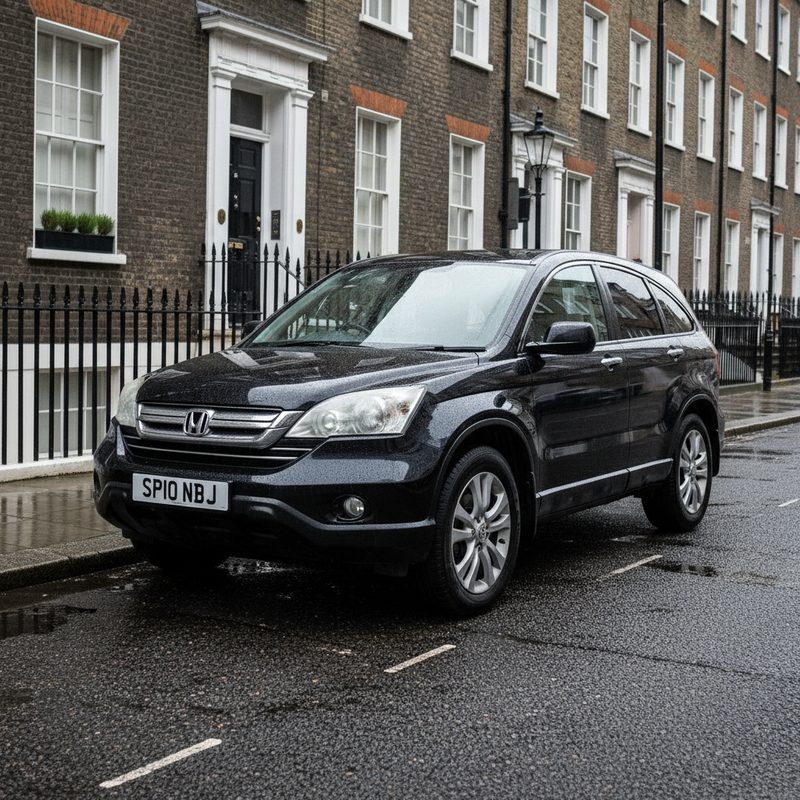
2010 Honda CR-V RE — Dependable SUV That Outlasts Everything
The CR-V RE is one of the most reliable SUVs you can buy — but Honda parts pricing and fuel consumption mean the total cost of ownership is higher than budget buyers expect.
Reliability You Pay For
The Honda CR-V RE (2006–2012) is the SUV equivalent of the Jazz — overengineered, underestimated, and built to last well beyond 150,000 miles without the major mechanical failures that plague many of its rivals. At £3,000–£5,000 for a 2010 model, it competes directly with the Nissan Qashqai J10 and Ford Kuga Mk1 for family SUV buyers, but it costs more to fuel and service than either. The trade-off is simple: you pay more per mile, but you pay far less in unexpected repair bills, and that equation works out in the CR-V's favour for most buyers who plan to keep the car for three years or more.
At 15 years old, the national average MOT failure rate sits at approximately 39% across all vehicle classes. The CR-V RE beats this average comfortably, typically running 6–10 percentage points below the national benchmark for cars of this age. Honda's build quality, combined with chain-driven engines that avoid the expensive timing belt failures common to many diesel SUVs, keeps these cars on the road longer than most competitors. The CR-V is the kind of car that accumulates 180,000 miles with nothing more than routine servicing and the occasional set of brake pads — and that kind of dependability is rare in the SUV segment.
The CR-V RE is a genuine family car. The rear seats offer excellent legroom, the boot is large and practical (though not class-leading), and the driving position provides the elevated view that SUV buyers want. Build quality inside the cabin is excellent — switches feel solid, the dashboard does not creak or rattle, and the materials have aged far better than contemporary Fords and Vauxhalls. If you are looking for a reliable family SUV and your budget stretches to £4,000–£5,000, the CR-V RE deserves serious consideration alongside the obvious mainstream choices.
Engine Choices
2.0 i-VTEC (150 bhp) — Smooth But Genuinely Thirsty
The 2.0-litre petrol i-VTEC is a smooth, refined engine that makes the CR-V pleasant to drive in all conditions. It produces 150 bhp and enough torque for comfortable motorway cruising, but the fuel economy tells the real story: expect just 30–35 mpg in real-world mixed driving, dropping to 25–28 mpg in heavy urban traffic. Insurance groups are 17–21, reflecting both the engine size and the vehicle's value. The engine is timing chain driven, eliminating the cost and anxiety of scheduled belt changes. The 2.0 petrol is best suited to lower-mileage drivers — those covering under 8,000 miles per year — where the fuel penalty is manageable and the smooth, quiet nature of the petrol engine is appreciated on shorter journeys. For anyone covering more than 10,000 miles annually, the diesel makes significantly more financial sense despite its higher purchase price.
2.2 i-CDTi (140 bhp) — The Engine That Built the Reputation
The 2.2-litre i-CDTi diesel is Honda's own design, not an outsourced unit from another manufacturer, and this matters. Honda engineered it to the same standards as their petrol engines, and the result is a diesel that regularly exceeds 200,000 miles without major issues. It returns 38–44 mpg in real-world driving, sits in insurance groups 18–23, and is timing chain driven — no expensive belt changes to worry about. The engine is fitted with a DPF (diesel particulate filter), which requires regular longer journeys of 20 minutes or more at motorway speeds to regenerate properly. If your driving is primarily short urban trips, this engine is not suitable and the DPF will clog, leading to expensive forced regeneration or replacement costs. For mixed or motorway-heavy driving, the 2.2 i-CDTi is the engine that built the CR-V's legendary reputation. It is refined, torquey, and remarkably fuel-efficient for a vehicle of this size and weight. This is the engine to buy for almost all buyers.
Known Faults
Air Conditioning Compressor Failure
The A/C compressor is the most commonly reported failure on the CR-V RE, and it shares this weakness with the 8th-generation Civic. The compressor clutch or internal seals fail, resulting in warm air from the vents regardless of the temperature setting. Replacement costs £450–£800 on the CR-V due to the larger system and the labour involved in accessing the compressor. This is more expensive than the equivalent repair on the Civic because of the CR-V's engine bay layout. Test the air conditioning thoroughly at every viewing — you should feel noticeably cold air within 30 seconds of pressing the A/C button, and the compressor should engage without any clicking, squealing, or grinding noises. An A/C regas (£50–£80) may fix a slightly underperforming system, but if the compressor itself has failed, a regas will make no difference. Budget for this repair if the A/C is not working — it is too expensive to ignore, and a car without functioning A/C is worth £300–£500 less than one with it.
Rear Differential Wear (AWD Models)
The rear differential on all-wheel-drive CR-V models requires regular fluid changes every 40,000 miles, and this is a service item that many owners and even some garages overlook. Neglected differentials develop a whining noise that is most noticeable at speeds between 30 and 50 mph, and if left unaddressed, the differential will eventually fail completely — replacement costs £800–£1,500, making it one of the most expensive potential repairs on the CR-V. Check the service history specifically for differential fluid changes. If the history is incomplete or the fluid changes are missing, budget for an immediate differential fluid change (£100–£150) as a minimum, and listen carefully during the test drive for any whining from the rear of the car. AWD models are more desirable for towing and rural driving, but the additional maintenance cost of the rear differential should be factored into your budget. Two-wheel-drive models avoid this issue entirely and are lighter, more fuel-efficient, and cheaper to maintain.
Dual Mass Flywheel Wear (2.2 Diesel)
The dual mass flywheel on the 2.2 diesel is a wear item that degrades from approximately 80,000 miles, particularly on cars that have been used for towing or heavy stop-start driving. Symptoms include juddering when pulling away from rest in first gear, a metallic rattling noise at idle with the clutch pedal released, and an increasing sense of driveline vibration at low engine speeds. Replacement costs £600–£900 including a new clutch, because the flywheel and clutch are always replaced together as an assembly. Our component lifespan data suggests clutch assemblies last 60,000–120,000 miles depending on driving style, and the CR-V's considerable weight (1,600 kg) means the clutch works harder than in lighter cars, putting wear at the lower end of that range for urban-heavy use. Always test the clutch during any test drive — pull away slowly in first gear on a slight uphill gradient and feel for any judder or vibration through the pedal.
Front Lower Arm Bushes — Steering Vagueness
Front lower brake pads is 25,000–50,000 miles, and the CR-V sits at the lower end of that range. Budget £100–£250 per axle for pads and £180–£400 for discs. Rear brakes last longer but still wear faster than on smaller cars. The advisory-to-failure conversion rate for brake components runs at 55–80%, and brakes carry a severity weight of 1.5x in our system, so any brake advisory on the MOT history should be taken seriously. Annual brake maintenance costs on the CR-V are typically £150–£300 — roughly double what you would spend on a Jazz or Civic.
Power Steering Rack Leak
The power steering rack can develop a slow leak from around 80,000–100,000 miles, evidenced by low fluid levels, stiff steering (particularly when cold), and fluid stains beneath the car near the front axle. A rack replacement costs £400–£700, making it one of the more expensive repairs on the CR-V. Steering components carry a severity weight of 1.5x in our scoring system. Check the power steering fluid level during any viewing and look for dampness around the steering rack boots. A minor leak may be managed with periodic fluid top-ups, but a significant leak will fail the MOT and requires replacement.
Tailgate Strut Failure
The rear tailgate gas struts weaken over time and eventually fail to hold the heavy tailgate open. This is a nuisance rather than a serious fault, but a falling tailgate can injure fingers or heads. Replacement struts cost £40–£80 for a pair and take 15 minutes to fit. Check the tailgate stays open on its own during any viewing — if it starts to drop, the struts need replacing.
What to Pay
| Condition | Price Range |
|---|---|
| High mileage / needs work | £2,000–£3,000 |
| Average 2010 with full MOT | £3,000–£4,500 |
| Low mileage / full history | £4,500–£5,500 |
| 2.2 EX (top spec, AWD) | £4,000–£6,000 |
The CR-V holds its value well, but there is a wide spread between the cheapest and best examples. A high-mileage 2.0 petrol with a patchy service history might sell for £2,000, while a low-mileage 2.2 diesel EX with full Honda service history can command £5,500–£6,000. The diesel commands a significant premium over the petrol — typically £800–£1,500 more for equivalent condition and mileage.
Running Costs
Road tax is £210–£270 per year, which is significantly more than a Qashqai or comparable crossover. Insurance groups 17–23 reflect the vehicle's size, value, and repair costs. Annual servicing costs £180–£300 per visit at an independent garage, and Honda dealer servicing costs substantially more at £250–£450 per service. Annual fuel costs are approximately £1,400–£1,800 for the 2.2 diesel at 10,000 miles per year, and £1,800–£2,400 for the 2.0 petrol at the same mileage. Brake pad replacement averages £100–£250 per axle, and you should budget for at least one axle per year. Add in tyres (£300–£450 for four, given the CR-V's larger wheel sizes) and the total annual running costs sit at £2,500–£3,500 — this is emphatically not a budget car to run, despite its age and relatively low purchase price.
The Verdict
The CR-V RE is a fantastic SUV if you can afford the running costs and go in with realistic expectations about fuel economy and maintenance. The 2.2 i-CDTi with a manual gearbox is the pick of the range — chain-driven, reliable beyond 200,000 miles, and economical enough for daily commuting on mixed roads. The 2.0 petrol is too thirsty for anyone covering more than 8,000 miles per year and should only be considered by lower-mileage drivers who prefer the quieter, smoother petrol experience.
This is not a cheap car to run despite its age. It drinks more fuel than a Qashqai, wears brakes faster than a hatchback, and Honda parts cost 15–25% more than mainstream equivalents. But the CR-V will not break down unexpectedly, it will not strand you at the roadside, and it will not present you with a surprise £2,000 repair bill for a failed turbo or a cracked cylinder head. That peace of mind has genuine financial value, and for many families it is worth the premium.
Check the MOT history for any suspension or brake advisories, verify the DVLA vehicle details to confirm mileage and tax status, and scrutinise the service history for differential fluid changes on AWD models. Budget £500–£800 for first-year maintenance and enjoy one of the most dependable SUVs ever made.
Useful links: Honest John owner reviews | AutoTrader CR-V listings | Euro NCAP safety rating | Check MOT history | DVLA vehicle check
Check 2010 Honda CR-V, instantly with Dave's free vehicle intelligence report.
Check any Honda CR-V instantly with Dave's free vehicle intelligence report