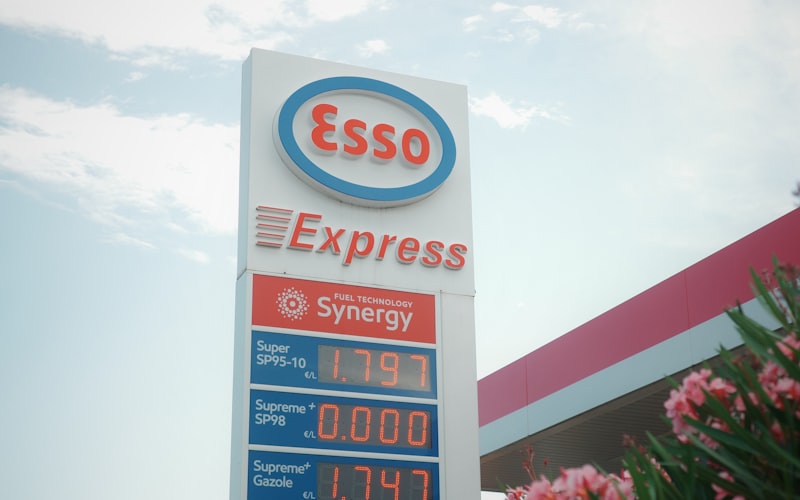
How to Find the Cheapest Fuel Near You
Dave's complete guide to finding the cheapest fuel near you. Eight practical steps covering live fuel maps, supermarket loyalty tricks, price trend tracking, and a simple weekly routine that saves £200-400 a year.
Right, let me save you some money.
If you've ever pulled into a petrol station, filled up, then driven past another garage half a mile down the road selling fuel for 5p a litre less - you know that sinking feeling. Over a year, that 5p difference on a 50-litre tank adds up to well over £100. That's a weekend away, a decent meal out, or a stack of car cleaning gear you didn't know you needed.
I'm Dave, and I've spent years obsessing over this stuff so you don't have to. This guide is my complete, step-by-step system for never overpaying for fuel again. No gimmicks, no nonsense, just practical methods that genuinely work.
Let's get into it.
Step 1: Know What You're Actually Paying
Before you can find the cheapest fuel, you need to understand what "cheap" looks like. Most drivers have no idea what the national average price is on any given day, which means they can't spot a good deal when it's right in front of them.
Check the National Average
The RAC Fuel Watch page is your best friend here. It tracks the daily national average for unleaded and diesel across the UK. Bookmark it. Check it once a week. Within a month, you'll instinctively know whether a price on a forecourt board is good, average, or daylight robbery.
Understand the Price Spread
At any given moment, the difference between the cheapest and most expensive fuel in the same town can be 10-15p per litre. That's not a small rounding error. On a full tank, that's £5 to £7.50. Fill up weekly, and you're looking at £260 to £390 a year. Just for choosing the wrong station.
The GOV.UK fuel finder publishes actual retailer prices so you can see this spread for yourself. It's official government data, updated regularly, and it covers thousands of stations.
Step 2: Use a Live Fuel Price Map
This is the single biggest money-saver in the whole guide, and it takes about thirty seconds.
A live fuel price map shows you every station near your location with their current prices, colour-coded so the cheapest ones jump out immediately.
How to Use Our Fuel Map
- Head to our live fuel map
- Enter your postcode or let it use your current location
- Look for the green pins — those are the cheapest stations nearby
- Check the price against the national average you learned in Step 1
- Pick the cheapest station that's on or near your usual route
That last point matters. There's no sense driving 15 miles out of your way to save 2p a litre. But if there's a station that's 3p cheaper and only a two-minute detour from your commute? That's free money.
Use Google Maps as a Backup
If you're out and about in an unfamiliar area, Google Maps now shows fuel prices at nearby stations when you search for "petrol station." It's not always perfectly up to date, but it's handy when you're in a pinch and need to make a quick decision.
Step 3: Track Fuel Price Trends
Fuel prices aren't random. They follow patterns weekly cycles, seasonal shifts, and reactions to wholesale market changes. Once you understand these patterns, you can time your fill-ups to catch prices on the way down rather than the way up.
Weekly Patterns
Supermarket fuel tends to be cheapest mid-week (Tuesday to Thursday) and creeps up before the weekend when demand rises. This isn't a hard rule, but it's a pattern I've seen play out consistently over the years.
Longer-Term Trends
Our fuel price trends page tracks how prices move over weeks and months. If prices have been falling steadily, you might hold off filling up completely and just put in enough to get through a couple of days. If they're climbing, fill up now before they go higher.
I'm not suggesting you turn fuel buying into a stock-trading obsession. But glancing at the trend once a week takes ten seconds and can easily save you a few quid per tank.
Step 4: Make Supermarkets Work for You
Supermarket fuel stations (Tesco, Sainsbury's, Asda, Morrisons) are almost always cheaper than branded stations like Shell, BP, or Esso. That's not a slight against the branded lot; it's just how the economics work. Supermarkets use fuel as a loss leader to get you through the door.
The Loyalty Card Double-Dip
Here's where it gets clever:
- Tesco Clubcard; You earn Clubcard points on fuel purchases. Those points convert into vouchers. It's not a massive saving per visit, but over a year it adds up to a genuine discount.
- Sainsbury's Nectar; Same principle. Nectar points on every fill-up, plus they regularly run bonus point promotions on fuel.
- Morrisons More; Points on fuel that convert to money-off vouchers.
- Asda; Typically the cheapest of the big four but doesn't run a traditional loyalty scheme. The saving is in the pump price itself.
The 5p-Off Voucher Trick
Supermarkets regularly offer "spend £40 in store, get 5p off per litre" vouchers. If you're doing your weekly shop anyway, grab the voucher and use it when you fill up. On a 50-litre tank, that's £2.50 off, effectively a 5% discount on a £50 fill-up.
The key is to plan your shop and your fill-up for the same trip. Don't make a special journey just for the voucher.
Step 5: Check Whether the Detour Is Worth It
This is where most people get it wrong. They see a station advertising fuel at 3p less per litre, drive six miles out of their way to get it, and end up spending more on the extra fuel than they saved.
Let me put it this way: if your car does 40 miles per gallon and fuel costs 135p per litre, every extra mile you drive costs you roughly 15p. A six-mile round-trip detour costs about 90p in fuel. If you're only saving 2p per litre on a 40-litre fill-up, that's 80p saved - and you've actually lost money.
Our trip calculator does this maths for you. Plug in the distance to the cheaper station, your car's fuel economy, and the price difference, and it'll tell you whether the trip is worth making.
The Rule of Thumb
As a rough guide, a detour is worth it if:
- The price difference is 3p or more per litre, AND
- The extra round-trip distance is under 4 miles
Anything beyond that, and the numbers start working against you.
Step 6: Use the Right Fuel for Your Car
This might sound obvious, but I've met plenty of drivers putting premium fuel in cars that don't need it. If your car's handbook says it runs on E10 unleaded (which is standard petrol), then putting in E5 super unleaded at an extra 10-15p per litre is just setting fire to money.
Premium fuels have their place, certain high-performance engines genuinely benefit from them. But for the average family hatchback or SUV, standard fuel is perfectly fine. The AA's fuel advice page has solid guidance on which fuel types suit which vehicles.
And if you're really serious about cutting fuel costs long-term, your choice of car matters more than your choice of station. A car that does 55mpg instead of 35mpg saves you far more over a year than any amount of station-hopping. If you're in the market, AutoTrader is a good place to compare fuel-efficient options, and our running costs guide breaks down exactly what different cars cost to run day-to-day.
Step 7: Time Your Fill-Ups Smartly
Don't wait until the fuel light comes on. When you're running on fumes, you'll pull into whatever station is nearest — and "nearest" is almost never "cheapest."
The Half-Tank Rule
I fill up when my tank hits the halfway mark. This gives me enough range to be choosy about where I stop, and enough flexibility to wait a day or two if prices are temporarily high.
Fill Up on Route, Not as a Destination
The cheapest fuel run is the one you don't make. If there's a good-value station on your commute, your school run, or your regular supermarket trip, that's where you should fill up. Even if it's not the absolute cheapest station within a 20-mile radius. The fuel, time, and hassle of a dedicated trip almost always wipe out the saving.
Step 8: Avoid the Motorway at All Costs
I mean motorway service stations, not the motorway itself. Although if you can avoid the M25, that's generally good life advice too.
Motorway service station fuel is consistently 15-25p per litre more expensive than nearby alternatives. On a 60-litre tank, that's up to £15 extra for a single fill-up. They know you're a captive audience, and they price accordingly.
If you're planning a long journey, fill up before you get on the motorway. If you need to refuel mid-trip, come off at a junction and find a station in the nearest town. Five minutes of detour can save you a tenner.
Dave's Fuel-Finding Routine
Right, here's my actual weekly routine distilled into a simple system. It takes almost no effort once it's a habit:
- Monday morning; I glance at the fuel price trends to see which direction prices are heading. Ten seconds.
- Before I need to fill up; I check the live fuel map for the cheapest station on or near my regular routes. Thirty seconds.
- Mid-week; I fill up at the cheapest option that doesn't require a detour, usually a supermarket station. I use my loyalty card every single time.
- Monthly; I use any accumulated loyalty vouchers or supermarket fuel discounts on my next fill-up.
- When planning a long trip; I run the numbers through the trip calculator to plan fuel stops that don't include motorway services.
That's it. No spreadsheets, no obsessive price-checking, no driving across town to save a penny. Just smart habits that quietly save £200-400 a year.
The money's there for the taking. You just have to know where to look.
Try our live fuel map
Get Dave's free AI-powered vehicle check before you make a decision.