What Does 'Suspension Arm Bush Worn' Mean on an MOT? Serious or Not?
A suspension arm bush worn advisory sounds technical but it is actually one of the most common MOT advisories out there. Here is the no-nonsense explanation of what it means for your car.
What on Earth Is a Suspension Arm Bush?
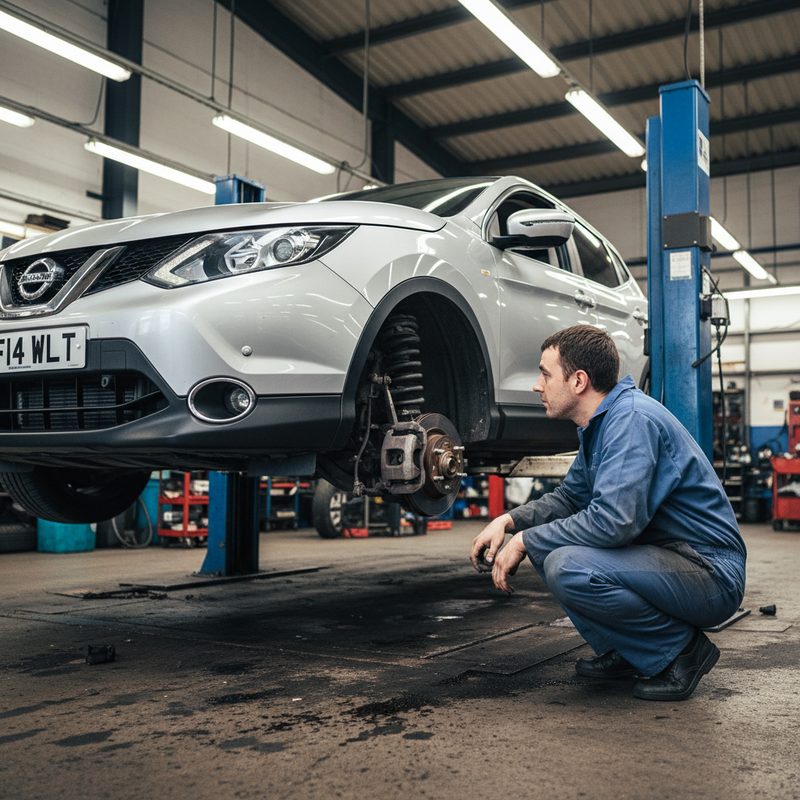
Let me start with the basics because this is one of those MOT advisories that sounds far more intimidating than it actually is. Your car has suspension arms -- sometimes called control arms or wishbones -- that connect the wheel assembly to the body of the car. At each end of these arms, there are rubber bushes. Think of them as rubber doughnuts that act as cushions between metal components.
Their job is simple but crucial: they allow the suspension arm to pivot smoothly while absorbing vibrations and road noise. Without them, every bump in the road would send a jolt of metal-on-metal impact straight through the car. The rubber absorbs that energy, keeps things quiet, and lets the suspension do its job properly.
When the MOT tester writes 'Suspension Arm Bush Worn,' they are telling you that one or more of these rubber bushes has degraded. The rubber has gone soft, cracked, perished, or started to separate from its metal housing. The bush is still doing its job -- otherwise it would be a fail, not an advisory -- but it is not doing it as well as it should be.
How Serious Is This Advisory?
I would put this firmly in the 'keep an eye on it' category rather than the 'drop everything and fix it' category. A worn suspension bush is not going to cause your wheel to fall off or your brakes to fail. The car passed the MOT, which means the wear is within acceptable limits for now.
That said, suspension bushes are not something to ignore indefinitely. Here is what happens as they deteriorate further:
If you are weighing up alternatives, our guide to Tyre Inner Edge Wear MOT Advisory covers similar ground from a different angle.
Handling Gets Vague
Worn bushes allow the suspension arm to move around more than it should. This translates to a less precise feel through the steering wheel. The car might feel a bit wallowy, particularly through corners, or you might notice it does not feel as planted as it used to on faster roads.
You Hear Clunking or Knocking
As the rubber deteriorates, the metal parts start to knock against each other over bumps. You will hear this as a clunk or thud from the affected corner, particularly over speed bumps, potholes, or rough surfaces. It is annoying rather than dangerous at first, but it gets worse.
Tyre Wear Becomes Uneven
This is one people miss. A worn bush changes the geometry of the suspension, which means the wheel no longer sits at the angle the manufacturer intended. Over time, this causes the tyre to wear unevenly -- typically on the inside edge. You might not notice until the tyre is dangerously worn on one side while looking fine on the other.
It Can Become an MOT Failure
If the bush deteriorates enough, it goes from advisory to failure. At that point, you cannot legally drive the car until it is fixed. Better to sort it on your terms than be forced to deal with it at MOT time.
For more on this topic, take a look at our Steering Rack Worn guide.
Overall severity: moderate. It is not a safety emergency today, but it will become one if you ignore it for too long. I would rate the urgency as something to address within the next three to six months.
What Does the Repair Cost?
The cost depends on which bush is worn, which car you have, and whether the bush can be replaced individually or whether you need the entire suspension arm.
On many modern cars, the bush is pressed into the arm and cannot be replaced separately. In those cases, you replace the whole arm, which comes with new bushes already fitted. On some older or simpler designs, the bush can be pressed out and a new one pressed in, which is cheaper.
Here are some typical costs:
Bush Replacement Only (Where Possible)
- Parts: £10 to £40 per bush
- Labour: £60 to £120 per bush (the pressing in and out is the time-consuming bit)
- Total per bush: £70 to £160
Complete Suspension Arm Replacement
- Small cars (Fiesta, Corsa, Polo): £100 to £200 per arm including labour
- Medium cars (Golf, Focus, A4): £150 to £300 per arm
- Large or premium cars (BMW 5 Series, Mercedes E-Class): £200 to £450 per arm
- SUVs and 4x4s: £200 to £500+ per arm
Most of the time, if one bush is worn, the other bushes on the same arm and the corresponding arm on the opposite side will not be far behind. Budget for replacing arms in pairs (left and right on the same axle) for even handling.
You might also find our Coolant Leak Visible MOT Advisory guide useful alongside this one.
Additional Costs
After replacing suspension arms or bushes, you will almost certainly need a wheel alignment. This typically costs £30 to £80 and is essential -- without it, your new components will be working at the wrong angles and your tyres will wear unevenly.
Can You Wait, or Should You Fix It Now?
You can wait, but not forever. Here is my rule of thumb:
- Advisory with no symptoms (no clunking, no handling issues, no uneven tyre wear): You have three to six months. Get a quote, plan the repair, and fit it into your budget.
- Advisory with mild clunking over bumps: Two to three months. The bush is deteriorating and things will only get worse.
- Advisory with noticeable handling changes or visible tyre wear: Fix it within a month. You are already experiencing the knock-on effects of the worn bush, and those effects are costing you money in tyre wear.
One important point: if you are about to go on a long motorway trip or a holiday drive, a worn bush is unlikely to cause a problem. The danger is more about gradual deterioration and tyre wear than sudden failure. Bushes do not snap or break without warning -- they degrade slowly and predictably.
What If This Advisory Appears Repeatedly?
If you are seeing suspension arm bush worn advisories across multiple consecutive MOTs, it either means the bushes have never been replaced (owner neglect) or they are wearing out prematurely.
Premature bush wear can be caused by:
- Poor quality replacement parts: Cheap bushes use inferior rubber that perishes faster. Always insist on OE-quality or genuine parts.
- Driving conditions: Lots of speed bumps, potholes, and rough roads accelerate bush wear. If the car lives in a city with terrible road surfaces, the bushes will have a harder life.
- Power and torque: High-powered cars put more stress through the suspension, which wears bushes faster. This is particularly common on front-wheel-drive performance cars where the engine torque is transmitted through the front suspension.
- Age: Rubber deteriorates with time, not just mileage. A car that sits on a driveway for years can still have perished bushes.
If you are buying a car with repeated bush advisories, it does not necessarily mean there is a major problem, but it does mean you should budget for the repair and factor it into your offer.
You can check the exact safety score for any model on the Euro NCAP website.
Impact on the Car's Value and Your Negotiation
A suspension arm bush advisory is a useful negotiating tool if you are buying. It is a documented, verifiable expense that will need addressing. Here is how I would use it:
- Single advisory, first appearance: Knock £100 to £250 off, depending on the car and whether it needs a bush or a whole arm.
- Repeated over two or more years: Knock £200 to £400 off and factor in the alignment cost too.
- Multiple suspension advisories (bushes plus other items): This suggests general suspension neglect. I would be pushing for £400 to £600 off or looking at a different car.
If you are selling, getting the bushes done before listing is often worthwhile. A clean MOT sheet gives buyers confidence and removes a negotiating tool from their arsenal.
Dave's Final Thought
A suspension arm bush worn advisory is bread-and-butter stuff. It is not glamorous, it is not exciting, and it is not something that should keep you up at night. But it does need dealing with before it turns into a bigger headache -- or an MOT failure.
If you want to check whether a car you are eyeing up has a pattern of suspension issues, bang the reg into my vehicle check tool. It gives you the complete MOT history at a glance, so you can spot recurring problems and go into any negotiation fully armed with the facts. For more on what to do if you encounter other advisories, check out my guide on DPF Blocked on MOT — How Serious Is It and What to Do or What Does 'Wishbone Bush Worn' Mean on an MOT? Serious or Not?.
Check your car's full advisory pattern with Dave
Get Dave's free AI-powered vehicle check before you make a decision.