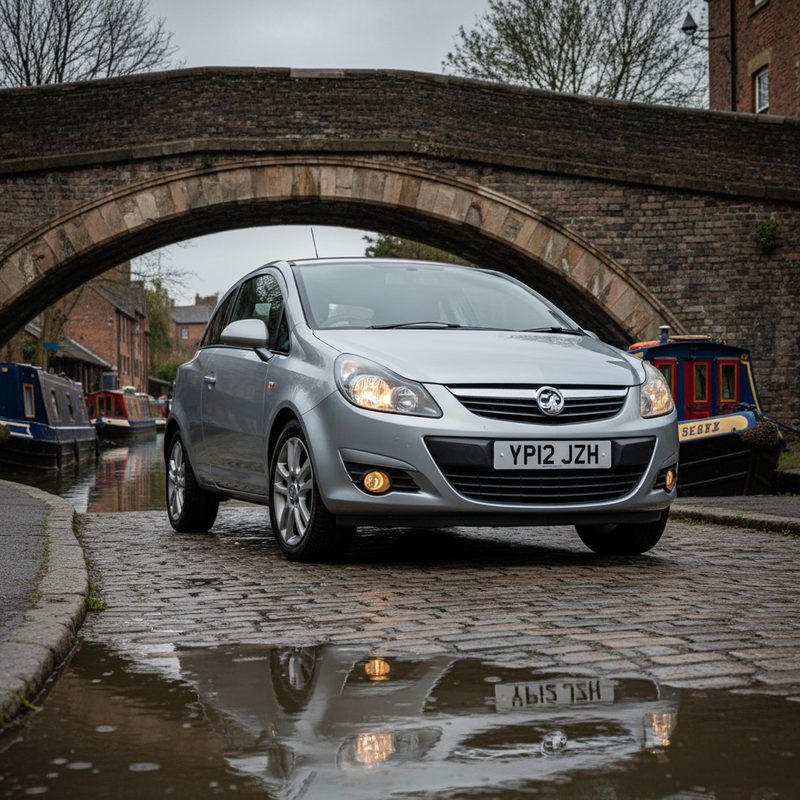
Vauxhall Corsa — Best Age to Buy for Lowest Cost Per Mile
The Vauxhall Corsa is already one of the cheapest cars on UK roads to run -- but buy it at the wrong age and you will pay far more per mile than you need to. Every number to find the sweet spot.
The Corsa's Secret -- Timing Your Purchase for Maximum Savings
The Vauxhall Corsa has always been about affordable motoring. Low purchase prices, cheap insurance, decent fuel economy, and parts that cost pennies compared to premium alternatives. But even within the Corsa world, there is a massive difference in what each mile costs you depending on when you buy.
I have crunched the numbers across every major cost category -- depreciation, fuel, insurance, road tax, servicing, and maintenance -- to find the exact age where Corsa ownership costs the least per mile. The results might surprise you.
Full Cost Per Mile Breakdown
I am using a Vauxhall Corsa 1.2 Turbo GS as my reference car, assuming 7,500 miles per year and a three-year ownership period at each purchase age.
Brand New Purchase
- Purchase price: £23,000
- Value after 3 years: £11,500
- Depreciation: £11,500 (£3,833/year)
- Annual fuel (50 mpg): £1,050
- Annual insurance: £550
- Annual servicing/maintenance: £220
- Road tax: £165
- Total annual cost: £5,818
- Cost per mile: 78p
Bought at 3 Years Old
- Purchase price: £11,500
- Value after 3 years (age 6): £6,000
- Depreciation: £5,500 (£1,833/year)
- Annual fuel: £1,050
- Annual insurance: £480
- Annual servicing/maintenance: £320
- Road tax: £165
- Total annual cost: £3,848
- Cost per mile: 51p
Bought at 5 Years Old
- Purchase price: £7,500
- Value after 3 years (age 8): £4,200
- Depreciation: £3,300 (£1,100/year)
- Annual fuel: £1,050
- Annual insurance: £450
- Annual servicing/maintenance: £420
- Road tax: £165
- Total annual cost: £3,185
- Cost per mile: 42p
Bought at 7 Years Old
- Purchase price: £5,000
- Value after 3 years (age 10): £3,000
- Depreciation: £2,000 (£667/year)
- Annual fuel: £1,050
- Annual insurance: £430
- Annual servicing/maintenance: £550
- Road tax: £165
- Total annual cost: £2,862
- Cost per mile: 38p
Bought at 10 Years Old
- Purchase price: £3,000
- Value after 3 years (age 13): £1,800
- Depreciation: £1,200 (£400/year)
- Annual fuel: £1,050
- Annual insurance: £420
- Annual servicing/maintenance: £750
- Road tax: £165
- Total annual cost: £2,785
- Cost per mile: 37p
The Sweet Spot: Six to Ten Years Old
The Corsa delivers its lowest cost per mile when purchased at six to ten years old. At this age, total cost per mile drops to around 37-40p -- exactly half of what it costs to run a brand-new Corsa.
The reason is straightforward. Depreciation has collapsed from £3,833 per year when new to roughly £400-£667 per year at seven to ten years old. That single change saves you over £3,000 annually. Maintenance costs have risen, yes, but only by £200 to £500 compared to a new car. The net saving is enormous.
Notice how the cost per mile is almost identical at seven years and ten years -- 38p versus 37p. This happens because the continuing fall in depreciation is almost perfectly offset by rising maintenance costs. This equilibrium zone is the cheapest window for Corsa ownership.
Why the Corsa Reaches Its Sweet Spot Earlier Than Some Rivals
The Corsa hits its lowest cost per mile at six to ten years old, which is roughly a year earlier than the Ford Fiesta (seven to ten years) and two to three years earlier than the Volkswagen Polo (eight to twelve years).
This is a direct consequence of the Corsa's heavier depreciation in its early years. Because it loses more value faster, the depreciation component of cost per mile shrinks sooner. The Corsa also benefits from being one of the cheapest cars to maintain in the supermini class -- parts are widely available and labour costs are low because every mechanic in the country is familiar with the car.
The Corsa-e (Electric) -- A Different Equation
The electric Corsa-e has a fundamentally different cost profile. Higher purchase prices (around £30,000 new) but much lower fuel costs (roughly £400-£500 per year in electricity versus £1,050 in petrol) and lower maintenance costs (no oil changes, no clutch, fewer brake pad changes).
At seven years old, a Corsa-e might cost roughly £7,000 to £9,000 to buy. Annual depreciation would be around £800 to £1,000. Electricity costs around £450 per year. Insurance is typically higher at £550 to £700. But maintenance is very low at around £200 per year.
The total cost per mile for a seven-year-old Corsa-e works out to roughly 35-40p -- similar to the petrol model but with significantly lower fuel costs offset by higher purchase price and insurance. If you have access to home charging, the Corsa-e can actually undercut the petrol version.
How Mileage Affects the Calculation
Your annual mileage has a dramatic effect on cost per mile because it changes how fixed costs like depreciation, insurance, and road tax are spread.
At 5,000 miles per year with a seven-year-old Corsa, cost per mile rises to about 48p. The fixed costs are spread across fewer miles, making each one more expensive.
At 7,500 miles per year (my baseline), cost per mile is 38p.
At 12,000 miles per year, cost per mile drops to about 30p. Higher fuel costs and slightly more maintenance are more than offset by spreading depreciation and insurance across 50% more miles.
At 15,000 miles per year, cost per mile can drop to around 27p. However, at this mileage the Corsa will accumulate value-reducing miles quickly, potentially increasing depreciation slightly.
The takeaway? If you drive a lot, the Corsa becomes even better value per mile. If you drive very little, fixed costs dominate and the per-mile figure goes up.
What Can Push Costs Higher Than Expected?
Even at the sweet spot age, certain things can spike your costs:
Unexpected repairs are the main risk. A clutch replacement on a Corsa costs £350 to £500. A new catalytic converter (if it fails emissions) can be £400 to £700. An alternator replacement is £250 to £400. None of these are catastrophic individually, but two or three in the same year can add 5-8p per mile.
Insurance surprises can hit younger or less experienced drivers hard. A 19-year-old insuring a Corsa might pay £1,500 to £2,000 per year, which alone adds 20-27p per mile. If you are in this situation, telematics policies can help reduce the premium.
Tyre costs add up over time. Budget tyres for a Corsa cost about £50 each; decent mid-range options are £65 to £80. You will typically need a new set every 20,000 to 25,000 miles. At 7,500 miles per year, that is roughly once every three years -- about £70 per year.
MOT failures can generate unexpected bills. Common Corsa MOT issues include corroded brake pipes, worn suspension components, and emission failures. Budgeting £200 to £400 per year for MOT-related work on cars over seven years old is sensible.
Keeping Your Corsa Costs as Low as Possible
- Buy at six to ten years old. This is where depreciation and maintenance balance out to give you the lowest total cost.
- Choose the 1.2 Turbo or 1.4 Turbo engine. Best balance of economy, performance, and reliability.
- Target low-mileage examples. Less wear means fewer surprise repair bills.
- Shop aggressively for insurance. Compare quotes every year. Switch providers. Use telematics if it helps.
- Drive smoothly. Gentle driving extends the life of brakes, tyres, and clutch while improving fuel economy.
- Do basic maintenance yourself. Oil top-ups, wiper blades, and bulb changes are easy and save on garage bills.
- Build a contingency fund. Set aside £30 to £50 per month for unexpected repairs. If nothing breaks, you have a nice savings buffer.
Dave's Verdict
The Vauxhall Corsa reaches its lowest cost per mile at six to ten years old, where all-in costs sit around 37-40p per mile. That is half what a new Corsa costs per mile, and it gives you a car that is perfectly adequate for daily driving, commuting, and family errands.
The key is finding a good example at this age -- one with reasonable mileage, documented maintenance, and no hidden surprises. Run the registration through Dave's vehicle check before you commit. Outstanding finance, write-off markers, mileage discrepancies, and theft records are all real risks, even at the budget end of the market. A quick check protects your money and gives you confidence. Check it with Dave.
Check Vauxhall Corsa, instantly with Dave's free vehicle intelligence report.
Check a specific year with Dave