Consumer Rights Buying Private Sale Car — Dave's Complete Guide
Private car sales offer fewer legal protections than dealer purchases. Your actual rights, the limits of caveat emptor, and essential precautions.
Consumer Rights When Buying a Private Sale Car
Buying a Used Car from a private seller can save you money, but it also means you have far fewer legal protections than when buying from a dealer. Understanding exactly where you stand legally before you hand over your money is essential.
Dave has seen countless private sale disputes and knows what protections you genuinely have and where you are exposed.
The Fundamental Difference
When you buy from a dealer, the Consumer Rights Act 2015 requires the car to be of satisfactory quality, fit for purpose, and as described. None of these quality-related protections apply to private sales.
The legal principle governing private sales is caveat emptor: buyer beware. The seller has no obligation to point out faults, defects, or problems with the car. If you buy a car with a dodgy gearbox and the seller never mentioned it, that is generally your problem.
This does not mean you have zero protections. Private sellers must still comply with certain legal requirements, and understanding these can save you from the worst outcomes.
What the Seller Must Do
The car must match its description. If the seller describes the car as having full service history and it does not, or states the mileage is genuine when it has been clocked, you have a claim under the Misrepresentation Act 1967. This applies to:
- Written descriptions in advertisements on AutoTrader, Facebook Marketplace, Gumtree, or eBay
- Verbal statements made during viewing or negotiation
- Any claims about the car condition, history, or specification
The seller must have the legal right to sell the vehicle. Under the Sale of Goods Act 1979, the seller must own the car or have authority to sell it. If the car turns out to be stolen or has outstanding finance, you could lose both the car and your money.
The seller must not deliberately conceal known faults. While a private seller is not required to volunteer information about every scratch and rattle, actively hiding serious defects crosses the line into misrepresentation or fraud.
What the Seller Does Not Have to Do
The car does not need to be of satisfactory quality. Unlike dealer sales, the private seller has no obligation to ensure the car is roadworthy, reliable, or in good mechanical condition. An eight-year-old car with 100,000 miles that breaks down the day after purchase is disappointing but not illegal.
The seller does not need to offer a warranty. Private sales come with no guarantees about future performance. What you see is what you get.
The seller does not need to accept returns. There is no cooling-off period and no right to reject for private sales. Once the deal is done, it is done, unless you can prove misrepresentation.
Protecting Yourself Before You Buy
Since your legal protections are limited, prevention becomes everything. Dave recommended checklist for private purchases:
Run an HPI check. For around fifteen pounds, you can verify whether the car has Outstanding Finance, is recorded as stolen, has been written off, or has mileage discrepancies. This single step prevents the majority of private sale disasters.
Check the MOT history. This free government service reveals the car complete test history, including failures, advisories, and recorded mileage at each test. Cross-reference these figures with what the seller claims.
Verify the seller identity. Check that the name on the V5C logbook matches the seller identification. If the names do not match, ask why. If the seller cannot provide satisfactory explanation, walk away.
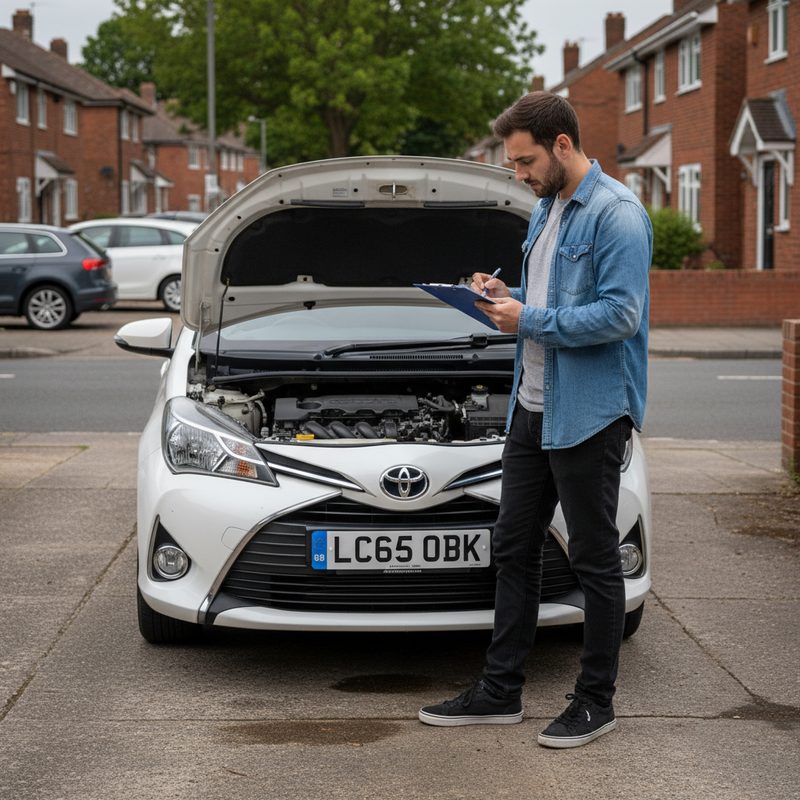
Inspect the car thoroughly. Consider paying for an independent inspection from the AA or RAC, which costs around one hundred to one hundred and fifty pounds. This is money well spent when your legal recourse after purchase is limited.
Take a proper test drive. Drive the car for at least 20 minutes on a variety of roads. Listen for unusual noises, feel for vibrations, check all electrical systems, and test the brakes thoroughly.
Getting a Written Receipt
Always insist on a written receipt for any private purchase. This should include:
- Full names and addresses of both buyer and seller
- Date of the transaction
- Vehicle details: make, model, registration, VIN, colour, and mileage
- The agreed price
- Any specific statements the seller has made about the car condition
- Signatures from both parties
The receipt serves as evidence if you need to pursue a claim later. If the seller states in writing that the car has never been in an accident and you later discover it has, that receipt becomes a powerful piece of evidence.
Our guide on writing a receipt for a private sale provides a template you can use.
What to Do If Things Go Wrong
If you discover problems after a private purchase, your options depend on the circumstances:
If the seller misrepresented the car: You can seek to rescind, meaning undo, the contract and recover your money. Contact the seller in writing, explain the misrepresentation, and request a refund. If they refuse, you can pursue a claim through the Small Claims Court for amounts up to ten thousand pounds.
Evidence is crucial. Save any listing screenshots, text messages, or emails where the seller made claims about the car. Witness statements from anyone present at the viewing can also help.
If the car has outstanding finance: The finance company has a legal right to repossess the vehicle, even from an innocent buyer. An HPI check before purchase would have revealed this. If you did not check and the car is repossessed, your only recourse is against the seller, which may be difficult to enforce.
If the car is stolen: The police will seize the vehicle, and you will lose your money. Again, an HPI check would have flagged this. You can pursue the seller for your money, but if they have disappeared, recovery may be impossible.
If you were defrauded: Report the crime to Action Fraud on 0300 123 2040 and to your local police. Citizens Advice can also provide guidance.
Online Private Sales: Extra Caution Needed
Buying through platforms like Facebook Marketplace, Gumtree, or eBay introduces additional risks. Some important precautions:
Never send money before seeing the car in person. No matter how convincing the listing or how persuasive the seller, transfer no funds until you have physically inspected the vehicle.
Meet at the seller address. If they want to meet in a car park or another neutral location, ask yourself why they do not want you at their home. The address should match the V5C.
Be cautious of deals that seem too good. A car priced significantly below market value is either a bargain or a trap. More often, it is a trap.
Watch for common red flags in online listings, such as stock photos, vague descriptions, or sellers who avoid direct questions.
Dave Summary
Private sales offer less legal protection but can deliver better prices. The key is to compensate for the reduced legal safety net with thorough pre-purchase diligence. Run checks, get inspections, verify identities, and document everything.
If you want the strongest consumer protections, buy from a dealer. If you want the best price and are willing to do the homework, buy privately but do it with your eyes wide open.
Use Dave to check any car you're considering
Get Dave's free AI-powered vehicle check before you make a decision.