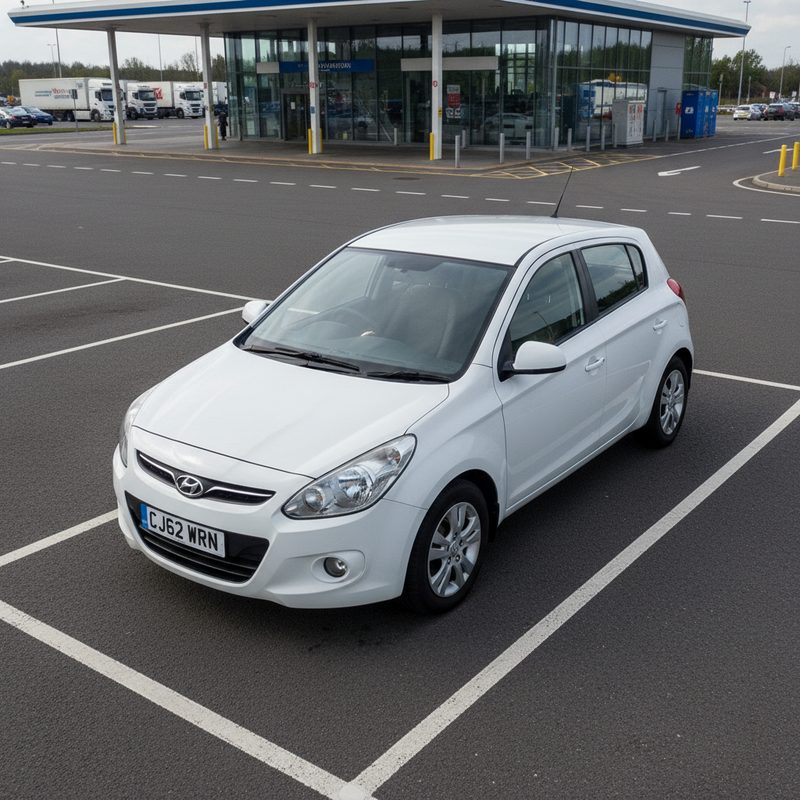
Hyundai I20
2012–2012
The Hyundai I20 (2012-2012) shows concerning electrical problem trends in MOT data.
The Hyundai I20 (2012-2012) has a significant overall MOT failure rate of 33.3%, based on 12 real tests from DVSA data. This figure indicates that a third of these vehicles do not pass their MOTs, raising concerns about their reliability and potential hidden issues.
Among the top defect categories, electrical problems are not explicitly listed, but the high failure rates in other areas such as tyres (380.17%), brakes (239.67%), and lights (107.44%) suggest that underlying electrical issues may contribute to these failures. The prevalence of these defects could indicate chronic electrical problems affecting the vehicle's overall performance and safety.
When examining failure rates by mileage, the data reveals that vehicles with mileage between 40,000 to 80,000 km have a 33.3% failure rate, while those with 80,000 to 120,000 km show an even higher failure rate of 40%. This trend suggests that as the vehicle ages and accumulates mileage, the likelihood of encountering electrical and other related issues increases.
Given these statistics, potential buyers should be cautious when considering the Hyundai I20 (2012-2012) due to its high failure rates and the possibility of chronic electrical problems that could lead to costly repairs and reliability concerns.
Useful links
Common Problems
| Problem | Severity | Typical Cost |
|---|---|---|
| Tyres issues | High | £50-£300 |
| Brakes issues | High | £80-£450 |
| Lights issues | High | £15-£200 |
Data Source
DVSA MOT bulk data — 12 tests analyzed

Thinking about this car?
Even problematic models can be good buys if the specific car has been well maintained. Check the MOT history to know for sure.
Check a Hyundai I20Frequently Asked Questions
Quick Stats
- Risk Level
- Medium
- Year Range
- 2012–2012
- Typical Repair Cost
- £145 – £950
- Affected Areas
- Tyres Brakes Lights Windscreen Other