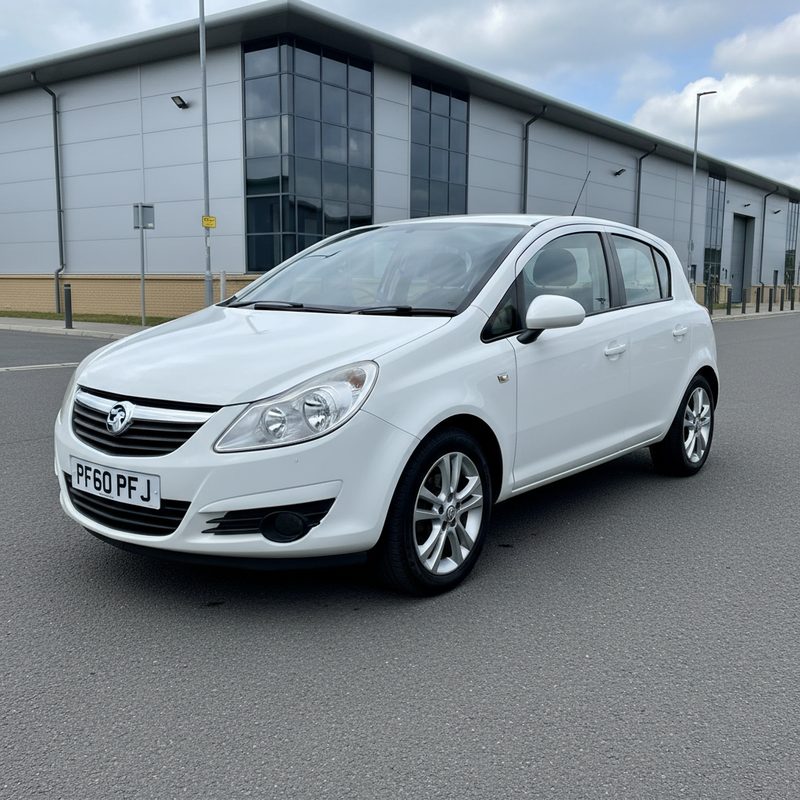
2010 Vauxhall Corsa D — Should You Buy One on a Budget
The Corsa D is everywhere — but the combo valve fault and timing chain issues mean picking the right engine saves you hundreds. Dave has the breakdown.
Britain's Budget Supermini
The Vauxhall Corsa D (2006–2014) is one of the most common cars on UK roads, and its sheer ubiquity is both its greatest strength and the source of its biggest problem. It is cheap to buy, cheap to insure, and available in every colour from every dealer, private seller, and auction in the country — which means the used market is flooded with neglected examples that have been run into the ground by owners who viewed the car as disposable. A 2010 example with 70,000–90,000 miles costs £1,500–£3,000, which puts it squarely in first-car and budget-runabout territory. But at this price, the condition varies enormously, and picking the right engine and the right example is the difference between years of trouble-free motoring and a spiral of escalating repair bills that quickly exceed the car's value.
But ubiquity does not mean reliability. At 15 years old, the national average MOT failure rate is 39%, and the Corsa D has specific engine-dependent faults that can turn a £2,000 car into a scrap candidate overnight. The timing chain on the 1.2 and 1.4 petrol engines is the critical concern — when it stretches beyond tolerance, the engine destroys itself, and the repair cost exceeds the car's value. The combo valve on the inlet manifold is the other Corsa D signature fault, causing rough running and warning lights that worry owners but are actually cheap and straightforward to fix. Engine choice is everything on this car, and understanding which engines carry which risks is the single most important piece of knowledge you can have before viewing any Corsa D.
The Corsa D's saving grace is its simplicity. Unlike German rivals that layer complexity upon complexity, the Corsa D is a fundamentally straightforward car with well-understood mechanicals and cheap parts availability. An independent garage can service it for half the cost of a Volkswagen Polo, and the most common repair items — brake pads, springs, exhaust sections — are stocked by every motor factor in the country. If you buy the right engine with a documented service history and a clean MOT record, the Corsa D will run cheaply and reliably for years. If you buy the wrong one with no history and a ticking timing chain, you will be looking for another car within twelve months.
Engine Choices — This Matters
1.0 Ecotec (65 bhp) — Simple and Cheap
The three-cylinder 1.0 is the budget option and the engine Dave recommends for absolute peace of mind. It is slow — 0–60 takes approximately 18 seconds, and overtaking on dual carriageways requires significant forward planning — but it uses a timing chain that is more robust than the 1.2 and 1.4 variants, returns an excellent 45–50 mpg in mixed driving, and sits in insurance groups 2–3, making it the cheapest possible car to insure for young and newly qualified drivers. The three-cylinder configuration produces a distinctive thrum at idle and under load, but it is never unpleasant, and the engine is perfectly adequate for town driving, school runs, and short commutes. Maintenance costs are minimal — the timing chain requires no scheduled replacement, servicing is inexpensive, and there are no turbochargers, intercoolers, or complex emission control systems to go wrong.
1.2 Ecotec (80 bhp) — The Common Choice
Available in two versions that are critically different in terms of reliability: the older tappet-style Z12XEP and the newer twin-port A12XER. Both use timing chains, and both carry the timing chain stretch risk that is the Corsa D's defining mechanical weakness. The chain can stretch at 60,000–80,000 miles, particularly on the A12XER variant, and the first symptom is a metallic rattle on cold start that fades after 10–20 seconds as the oil pressure builds. This rattle is not a minor inconvenience — it indicates that the chain has elongated beyond the tensioner's ability to compensate, and if the chain jumps a tooth on the camshaft sprocket, the resulting valve-to-piston contact destroys the engine. Replacement costs £400–£700 for the chain, tensioner, and guides, plus labour. This is the Corsa D's most expensive potential fault, and the one that scraps more Corsas than any other single issue.
1.4 Ecotec (90/100 bhp) — Better Performance
The 1.4 offers a genuine step up in performance and refinement over the 1.2, with noticeably better motorway ability and more relaxed cruising at 70 mph. Insurance groups 6–8 are still very affordable, and fuel economy of 40–45 mpg is only marginally worse than the smaller engines. The 1.4 uses the same timing chain architecture as the 1.2 with the same stretch risk, but owner data and garage reports suggest the chain tends to last slightly longer in the 1.4 — possibly because the engine is less stressed at motorway speeds and therefore runs with lower chain loads during sustained cruising. That said, budget for chain work if buying any 1.4 with more than 70,000 miles and no documented chain replacement.
1.3 CDTi (75 bhp) — Diesel
The Fiat-sourced 1.3 Multijet diesel returns an impressive 55–65 mpg and has a different character entirely from the petrol engines — torquey, quiet at cruise, and well-suited to motorway commuting. Insurance groups 8–10 are reasonable. However, the diesel particulate filter is deeply problematic on cars that are used primarily for short urban trips, because the DPF never reaches the temperature required for passive regeneration. A blocked DPF costs £400–£800 to replace, and forced regeneration at a dealer costs £100–£200 with no guarantee of success. Only consider the 1.3 CDTi if you regularly drive 20+ miles at motorway speeds to keep the DPF healthy.
Dave's pick: 1.0 for absolute budget and zero timing chain anxiety. 1.4 for the best balance of performance and cost, provided you can verify the chain history.
Known Faults
Combo Valve (Inlet Manifold) — The Corsa D Signature
The inlet manifold on the 1.2 and 1.4 petrol engines incorporates a combo valve — technically a swirl flap actuator — that controls airflow into the cylinders. This valve fails with remarkable regularity, causing rough idle, hesitation under acceleration, power loss, and an illuminated engine warning light. The combo valve's vacuum diaphragm deteriorates over time, and the plastic linkage rods that connect the actuator to the swirl flaps can snap. Replacement costs £150–£250 for the part plus £50–£100 labour, making it a relatively inexpensive fix despite the alarming symptoms. During your test drive, check for the engine warning light at startup — if it is illuminated, the combo valve is the most likely culprit. This is not a reason to walk away, but it is a negotiating point and an immediate maintenance priority.
Timing Chain Stretch — The Car Killer
The timing chain on the 1.2 and 1.4 petrol engines stretches over time, and this is the fault that defines the Corsa D ownership experience. The chain connects the crankshaft to the camshafts, and as it elongates, the valve timing drifts out of specification. The first symptom is a rattling or chattering noise on cold start that fades as the engine warms and oil pressure increases. The engine management light may illuminate with timing correlation fault codes. Preventative replacement costs £400–£700, which is expensive relative to the car's value but essential. If the chain has already jumped a tooth — indicated by a severe misfire, dramatic power loss, or failure to start — the resulting engine damage typically costs £1,000+ to repair, or more commonly requires a replacement engine at £800–£1,500 including fitting. This is the critical check on any Corsa D with a 1.2 or 1.4 engine. Always start the car from completely cold and listen for the rattle. Any metallic noise in the first 30 seconds of running should end your interest in that particular car.
Electric Power Steering — Suddenly Heavy
The electric power steering column can fail without warning, causing the steering to become extremely heavy and a red power steering warning light to illuminate on the dashboard. This typically happens at low speeds — parking, roundabouts, tight manoeuvres — where the lack of assistance is most noticeable and most dangerous. The failure is caused by the electric motor or the control unit within the steering column, and repair costs range from £300 to £600 depending on whether the motor, the ECU, or both need replacement. Some early Corsa D models (2006–2008) were covered by a Vauxhall recall for this issue — check with a Vauxhall dealer using the VIN to confirm whether the recall work was completed. During your test drive, turn to full lock in both directions at low speed and feel for any heaviness, juddering, or inconsistency in the steering effort.
Rear Coil Springs — The MOT Regular
Rear coil springs break on the Corsa D with a frequency that suggests a fundamental design weakness rather than an isolated fault. The driver's side rear spring is the most common failure, typically breaking at the lower coil where the spring sits in the cup on the trailing arm. This is a common MOT failure item — a broken spring is an immediate fail because it compromises the car's ride height and handling stability. Budget £60–£120 per spring fitted, and always replace in pairs to maintain even ride height. Our data shows that coil spring failures are disproportionately common on superminis with shorter suspension travel, and the Corsa D's relatively firm rear suspension contributes to accelerated fatigue in the spring wire. A visual check underneath the rear of the car — looking for broken or sagging springs — takes 30 seconds and can save you an MOT failure.
Exhaust System Corrosion — Predictable Decay
The rear exhaust section on the Corsa D corrodes from the inside out, and at 15 years old, most examples will either have had the rear section replaced or will need it soon. The exhaust manifold and catalytic converter are generally durable, but the centre section and back box deteriorate through a combination of internal condensation and external road salt exposure. A replacement rear section costs £80–£150 aftermarket, and a complete exhaust from the catalytic converter back costs £150–£300. Check underneath for heavy surface corrosion, holes, or exhaust blowing — a gentle rumble that was not there when the car was new usually indicates an exhaust leak.
Coolant Loss — Check the Expansion Tank
The plastic coolant expansion tank on the Corsa D can develop hairline cracks that cause slow coolant loss. The loss is gradual enough that many owners do not notice until the engine overheats, by which point head gasket damage may have occurred. Replacement expansion tank costs are modest at £30–£50 for the part plus labour, but the consequential damage from overheating — head gasket failure at £400–£800, or cylinder head warping requiring a replacement head at £600–£1,000 — makes regular coolant level checks essential. During your viewing, check the coolant level in the expansion tank (with the engine cold) and look for any visible cracks or staining around the tank and its hoses.
What to Pay
| Condition | Price Range |
|---|---|
| High mileage / needs work | £800–£1,500 |
| Average 2010 with full MOT | £1,500–£2,500 |
| Low mileage / full history | £2,500–£3,500 |
The Corsa D is approaching its residual value floor — prices have stabilised and are unlikely to fall much further for clean examples. A £2,000 Corsa D with a documented timing chain replacement and a clean MOT history is a significantly better purchase than a £1,200 example with unknown chain status, because the chain work alone costs £400–£700 and the risk of engine destruction adds an unquantifiable cost to the cheaper car.
Running Costs
Road tax is £130–£165 per year for the petrol engines, placing the Corsa D firmly in the affordable bracket. Insurance groups 2–10 depending on engine make it particularly attractive for younger drivers facing punishing premiums on higher-group vehicles. Annual servicing costs £200–£300 at an independent garage, and the service intervals are every 12 months or 10,000 miles. Brake pads last 25,000–50,000 miles and cost £80–£200 per axle for pads and discs. A set of tyres costs £100–£180 for a pair of fronts in the 185/65 R15 size. Total annual running costs including fuel at 45 mpg over 8,000 miles sit at approximately £1,600–£2,200, making the Corsa D genuinely one of the cheapest cars on the road to own and run. Low insurance groups are the Corsa D's strongest financial argument, and for many younger buyers, that alone justifies choosing it over arguably better-built rivals.
The Verdict
The Corsa D is the default budget car for a reason — it is everywhere, it is cheap, and it is easy to fix at any independent garage in the country. But the timing chain on the 1.2 and 1.4 engines is a genuine risk that can total the car in the most expensive way possible, and this single fault defines the entire buying process. Pick the 1.0 for absolute peace of mind, or the 1.4 with documented chain history if you need the extra performance. Avoid any 1.2 or 1.4 that rattles on cold start, regardless of how cheap it is — the repair cost will exceed the car's value. The combo valve fault sounds alarming but costs £200 to fix and should not put you off an otherwise good car. Compare with the Ford Fiesta Mk7 which is better to drive and carries fewer mechanical risks, or the Hyundai i10 for even lower running costs.
Useful links: Vauxhall running costs | Check MOT history | AutoTrader Corsa listings | DVLA vehicle check | Honest John owner reviews
Check 2010 Vauxhall Corsa, instantly with Dave's free vehicle intelligence report.
Check any Vauxhall Corsa instantly with Dave's free vehicle intelligence report