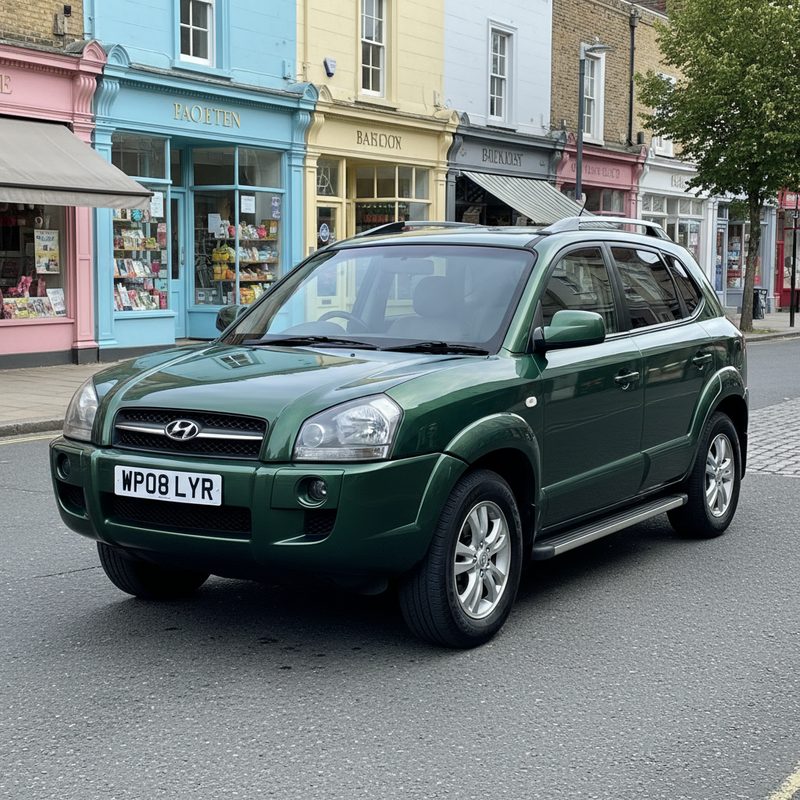
Negotiating a Used 2018 Hyundai Tucson
Learn how to effectively negotiate the price of a used 2018 Hyundai Tucson with practical tips, leverage points, and real-world examples.
Understanding the Fair Market Price Range for a 2018 Hyundai Tucson
When it comes to negotiating the price of a used car, knowledge is power. For a 2018 Hyundai Tucson, the fair market price can vary significantly based on factors such as mileage, condition, and location. As of now, you can expect to pay between £18,000 and £24,000 for a well-maintained Tucson with average mileage of around 30,000 to 50,000 miles.
To get a more precise figure, consider checking online platforms like AutoTrader, CarGurus, or local dealership websites. These platforms provide listings that can give you a good idea of what similar models are selling for in your area. For instance, if you find a Tucson with 40,000 miles listed at £21,500, and another with 35,000 miles at £22,000, you can use this information to gauge whether the vehicle you’re interested in is priced fairly.
Additionally, take into account the trim level and features. A Tucson SE might be priced lower than a fully-loaded Premium model. Knowing these details will help you establish a baseline for negotiations. If you find a Tucson that has been sitting on the lot for a while, this could also indicate that the dealer may be more willing to negotiate.
Specific Leverage Points Buyers Can Use
Armed with your knowledge of the fair market price, it’s time to think about specific leverage points you can use during negotiations. One of the most effective strategies is to highlight any discrepancies in the vehicle's condition or history. For example, if the Tucson has minor scratches or dents, use these as bargaining chips. Point out that while the car is generally in good shape, these imperfections will require some investment to fix, which should be reflected in the price.
Another leverage point is the vehicle's service history. If the seller can provide a complete service history showing regular maintenance, that’s a positive. However, if there are gaps or if the car has had any major repairs, you can use this information to negotiate a lower price. For instance, if the Tucson had a significant repair done shortly before sale, you might argue that this raises concerns about its reliability and should be reflected in the price.
You can also leverage any additional costs that may be incurred post-purchase. For instance, if the car is due for an MOT soon, or if the tyres are worn and will need replacing, these are valid points to bring up. A well-maintained Tucson might not need any immediate work, but if you can identify potential costs, you can argue for a lower price based on the total cost of ownership.
An Actual Negotiation Script/Dialogue Example
Let’s paint a picture of a typical negotiation scenario. Imagine you’ve found a 2018 Hyundai Tucson listed for £22,000 at a local dealership. You’ve done your homework, and you’re ready to negotiate. Here’s how a conversation might unfold:
You: “Hi there, I’m interested in the Hyundai Tucson you have listed for £22,000. I’ve done some research, and I see similar models priced lower. Can we discuss the price?”
Salesperson: “Of course! This Tucson is in excellent condition and has low mileage, which justifies the price.”
You: “I understand, but I noticed a few minor scratches on the bumper and that the tyres are quite worn. I’ll need to invest in new tyres soon, which adds to my costs. Given these factors, would you consider lowering the price?”
Salesperson: “I appreciate your concerns, but this is a popular model and we’ve had a lot of interest.”
You: “That’s great to hear, but I also noticed it’s been on the lot for over a month. Given that, and the additional costs I’ll incur, would you be willing to lower the price to £20,500?”
Salesperson: “I can’t go that low, but I could offer it to you for £21,500.”
You: “That’s a step in the right direction, but I’m still concerned about the tyres and the scratches. How about we settle at £20,800?”
Salesperson: “Let me check with my manager. I might be able to make that work.”
This script demonstrates how to approach negotiations with confidence, using specific points to justify your offer. Remember, the key is to remain polite but firm, and to be prepared for some back-and-forth.
When to Walk Away
Knowing when to walk away is just as important as negotiating effectively. If the dealer is unwilling to budge on price despite your valid points, it may be time to consider other options. For instance, if you’ve done your research and the dealer is still insisting on a price that’s above the fair market range, don’t be afraid to walk away.
Imagine you’ve found a Tucson listed at £22,000, but after negotiations, the dealer won’t go below £21,800. If you know that similar models are available for £20,500, it’s a clear sign that this dealer isn’t willing to negotiate fairly. Walking away can sometimes prompt the dealer to reconsider their position, especially if they see you as a serious buyer who won’t settle for less.
Additionally, if you feel pressured or rushed during the negotiation process, it’s a red flag. A good deal should never come at the expense of your comfort or confidence. If you sense that the dealer is using high-pressure tactics, such as insisting that the deal is only valid for today, take a step back. There are plenty of other cars and dealers out there, and you should never feel forced into a decision.
Common Dealer Tactics to Watch For
Dealerships often employ various tactics to maximise their profits, and being aware of these can help you navigate negotiations more effectively. One common tactic is the “limited time offer.” Dealers may claim that a price is only valid for a short period, creating a sense of urgency. While some deals may indeed be time-sensitive, it’s essential to remember that a good deal will still be available tomorrow or next week.
Another tactic is the “low monthly payment” strategy. Dealers may advertise a low monthly payment to entice buyers, but this often comes with a longer loan term or higher interest rates, resulting in paying more over time. Always calculate the total cost of the vehicle, not just the monthly payment, to ensure you’re getting a fair deal.
Additionally, be cautious of add-ons and upsells. Once you’ve settled on a price, the dealer may try to sell you additional warranties, service packages, or accessories. While some of these may be beneficial, they can significantly increase the overall cost of the vehicle. Stick to your budget and be firm about what you’re willing to pay.
How MOT History Gives You Negotiation Ammo
The MOT history of a vehicle can be a powerful tool in your negotiation arsenal. Before you even step foot in the dealership, it’s wise to obtain the MOT history for the 2018 Hyundai Tucson you’re considering. This information is readily available online and can reveal crucial details about the car’s past.
For instance, if the MOT history shows a pattern of repeated failures or advisories, you can use this information to negotiate a lower price. Let’s say you find that the Tucson you’re interested in has had multiple advisories for brake issues over the past few years. This raises concerns about the vehicle’s reliability and safety, giving you a solid reason to ask for a price reduction.
Moreover, if the MOT history indicates that the car has been well-maintained with no significant issues, this can work in your favour as well. You can use this information to justify a slightly higher offer if the vehicle is in excellent condition. However, always be cautious and ensure that the seller is transparent about the car’s history. If they seem evasive or unwilling to provide documentation, it’s a red flag.
Conclusion
Negotiating the price of a used 2018 Hyundai Tucson doesn’t have to be a daunting task. By understanding the fair market price, leveraging specific points, and being prepared for common dealer tactics, you can approach negotiations with confidence. Remember to do your research, keep an eye on the vehicle’s condition and history, and don’t hesitate to walk away if the deal doesn’t meet your expectations.
As you embark on your car-buying journey, consider getting a free vehicle check to uncover any hidden issues that could provide you with additional negotiation leverage. With the right approach and knowledge, you can secure a great deal on your next used car purchase. Happy negotiating!
Check 2018 Hyundai Tucson, instantly with Dave's free vehicle intelligence report.
Get a free vehicle check to find negotiation leverage on any Hyundai Tucson